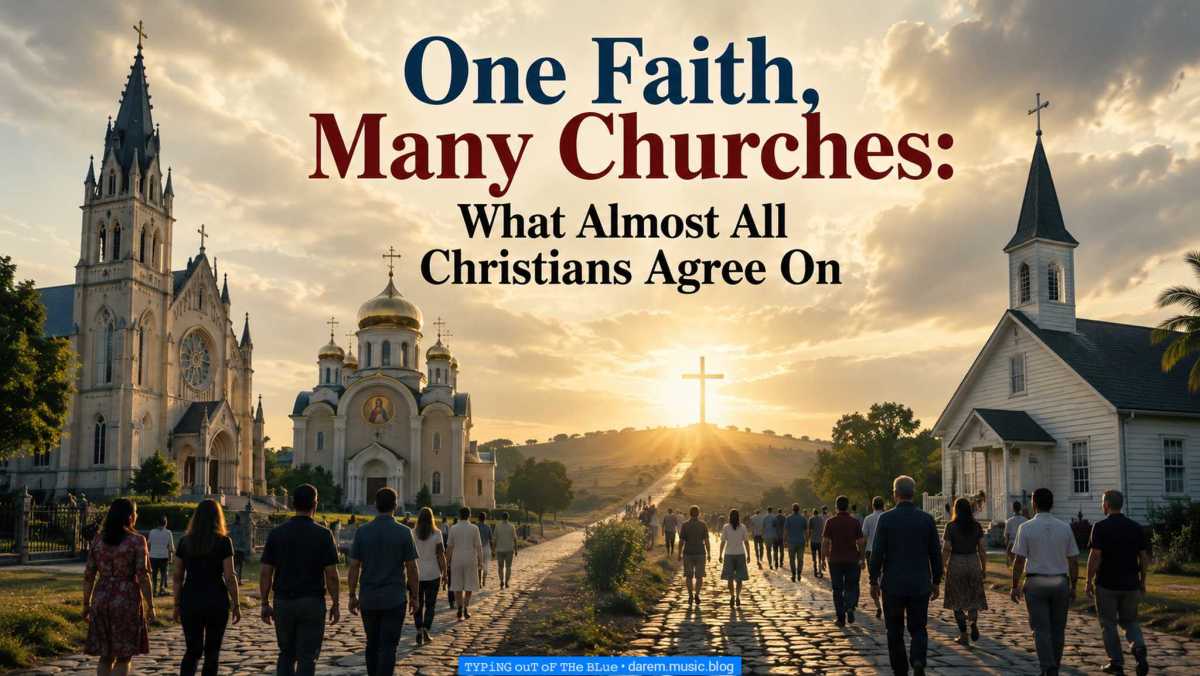
One Faith, Many Churches: What Almost All Christians Agree On

Discover the core beliefs that connect most Christians across the world.

Walk into a Catholic cathedral, an Orthodox church filled with ancient chants, or a small Protestant chapel on a quiet street, and you’ll notice plenty of differences. The prayers may sound different. The traditions may feel unfamiliar. Even the buildings tell different stories.

But listen a little longer, and you’ll hear a familiar melody beneath them all.

Despite thousands of Christian churches and denominations around the world, most share the same foundation that has been passed down for nearly 2,000 years.

Here are some of the beliefs shared by almost all Christians:

• Jesus Christ is the promised Messiah.
• Jesus died on the cross and rose from the dead.
• The Bible is recognized as sacred Scripture, although Christian traditions differ in its canon and interpretation.
• Jesus Christ will return.
• There will be a final judgment and eternal life.

That doesn’t mean every Christian church believes exactly the same things.

Some recognize the Pope as the leader of the Church. Others do not. Some worship with ancient liturgies, icons, and incense. Others gather with simple prayers, a Bible, and songs. Some celebrate seven sacraments. Others observe only two.

These differences have shaped Christian history for centuries.

Yet through all the different traditions, one message continues to echo.

Jesus Christ is at the center.

The voices may sing in different harmonies, but the song still points to the same Savior. Around the world, in grand cathedrals, neighborhood churches, mountain villages, and crowded cities, billions of Christians place their hope in His life, death, resurrection, and promised return.

The roads may have branched over time, but they all begin with the same story, and that story begins with Christ.

We may belong to different churches and worship in different ways, but our shared faith in Christ unites us far more than our differences divide us. By choosing respect, kindness, and love for one another, we reflect the One we all follow. After all, a melody doesn’t need every voice to sing the same part to create one beautiful song.

⌨ ᴛʸᵖⁱⁿᵍ ᴏᵘᵗ ᵒᶠ ᵗʰᵉ ʙˡᵘᵉ ᵈᵃʳᵉᵐ ᵐᵘˢⁱᶜ ᵇˡᵒᵍ
Praying Without Words • Darem Placer • Full album. Press play.

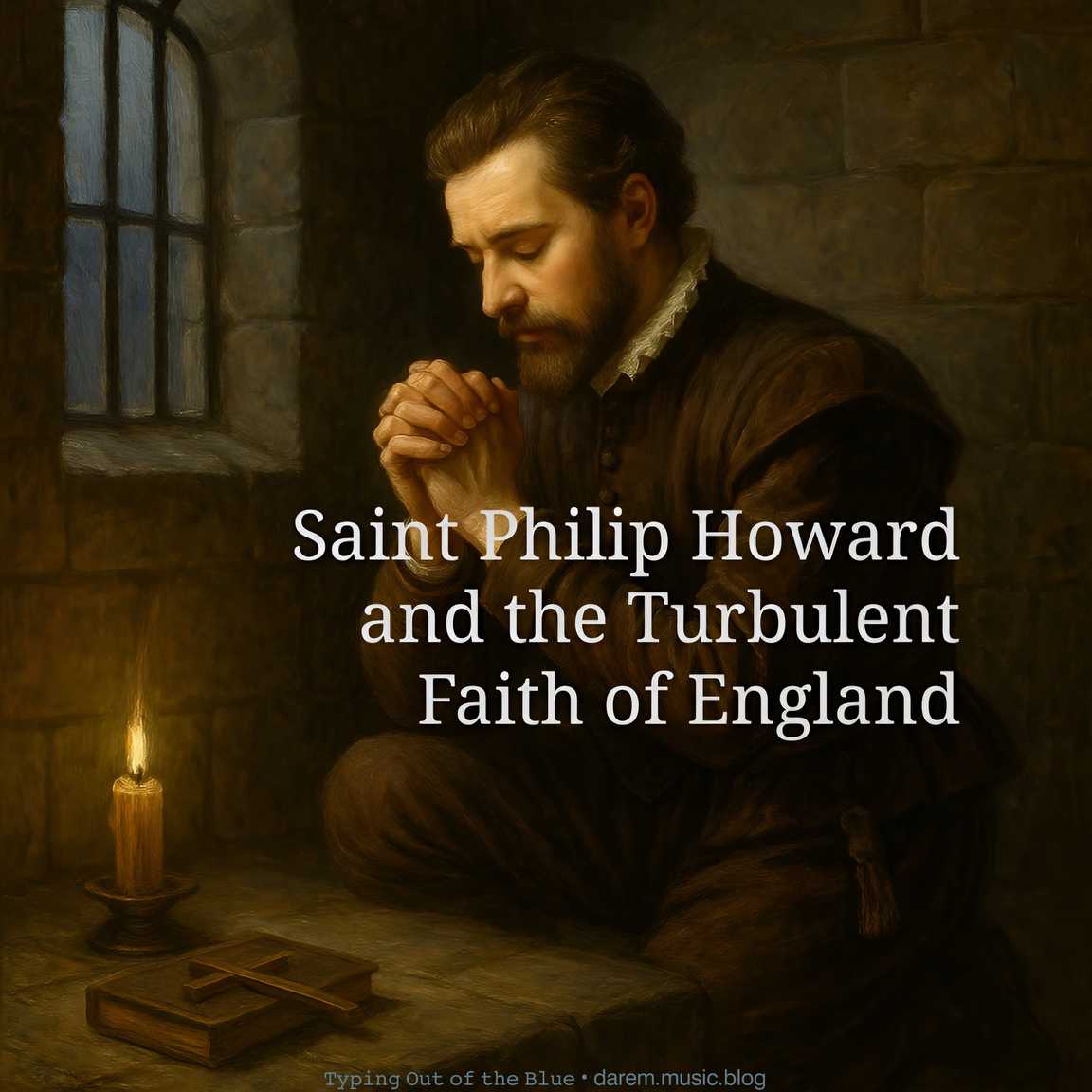
Saint Philip Howard and the Turbulent Faith of England

Amid England’s clash of faith and power, he chose conviction over comfort, standing firm in truth.

England in the 1500s was torn by faith and power. Queen Mary I ruled from 1553 to 1558, trying to bring the country back to Catholicism—but she did it with fire and fear. Many Protestants were executed, and her name became “Bloody Mary.” She ruled with fire and fear, and though history can’t say for sure, the vodka-tomato cocktail was probably named after her—Bloody Mary—for her bloody reign.

When her half-sister Elizabeth I took the throne in 1558, England turned Protestant again. The pendulum of faith swung from one extreme to another—each side sure it was saving souls.

Philip Howard was born in 1557, right in the middle of this chaos. He grew up wealthy, proud, and loyal to Queen Elizabeth’s court. Religion was politics, not faith. But as he watched the endless struggle between belief and power, something in him changed.

When he heard about the courage of Saint Edmund Campion, a priest who faced death defending his faith in 1581, Philip saw what true religion could be—quiet, brave, and pure. Not the kind that burned or punished, but the kind that endured.

At 27, he embraced the Catholic faith of his ancestors, knowing it could cost him everything. He tried to escape England to live freely, but he was caught and sent to the Tower of London in 1585, where he spent ten years. The Tower was not just a fortress—it also served as a royal prison for nobles and political prisoners. The queen offered him freedom if he would attend one Protestant service. He refused.

He died there in 1595, sick but steadfast. In 1970, he was declared one of the Forty Martyrs of England and Wales.

Today, Catholics and Protestants remember those times not with anger but with respect. Both sides had believers who suffered for conscience and truth. The focus now is on faithfulness to God, not fighting over church politics.

⌨ ᴛʸᵖⁱⁿᵍ ᴏᵘᵗ ᵒᶠ ᵗʰᵉ ʙˡᵘᵉ ᵈᵃʳᵉᵐ ᵐᵘˢⁱᶜ ᵇˡᵒᵍ
Traces of courage, silence, and sacrifice—this is Saints.

Listen on Apple Music, Apple Music Classical, and YouTube Music