
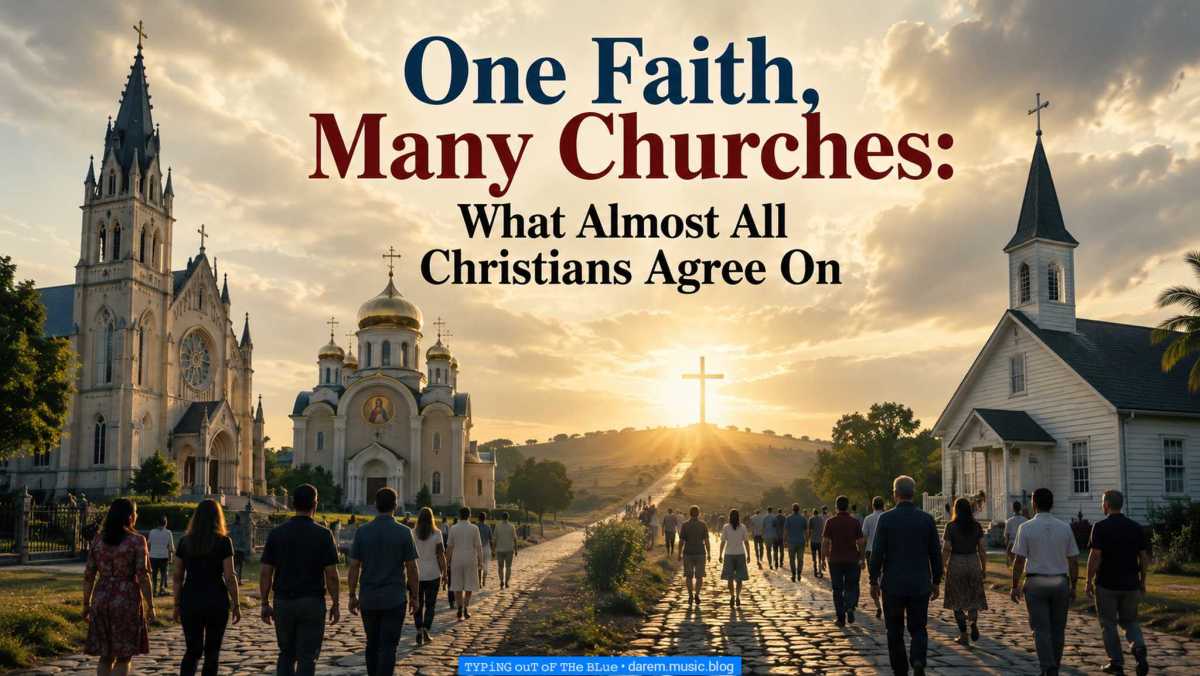
Walk into a Catholic cathedral, an Orthodox church filled with ancient chants, or a small Protestant chapel on a quiet street, and you’ll notice plenty of differences. The prayers may sound different. The traditions may feel unfamiliar. Even the buildings tell different stories.
But listen a little longer, and you’ll hear a familiar melody beneath them all.
Despite thousands of Christian churches and denominations around the world, most share the same foundation that has been passed down for nearly 2,000 years.
Here are some of the beliefs shared by almost all Christians:
• Jesus Christ is the promised Messiah.
• Jesus died on the cross and rose from the dead.
• The Bible is recognized as sacred Scripture, although Christian traditions differ in its canon and interpretation.
• Jesus Christ will return.
• There will be a final judgment and eternal life.
That doesn’t mean every Christian church believes exactly the same things.
Some recognize the Pope as the leader of the Church. Others do not. Some worship with ancient liturgies, icons, and incense. Others gather with simple prayers, a Bible, and songs. Some celebrate seven sacraments. Others observe only two.
These differences have shaped Christian history for centuries.
Yet through all the different traditions, one message continues to echo.
Jesus Christ is at the center.
The voices may sing in different harmonies, but the song still points to the same Savior. Around the world, in grand cathedrals, neighborhood churches, mountain villages, and crowded cities, billions of Christians place their hope in His life, death, resurrection, and promised return.
The roads may have branched over time, but they all begin with the same story, and that story begins with Christ.
We may belong to different churches and worship in different ways, but our shared faith in Christ unites us far more than our differences divide us. By choosing respect, kindness, and love for one another, we reflect the One we all follow. After all, a melody doesn’t need every voice to sing the same part to create one beautiful song.
⌨ ᴛʸᵖⁱⁿᵍ ᴏᵘᵗ ᵒᶠ ᵗʰᵉ ʙˡᵘᵉ ᵈᵃʳᵉᵐ ᵐᵘˢⁱᶜ ᵇˡᵒᵍ

