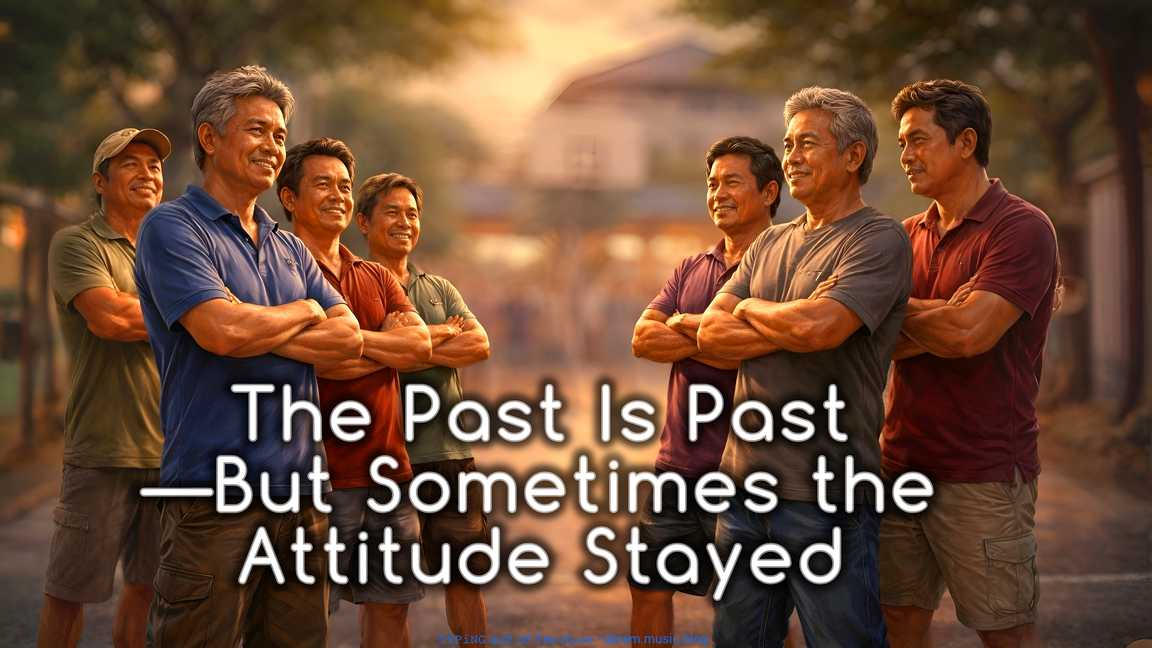
The Past Is Past

Time moves forward, but sometimes the attitude we learned as teenagers quietly stays behind.

Most of us like to say, “Past is past.”

And in many ways, that’s true. Time moves forward. People grow older. Life brings work, family, responsibilities, and a thousand new things to think about.

But sometimes, the past leaves small fingerprints behind.

Think about old teenage rivalries. Two groups of friends. Maybe classmates who didn’t get along. Maybe two barkadas (group of friends) who competed, argued, or simply avoided each other. At that age, everything felt intense. Small issues became big. Pride was loud. Ego was louder.

Back then, it was easy to say, “That’s just how teenagers are.”

Fast forward thirty or forty years.

Now everyone is in their 50s. Hair has thinned. Some are already grandparents. Life has given enough lessons to fill a library.

Yet every now and then, you still see traces of those old habits.

A sarcastic comment here. A silent cold shoulder there. A small attempt to outdo the other group. Nothing dramatic. Nothing openly hostile. Just little echoes of something that should have been left in the school hallway decades ago.

It’s a strange thing about human nature. Time can pass, but attitude sometimes freezes in the year it was formed.

The teenage version of us may have gone home, but occasionally the teenage mindset stayed behind.

And maybe that is the quiet reminder life gives us.

Growing older is automatic. Growing wiser is a choice.

The past should stay where it belongs—in memory, not in behavior.

Because carrying teenage rivalries into our 50s is like still wearing a school uniform to a reunion.

At some point, we have to laugh, shake hands, and finally grow up.

⌨ ᴛʸᵖⁱⁿᵍ ᴏᵘᵗ ᵒᶠ ᵗʰᵉ ʙˡᵘᵉ ᵈᵃʳᵉᵐ ᵐᵘˢⁱᶜ ᵇˡᵒᵍ

People•Darem Placer

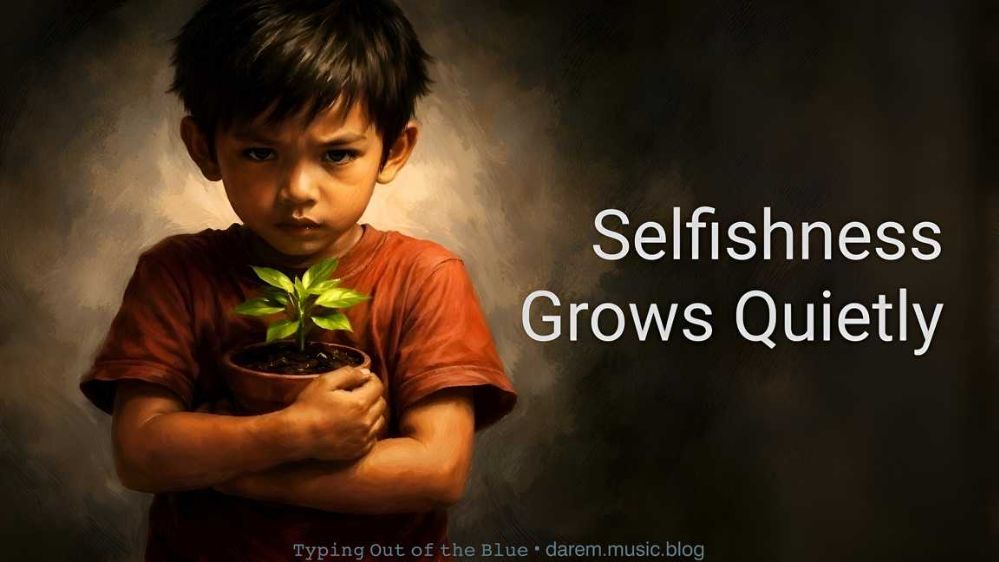
Selfishness Grows Quietly

Selfishness forms slowly, shaped by childhood, habits, and what we learn to ignore.

For those who’d rather listen.

Selfishness doesn’t just pop out of nowhere one morning. It grows quietly, like a plant you didn’t notice, until it’s already big.

It starts in childhood, and it’s actually very normal. A kid says “mine” because they’re still in survival mode. They don’t know empathy yet. Their world is small, mostly about needs and comfort. This is not selfishness. This is instinct. The danger starts when someone gets stuck here.

If a child grows up always getting what they want, or never being corrected, a message sinks in: “I come first. Always.” On the other hand, if a child grows up neglected, ignored, or emotionally starved, another message forms: “No one will take care of me, so I must take everything I can.” Different roots, same outcome.

Then comes adolescence. This is where selfishness gets trained. Peer pressure, comparison, validation. Likes, approval, status. Teens quickly learn what gets rewarded. Sometimes it’s kindness. Often it’s attention-seeking, dominance, or stepping on others to look strong. If empathy isn’t modeled at home, the shortcut becomes attractive: take, don’t share. Win, don’t care.

By adulthood, selfishness looks more “polite” but sharper. It wears suits, smiles, and excuses. “I’m just being practical.” “I need to protect my peace.” Sometimes those are true. Sometimes they’re just dressed-up self-interest. Adults who were never taught emotional responsibility tend to center every decision on comfort, gain, or image. People become tools, not companions.

Selfishness is often not about loving oneself too much. It’s about never learning how to love others properly, or never being shown how.

But it’s not permanent. Empathy can be learned later. Generosity can be practiced. Awareness alone already cracks the shell. Selfishness grows unconsciously, but it shrinks the moment someone starts asking,

“How does this affect others?”

That question is where growing up really begins.

⌨ ᴛʸᵖⁱⁿᵍ ᴏᵘᵗ ᵒᶠ ᵗʰᵉ ʙˡᵘᵉ ᵈᵃʳᵉᵐ ᵐᵘˢⁱᶜ ᵇˡᵒᵍ
Digital Albums by Darem Placer on Bandcamp
Listen. Support. Buy. Download.