What Leads to a Bad Attitude?

Looking deeper can change the way we see ourselves and others.

A bad attitude is usually a symptom, not the real problem.

What we show on the outside often begins with what is happening inside. Before judging someone’s attitude, it helps to ask what might be feeding it.

Bad attitudes often begin with things like these:

Unresolved pain. Old wounds do not disappear just because time passes. Hurt that stays buried often finds another way to come out.

Fear and insecurity. When we feel the need to protect ourselves, kindness often gives way to defensiveness.

Mental or physical health issues. Some struggles affect the mind and emotions as much as the body. They can change how we respond to everyday life.

Environment. The people and atmosphere around us can slowly shape our outlook. Living with anger, constant criticism, or disrespect can leave a lasting influence.

Chronic stress. Pressure that never ends can drain our patience until even small things feel heavy.

Pride. Our growth stops when we believe we have nothing left to learn.

Entitlement. Life becomes frustrating when reality refuses to follow our expectations.

Envy. Looking too long at someone else’s life makes it harder to appreciate our own.

Lack of gratitude. When we only count what is missing, we easily overlook what we already have.

Unhealthy habits. Too little rest, poor nutrition, substance abuse, or lack of exercise can quietly affect our mood, thinking, and self-control.

Habit. The more we react negatively, the more natural it becomes. Repeated negative reactions can slowly become our default response.

The good part is this. A bad attitude does not have to stay forever. When we face the real cause instead of hiding it, change becomes possible. Healing, humility, gratitude, and better habits take time, but every step helps us become better for others and for ourselves.

⌨ ᴛʸᵖⁱⁿᵍ ᴏᵘᵗ ᵒᶠ ᵗʰᵉ ʙˡᵘᵉ ᵈᵃʳᵉᵐ ᵐᵘˢⁱᶜ ᵇˡᵒᵍ

Unbroken Pieces of a Tangled Mind • Darem Placer

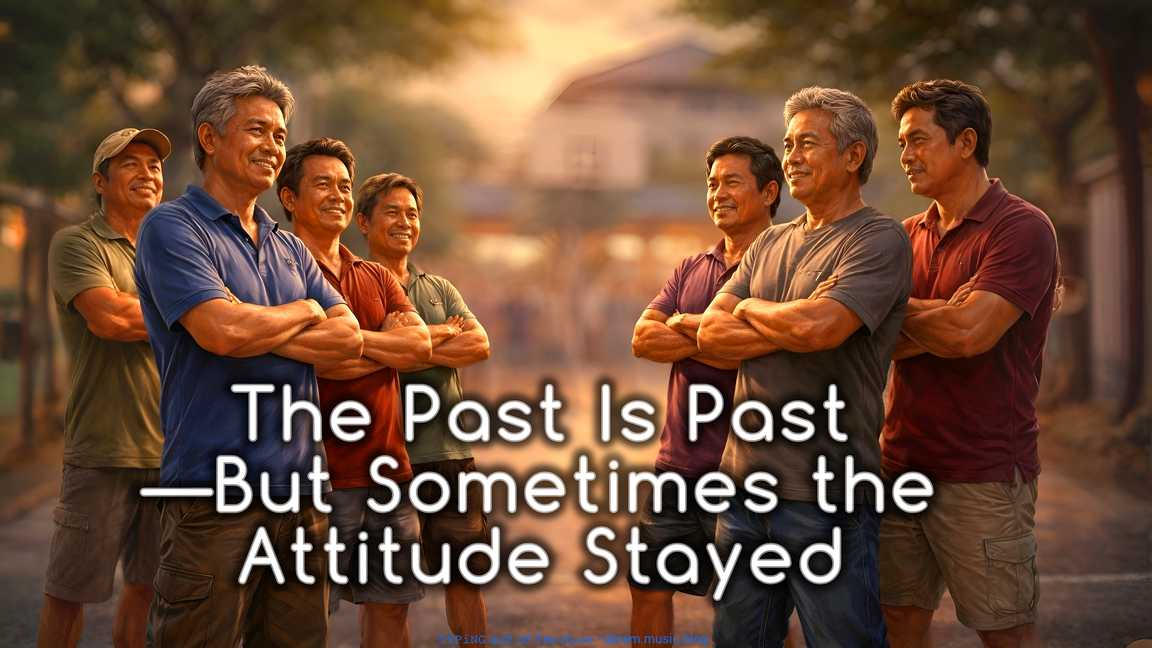
The Past Is Past

Time moves forward, but sometimes the attitude we learned as teenagers quietly stays behind.

Most of us like to say, “Past is past.”

And in many ways, that’s true. Time moves forward. People grow older. Life brings work, family, responsibilities, and a thousand new things to think about.

But sometimes, the past leaves small fingerprints behind.

Think about old teenage rivalries. Two groups of friends. Maybe classmates who didn’t get along. Maybe two barkadas (group of friends) who competed, argued, or simply avoided each other. At that age, everything felt intense. Small issues became big. Pride was loud. Ego was louder.

Back then, it was easy to say, “That’s just how teenagers are.”

Fast forward thirty or forty years.

Now everyone is in their 50s. Hair has thinned. Some are already grandparents. Life has given enough lessons to fill a library.

Yet every now and then, you still see traces of those old habits.

A sarcastic comment here. A silent cold shoulder there. A small attempt to outdo the other group. Nothing dramatic. Nothing openly hostile. Just little echoes of something that should have been left in the school hallway decades ago.

It’s a strange thing about human nature. Time can pass, but attitude sometimes freezes in the year it was formed.

The teenage version of us may have gone home, but occasionally the teenage mindset stayed behind.

And maybe that is the quiet reminder life gives us.

Growing older is automatic. Growing wiser is a choice.

The past should stay where it belongs—in memory, not in behavior.

Because carrying teenage rivalries into our 50s is like still wearing a school uniform to a reunion.

At some point, we have to laugh, shake hands, and finally grow up.

⌨ ᴛʸᵖⁱⁿᵍ ᴏᵘᵗ ᵒᶠ ᵗʰᵉ ʙˡᵘᵉ ᵈᵃʳᵉᵐ ᵐᵘˢⁱᶜ ᵇˡᵒᵍ

People•Darem Placer