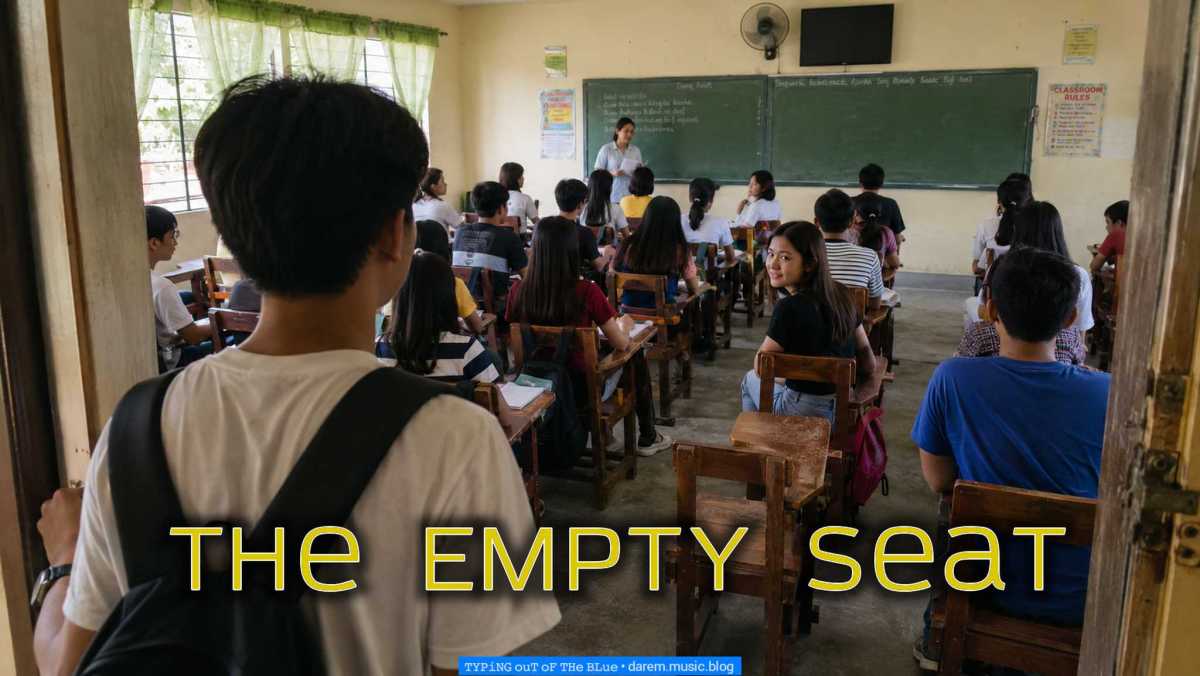
The Empty Seat

Some lifelong friendships begin with nothing more than an empty chair and a simple hello.

First day of classes is often described as a fresh start. New notebooks. New teachers. New faces. But there is something else happening that day. Friendships are being assigned by chance.

People like to say, “Choose your friends wisely.” It is good advice. The reality is that many lifelong friendships began with an empty seat.

A student walks into a classroom. One chair is available. Another student is already sitting nearby. A simple “Hi” is exchanged. Maybe they share notes. Maybe they laugh at the same joke. Years later, they are still friends.

When we look back, we often imagine that important moments arrive with a spotlight. In reality, many arrive quietly. A random seating arrangement. A class schedule. A forgotten pencil. Sometimes that is all it takes.

What makes the story even better is when two very different people become friends. One follows the rules. The other bends them. One stays out of trouble. The other seems to attract it. Most people expect only one ending. The good student becomes worse.

But there is another ending that deserves more attention. The good student stays good. The troubled student slowly changes. Not because of lectures. Not because of pressure. Not because someone tried to win an argument. Just friendship. Day after day. Year after year.

A good example has a quiet way of traveling. It rarely makes headlines. It rarely goes viral. Yet it can change a person more deeply than a thousand speeches. That is why some of the most beautiful stories are not about people avoiding each other. They are about people helping each other become better.

Every school year begins the same way. Students enter classrooms and look for a place to sit. Most of them think they are just choosing a chair. They may actually be meeting someone whose voice will echo through their life long after the school bell rings for the last time.

⌨ ᴛʸᵖⁱⁿᵍ ᴏᵘᵗ ᵒᶠ ᵗʰᵉ ʙˡᵘᵉ ᵈᵃʳᵉᵐ ᵐᵘˢⁱᶜ ᵇˡᵒᵍ
Underplayground • Darem Placer • Full album. Press play.

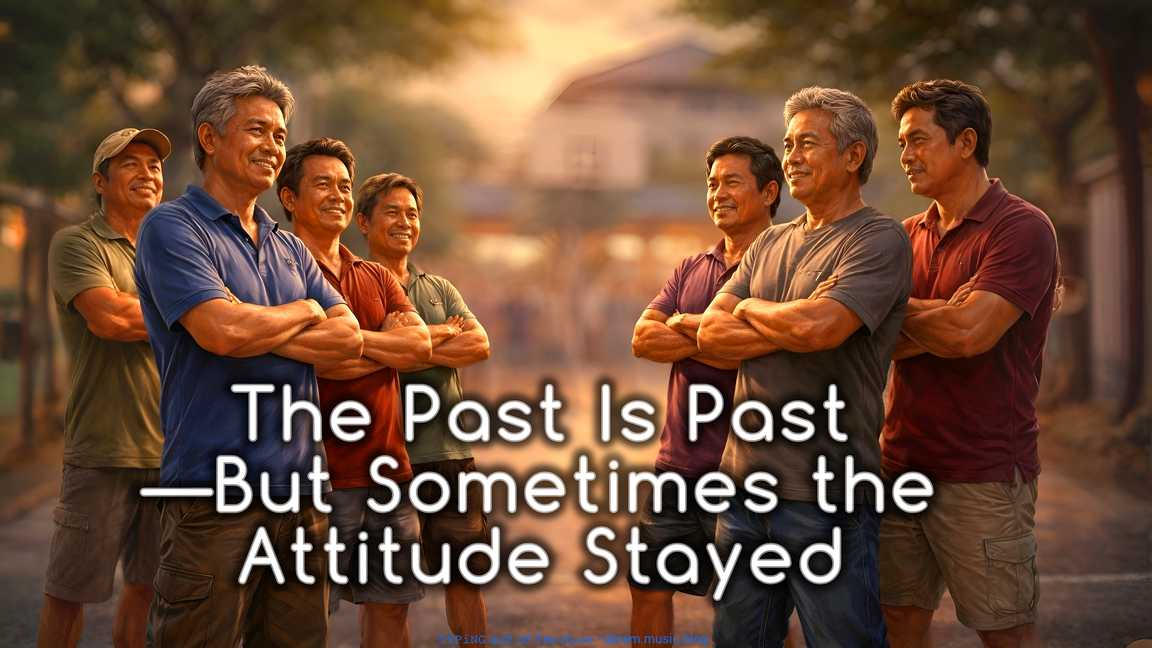
The Past Is Past

Time moves forward, but sometimes the attitude we learned as teenagers quietly stays behind.

Most of us like to say, “Past is past.”

And in many ways, that’s true. Time moves forward. People grow older. Life brings work, family, responsibilities, and a thousand new things to think about.

But sometimes, the past leaves small fingerprints behind.

Think about old teenage rivalries. Two groups of friends. Maybe classmates who didn’t get along. Maybe two barkadas (group of friends) who competed, argued, or simply avoided each other. At that age, everything felt intense. Small issues became big. Pride was loud. Ego was louder.

Back then, it was easy to say, “That’s just how teenagers are.”

Fast forward thirty or forty years.

Now everyone is in their 50s. Hair has thinned. Some are already grandparents. Life has given enough lessons to fill a library.

Yet every now and then, you still see traces of those old habits.

A sarcastic comment here. A silent cold shoulder there. A small attempt to outdo the other group. Nothing dramatic. Nothing openly hostile. Just little echoes of something that should have been left in the school hallway decades ago.

It’s a strange thing about human nature. Time can pass, but attitude sometimes freezes in the year it was formed.

The teenage version of us may have gone home, but occasionally the teenage mindset stayed behind.

And maybe that is the quiet reminder life gives us.

Growing older is automatic. Growing wiser is a choice.

The past should stay where it belongs—in memory, not in behavior.

Because carrying teenage rivalries into our 50s is like still wearing a school uniform to a reunion.

At some point, we have to laugh, shake hands, and finally grow up.

⌨ ᴛʸᵖⁱⁿᵍ ᴏᵘᵗ ᵒᶠ ᵗʰᵉ ʙˡᵘᵉ ᵈᵃʳᵉᵐ ᵐᵘˢⁱᶜ ᵇˡᵒᵍ

People•Darem Placer