Why Is Pi Such a Big Deal?
Pi may seem like something that belongs only in math class, but its story reaches much further.

Pi may seem like something that belongs only in math class, but its story reaches much further.
A simple example with 100 pesos shows how small daily changes can grow into something much bigger over time.
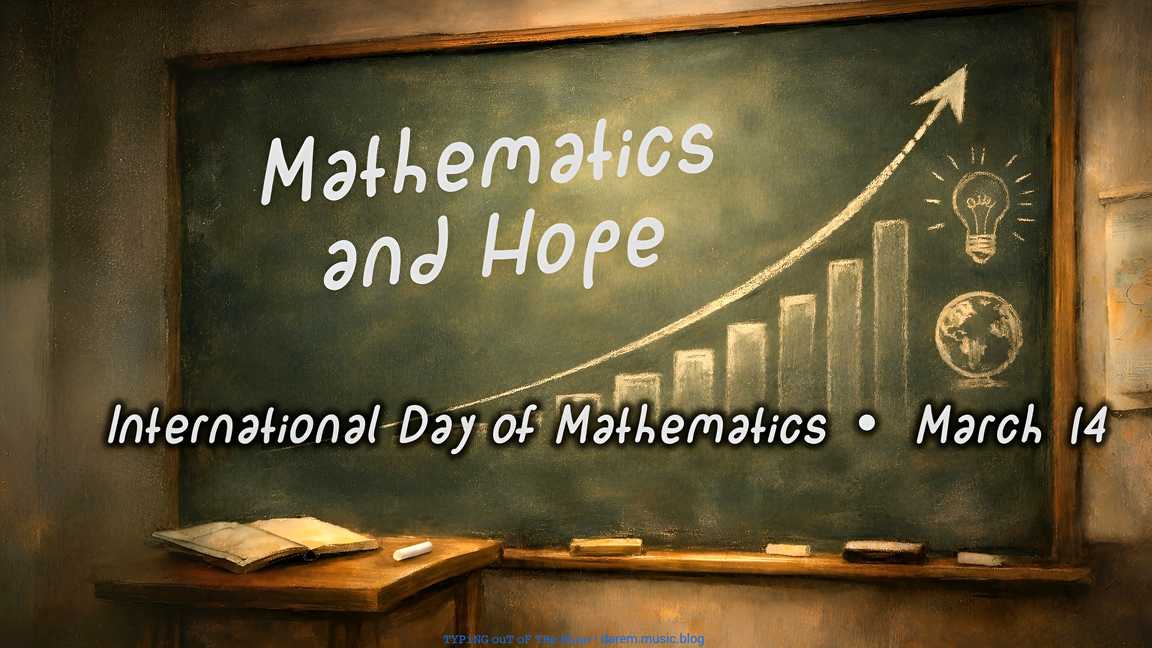
International Day of Mathematics • March 14
Mathematics sometimes explains life using very ordinary things.
Imagine starting with 100 pesos.
If that amount grows by just 1% in a day, the increase is only one peso. After the first day, the total becomes 101 pesos.
On the second day, the 1% is no longer based on the original 100. It is now based on 101. The increase becomes slightly larger, about 1.01 pesos. The total becomes 102.01 pesos.
On the third day, the same thing happens again. The 1% is based on 102.01. The increase becomes about 1.02 pesos, bringing the total to 103.03 pesos.
Nothing dramatic happens at the beginning. The numbers grow slowly, almost quietly. But every increase is calculated from the new amount, and each small step builds on the previous one.
If that small 1% improvement continues every day for one year, the original 100 pesos becomes around 3,700 pesos.
The opposite also works in mathematics. If the value drops by 1% each day, the decline slowly compounds as well. After one year, only about 3 pesos remain from the original 100.
This simple example shows something important about how change works. The smallest steps may look insignificant at first, but when they continue steadily, they can lead to results far greater than anyone expected.
Sometimes progress does not arrive as a sudden breakthrough. Sometimes it begins with the smallest step forward today, followed by another tomorrow.
Mathematics quietly reminds us that even the smallest positive step, repeated day after day, can grow into something powerful.
Even the famous number π (pi), celebrated every March 14 (3.14), carries a quiet reminder of this idea. Its digits never end. They continue without limit, always revealing another number after the last one.
In its own way, that endless pattern reflects something people understand well. As long as the story continues, there is always another step ahead—and that is where hope lives.
⌨ ᴛʸᵖⁱⁿᵍ ᴏᵘᵗ ᵒᶠ ᵗʰᵉ ʙˡᵘᵉ ᵈᵃʳᵉᵐ ᵐᵘˢⁱᶜ ᵇˡᵒᵍ