
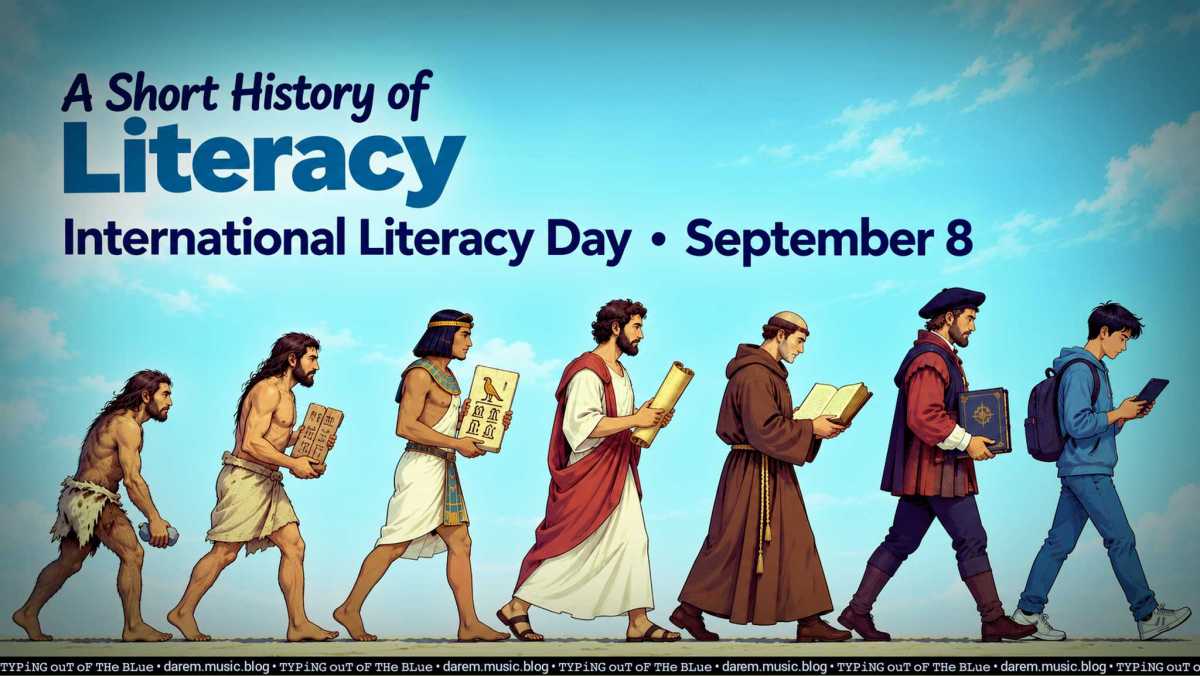
International Literacy Day • September 8
People have been finding ways to record and share information for thousands of years. Around 3200 BCE, the Sumerians of ancient Mesopotamia developed cuneiform, one of the earliest known writing systems. They used it for practical records, including trade, food, and other goods.
Other civilizations developed their own writing systems, including ancient Egypt and China. But reading and writing were not skills everyone had. They were mostly learned by scribes, religious leaders, rulers, and other educated people.
The spread of alphabets helped make writing more accessible, while paper and printing made books and other written materials easier to produce. Printing developed early in China and later took new forms elsewhere. In 15th-century Europe, the printing press helped books and ideas reach far more people.
As education expanded, literacy gradually became part of everyday life for more and more people.
Today, literacy means more than reading and writing. It means understanding information, thinking critically, communicating clearly, and using knowledge wisely.
From clay tablets to digital screens, literacy helps people understand the world and shape what comes next. It opens opportunities for people, helps us make wiser choices for the planet, and builds the knowledge and skills that drive prosperity.
Literacy is not simply about learning to read the world. It is about learning how to help build a better one.
⌨ ᴛʸᵖⁱⁿᵍ ᴏᵘᵗ ᵒᶠ ᵗʰᵉ ʙˡᵘᵉ ᵈᵃʳᵉᵐ ᵐᵘˢⁱᶜ ᵇˡᵒᵍ