
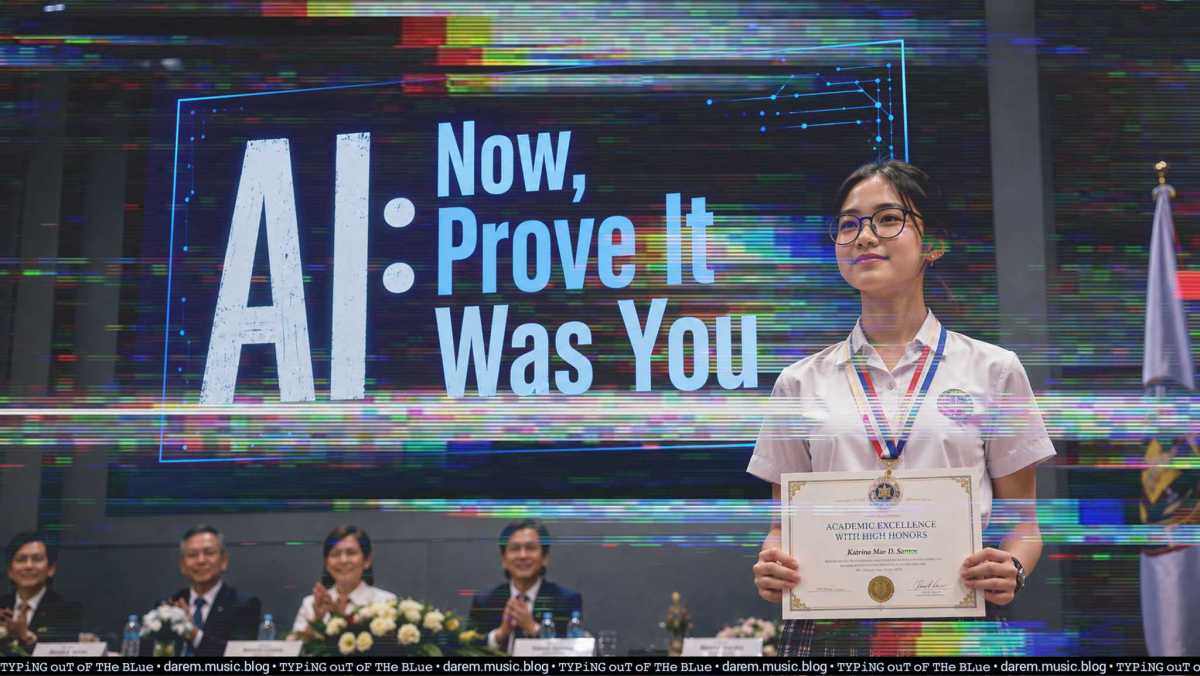
AI has changed the question from “What did you achieve?” to “How do we know you actually did it?”
Awards, published work, portfolios, academic achievements, even creative output can now be questioned because AI can produce something that looks remarkably polished without the person necessarily having the underlying skill.
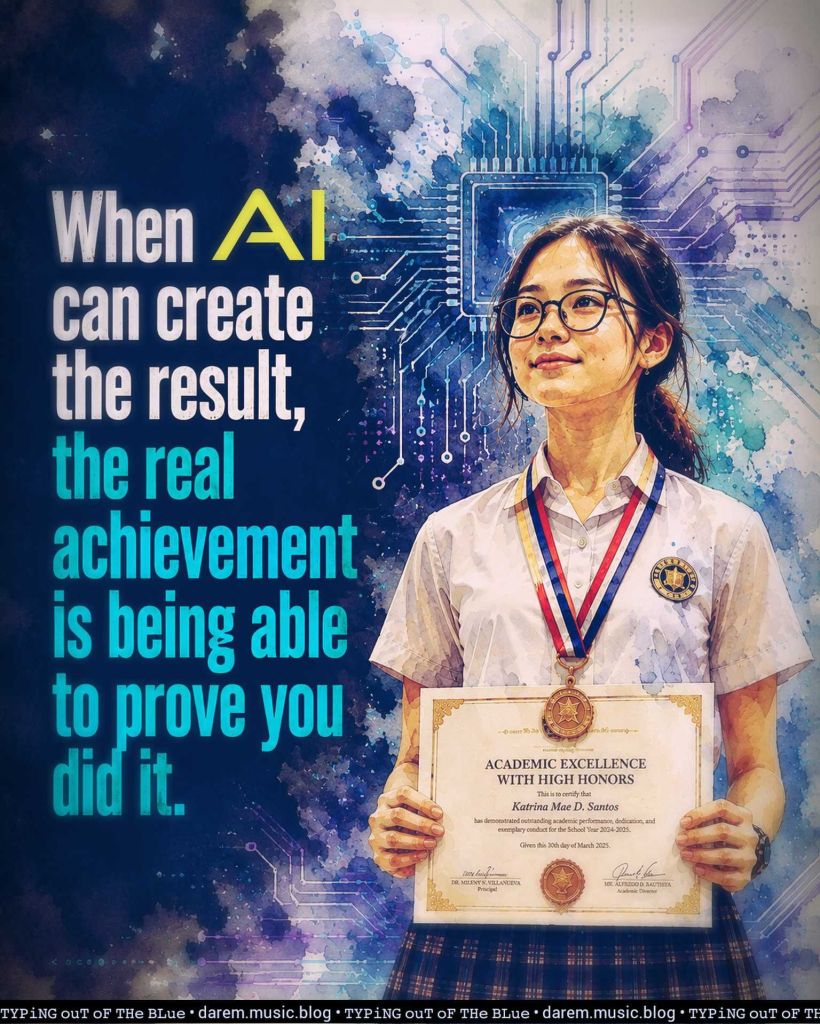
AI doesn’t make real achievement less valuable. It makes proof of authorship more valuable.
A trophy, certificate, or polished piece of work used to be enough.
Now people may ask:
“Did you actually do this?”
“How much of it was AI?”
“Can you explain your process?”
“Can you reproduce the result without AI?”
“Is there a record of how you got there?”
Even in art, seeing the artist create the work in front of you can become part of the proof. Street musicians have no problem with that. You can hear them play right there.
This matters even more in schools, especially for students graduating with honors. Their achievements may be completely legitimate, but the level of trust has changed. A polished output is no longer automatic proof of the student’s own ability.
In a strange way, we may be heading back toward valuing process, reputation, provenance, and demonstrated skill more than the finished product alone.
AI can make achievements look easier while making genuine achievement harder to prove.
⌨ ᴛʸᵖⁱⁿᵍ ᴏᵘᵗ ᵒᶠ ᵗʰᵉ ʙˡᵘᵉ ᵈᵃʳᵉᵐ ᵐᵘˢⁱᶜ ᵇˡᵒᵍ