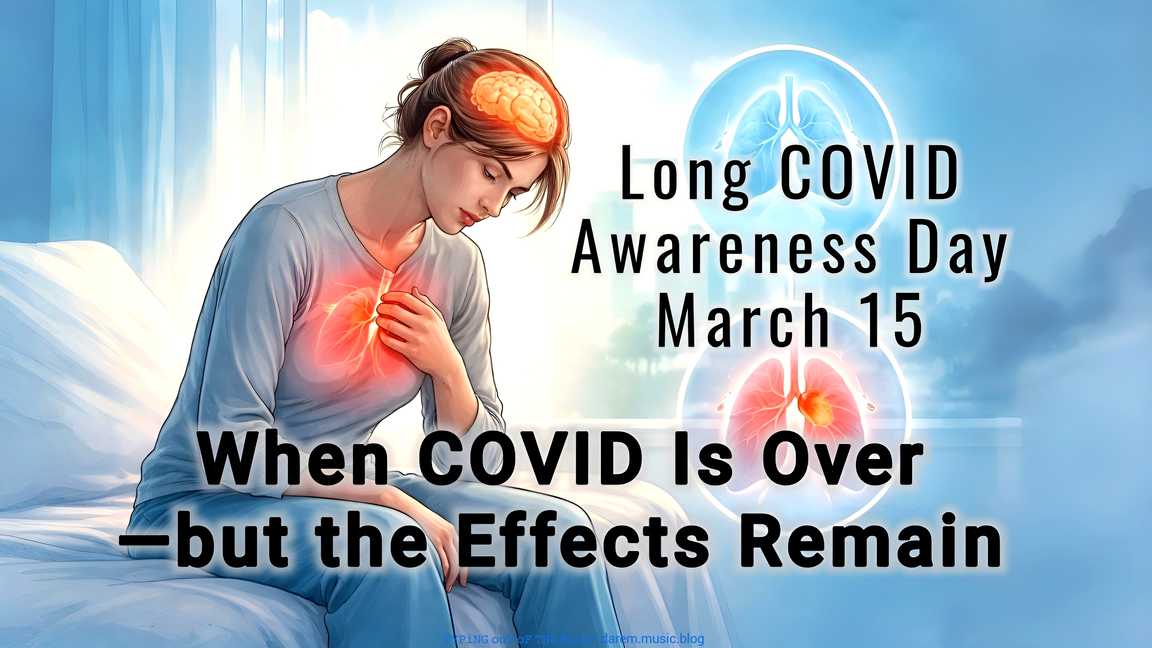
When COVID Is Over—but the Effects Remain

COVID may be over—but for some people, its effects remain. Long COVID Awareness Day brings attention to the mystery.

Long COVID Awareness Day • March 15

For many people, COVID-19 is already part of the past. The lockdowns ended. Masks slowly disappeared. Life returned to something close to normal.

But for some people, the virus never completely left.

Even after recovering from the infection, many continue to deal with strange and frustrating symptoms. Extreme tiredness. Shortness of breath. Headaches that come and go. Difficulty concentrating. Some describe it simply as feeling “not like themselves anymore.”

This condition is now widely called Long COVID.

Doctors are still trying to understand why it happens. Some patients had severe infections. Others had very mild cases and thought they had fully recovered. Yet weeks or months later, the body still struggles.

COVID was first known as a respiratory illness affecting the lungs. But research now shows the virus can influence many parts of the body—including the heart and blood vessels.

Because of this, researchers are paying closer attention to whether Long COVID may sometimes involve the cardiovascular system.

Some patients report chest discomfort, irregular heartbeat, or unusual fatigue during simple activities like walking or climbing stairs. These symptoms do not happen to everyone, but they appear often enough that doctors are studying them carefully.

Long COVID Awareness Day reminds us that the story of the pandemic did not end for everyone at the same time.

For some people, recovery is not measured in days.

It is measured in patience, treatment, and time.

⌨ ᴛʸᵖⁱⁿᵍ ᴏᵘᵗ ᵒᶠ ᵗʰᵉ ʙˡᵘᵉ ᵈᵃʳᵉᵐ ᵐᵘˢⁱᶜ ᵇˡᵒᵍ

Tears on an Empty Space•Darem Placer

How to Sleep Well

Good sleep improves health, focus, and mood.

World Sleep Day • March 13

Good sleep is one of the most important things for health, yet it is also one of the most ignored.

Many people think sleep is just “rest.” But during sleep, the body repairs muscles, balances hormones, strengthens the immune system, and organizes memories in the brain. Without good sleep, the body slowly begins to struggle.

Poor sleep is linked to fatigue, poor focus, mood swings, weight gain, and even heart problems. The good news is that improving sleep often starts with small habits.

Here are simple ways to sleep better.

• Keep a regular sleep schedule 
Go to bed and wake up at the same time every day. The body likes routine. When the schedule is consistent, the brain naturally prepares for sleep.

• Reduce screen time before bed 
Phones, tablets, and computers produce blue light that tells the brain to stay awake. Try to stop using screens at least 30–60 minutes before bedtime.

• Keep the bedroom dark and cool 
A quiet, dark, and slightly cool room helps the body relax. Many people sleep better when the environment feels calm and comfortable.

• Avoid caffeine late in the day 
Coffee, energy drinks, and even some teas can stay in the body for hours. Drinking them too late can delay sleep.

• Get sunlight during the day 
Natural light helps regulate the body’s internal clock. Even a short walk outside during the day can help improve sleep at night.

• Move your body 
Regular physical activity helps the body feel ready for rest later. Exercise does not need to be intense. Even simple daily movement can help.

• Keep the bed for sleep 
Try not to work, eat, or scroll through your phone while in bed. The brain should associate the bed with sleeping.

Good sleep is not a luxury. It is part of basic health.

World Sleep Day reminds people that sleeping well is one of the simplest ways to live better. Sometimes the most powerful health habit is also the quietest one: turning off the lights and letting the body rest.

⌨ ᴛʸᵖⁱⁿᵍ ᴏᵘᵗ ᵒᶠ ᵗʰᵉ ʙˡᵘᵉ ᵈᵃʳᵉᵐ ᵐᵘˢⁱᶜ ᵇˡᵒᵍ

The Quiet Between Piano Notes • Darem Placer