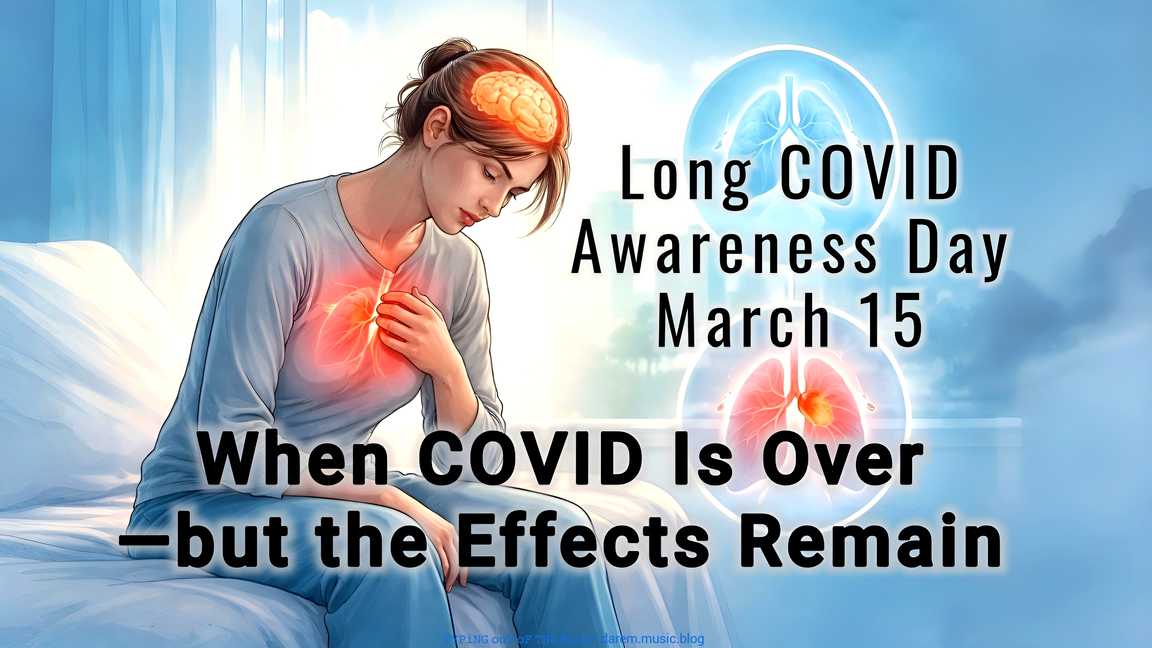
Long COVID Awareness Day • March 15
For many people, COVID-19 is already part of the past. The lockdowns ended. Masks slowly disappeared. Life returned to something close to normal.
But for some people, the virus never completely left.
Even after recovering from the infection, many continue to deal with strange and frustrating symptoms. Extreme tiredness. Shortness of breath. Headaches that come and go. Difficulty concentrating. Some describe it simply as feeling “not like themselves anymore.”
This condition is now widely called Long COVID.
Doctors are still trying to understand why it happens. Some patients had severe infections. Others had very mild cases and thought they had fully recovered. Yet weeks or months later, the body still struggles.
COVID was first known as a respiratory illness affecting the lungs. But research now shows the virus can influence many parts of the body—including the heart and blood vessels.
Because of this, researchers are paying closer attention to whether Long COVID may sometimes involve the cardiovascular system.
Some patients report chest discomfort, irregular heartbeat, or unusual fatigue during simple activities like walking or climbing stairs. These symptoms do not happen to everyone, but they appear often enough that doctors are studying them carefully.
Long COVID Awareness Day reminds us that the story of the pandemic did not end for everyone at the same time.
For some people, recovery is not measured in days.
It is measured in patience, treatment, and time.
⌨ ᴛʸᵖⁱⁿᵍ ᴏᵘᵗ ᵒᶠ ᵗʰᵉ ʙˡᵘᵉ ᵈᵃʳᵉᵐ ᵐᵘˢⁱᶜ ᵇˡᵒᵍ