One Storm, Two Names
One cyclone can carry two labels, but does that actually make public warnings clearer?

One cyclone can carry two labels, but does that actually make public warnings clearer?
Prepare for the heat. Ignore the hype.
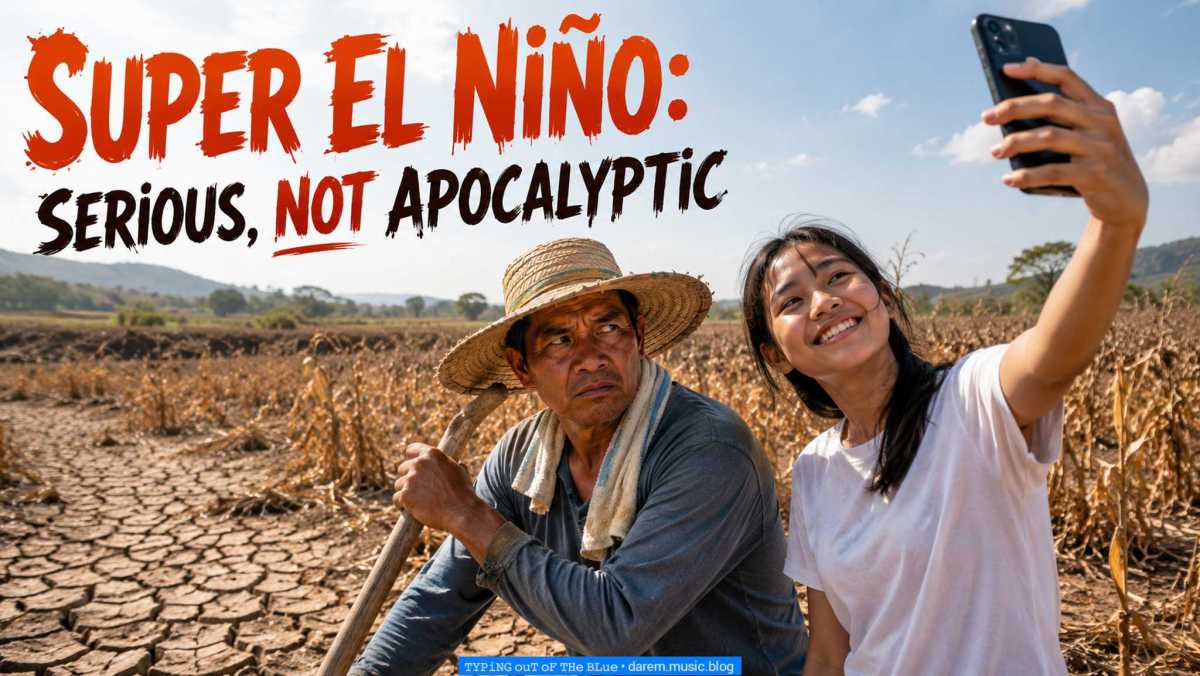
Social media is full of warnings about a possible Super El Niño. Some posts make it sound like the end of the world is just around the corner. The reality is less dramatic than that, but still worth taking seriously.
If a very strong El Niño develops, the most likely effects will be things people can actually see and feel in everyday life:
🌡️ A long period of unusually hot weather.
💧 Water shortages in some dams and water districts.
🌾 Lower yields of rice, corn, and other crops.
🔥 Higher risk of grass fires and forest fires in dry areas.
⚡ Increased demand for electricity as more people use fans and air conditioners.
💰 Higher prices for some food products.
These are real concerns. They can affect communities, livelihoods, and household budgets.
But a Super El Niño is not an asteroid heading toward Earth. It is not a global extinction event. It is not the end of civilization.
Some of the strongest El Niño events in modern history have already happened. They brought droughts, floods, crop losses, and economic challenges. Yet life went on.
A simple comparison:
🎵 Normal El Niño = a warm summer song.
🎵 Strong El Niño = the volume turned way up.
🎵 Super El Niño = the speakers shaking the windows.
☄️ An extinction-level event = a completely different concert.
So if a Super El Niño does develop, the most likely challenge is not survival. It is dealing with water shortages, pressure on agriculture, public health concerns, and rising costs over many months.
That is serious. But it is very different from the doomsday scenarios often seen on social media.
That is why preparation is more useful than panic.
💧 Use water wisely. Fix leaks and avoid unnecessary waste.
🌡️ Prepare for hotter days by staying hydrated and avoiding prolonged exposure to extreme heat.
⚡ Expect higher electricity consumption as fans and air conditioners work harder.
🥫 Keep a reasonable supply of essentials, not because society is collapsing, but because droughts and supply disruptions can sometimes affect prices and availability.
🌱 If you grow plants, adjust early. Use water efficiently and choose heat-tolerant varieties when possible.
💰 Keep an eye on your budget, as food prices can rise when agricultural production suffers.
A Super El Niño is not usually defined by a single catastrophic event. Its effects are more often felt gradually through heat, drought, pressure on water supplies, and rising costs.
The world is not ending. It may simply become hotter, drier, and more expensive for a while. 🌦️🙂
⌨ ᴛʸᵖⁱⁿᵍ ᴏᵘᵗ ᵒᶠ ᵗʰᵉ ʙˡᵘᵉ ᵈᵃʳᵉᵐ ᵐᵘˢⁱᶜ ᵇˡᵒᵍ