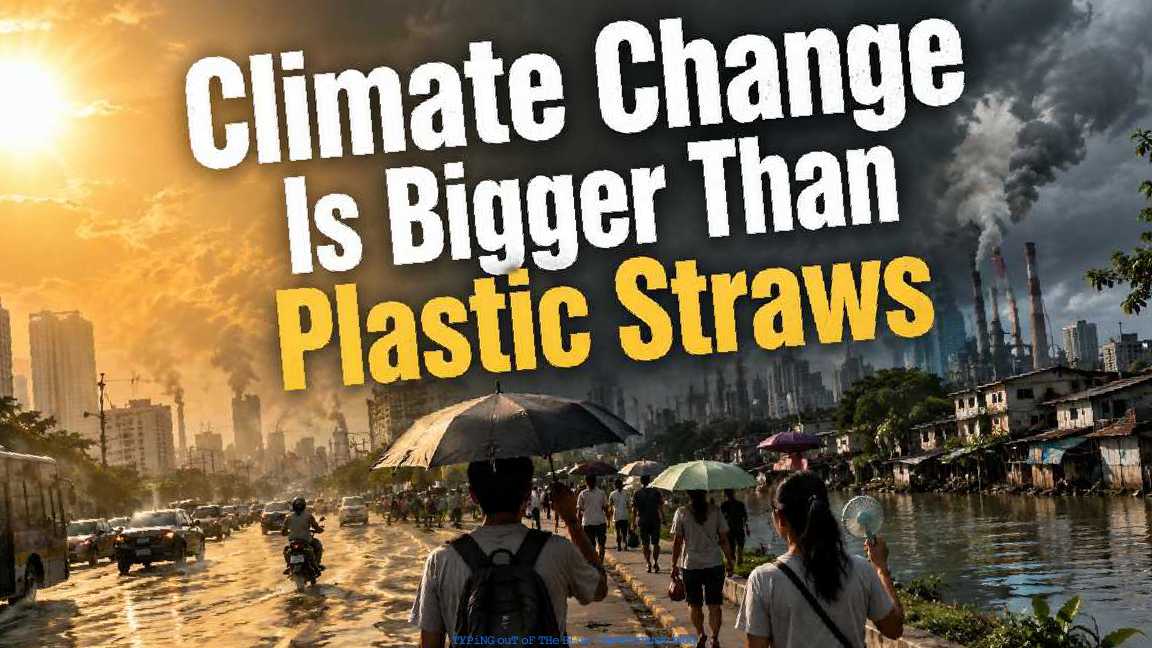
The World Meteorological Organization says 2015–2025 were the 11 hottest years on record. Oceans are warming, glaciers are shrinking, and sea levels are rising.
No country is completely untouched by climate change. Some, such as Norway, are less vulnerable and better prepared, but the problem is global.
These are some of the worst examples in 2026. Fires, floods, and heatwaves existed long before climate change. What is changing is how intense, frequent, or destructive some can become.
United States: Extreme Heat
A major heatwave hit parts of the United States in late June and early July. At least 44 deaths were reported, while Atlantic City, New Jersey reached 41°C, breaking its all-time temperature record.
Global warming raises average temperatures, making extreme heat more likely and dangerous.
Spain and France: Wildfires
Extreme summer heat has helped create dangerous wildfire conditions. In Spain, at least 12 people were killed in one major July wildfire, with 23 reported missing. In France, two firefighters were killed, while major fires forced thousands to evacuate.
Hotter conditions can dry forests and vegetation faster, helping fires spread and making them harder to control.
Canada: Fire and Smoke
Hundreds of wildfires have burned across Canada in 2026. At least four deaths and dozens of injuries have been reported, while smoke has traveled into the United States and across the Atlantic.
Canada is warming about twice as fast as the global average. Higher temperatures can dry vegetation and contribute to longer and more severe fire seasons.
India: Extreme Monsoon Flooding
Severe monsoon flooding in Assam killed at least 50 people and displaced around 700,000, while hundreds of villages were flooded.
Warmer air can hold more water vapor, increasing the potential for heavier rainfall.
The monsoon is old. The atmosphere it now operates in is warmer.
Afghanistan: Deadly Flash Floods
Flash floods in Nuristan killed at least 20 people in July, injured more than 80, and left more than 100 reported missing.
Extreme rainfall, environmental damage, and weak infrastructure can make flash floods especially destructive. A warmer atmosphere can intensify heavy rainfall even in places that also struggle with drought.
Australia and the Pacific: Warming Oceans
Unusually warm oceans and marine heatwaves are putting pressure on coral reefs, fisheries, food, jobs, tourism, and coastal communities.
Oceans absorb most of the excess heat trapped by greenhouse gases. They also absorb carbon dioxide, making seawater more acidic.
Pacific Island Countries: Rising Seas
Low-lying Pacific islands face increasing coastal flooding, erosion, saltwater entering freshwater supplies, and pressure on communities near the shore.
Sea levels rise as warmer seawater expands and melting land ice adds water to the oceans.
The islands have always lived beside the ocean. The difference is that the ocean is slowly moving closer.
What Is Causing This?
Human activity is the main cause of current global warming.
Burning coal, oil, and gas releases greenhouse gases, especially carbon dioxide. Deforestation removes trees that absorb CO₂, while agriculture, industry, transportation, buildings, and waste add more greenhouse gases.
Natural cycles such as El Niño can increase heat, drought, or rainfall in different regions, but they now happen on a planet already warmed by human activity.
This article is not meant to frighten us, but to make us aware and act.
We have been told for years that small actions matter. They still do, especially when many people do them. But if too few individuals, businesses, and governments act, the problem grows. The longer we wait, the bigger and more difficult the solutions become.
We can see the problem on our roads. Millions of new cars that run on gasoline or diesel are still being made and sold. Some people have no practical alternative. Others may not see climate change as urgent, especially when its worst effects seem far away or unlikely to happen in their lifetime.
But every new fuel-burning car can stay on the road for many years. What we buy and build today can keep producing emissions long into the future.
That is why responsibility cannot fall on ordinary people alone. Car companies, industries, cities, and governments also have to make cleaner choices affordable and practical. Otherwise, we keep asking people to change while continuing to build a world that makes change difficult.
What Can We Do?
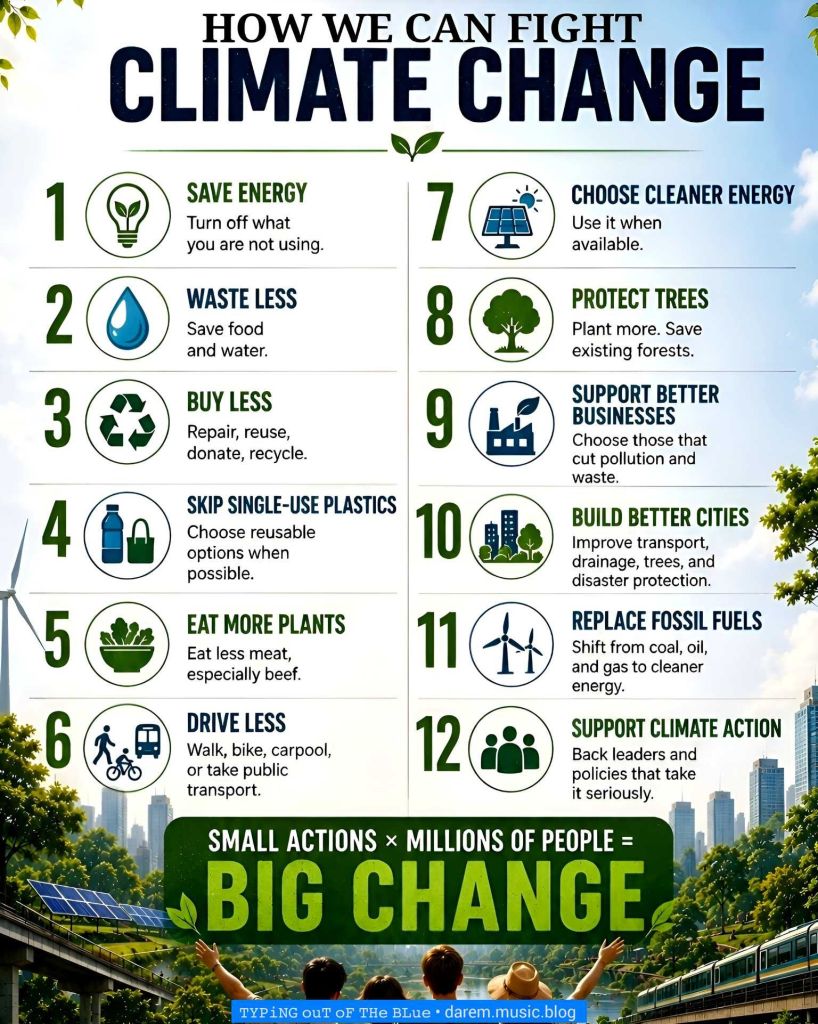
- Turn off lights, appliances, and air-conditioning when we do not need them.
- Waste less food and water.
- Buy only what we need. Repair, reuse, donate, or recycle instead of throwing things away.
- Avoid single-use plastics when practical.
- Eat more plant-based food when possible. Producing some meat, especially beef, creates more greenhouse gases.
- Walk, bike, carpool, or take public transportation when possible.
- Choose cleaner energy when available.
- Plant trees and protect existing forests.
- Support businesses that reduce pollution and waste.
- Communities and cities should improve public transportation, drainage, tree cover, and protection from floods, fires, and extreme heat.
- Governments should keep reducing the use of coal, oil, and gas by replacing them with cleaner energy, with the goal of eventually leaving fossil fuels behind completely.
- Support leaders and policies that take climate change seriously.
We do not have to do everything perfectly. But more of us need to do what we can.
Small actions matter when millions of people do them. If too few of us act, the problem gets bigger, and so will what we need to do about it.
Different countries are hearing different sounds of climate change, but they are part of the same dark song.
The longer we wait to act, the harder it becomes to change the ending.
⌨ ᴛʸᵖⁱⁿᵍ ᴏᵘᵗ ᵒᶠ ᵗʰᵉ ʙˡᵘᵉ ᵈᵃʳᵉᵐ ᵐᵘˢⁱᶜ ᵇˡᵒᵍ