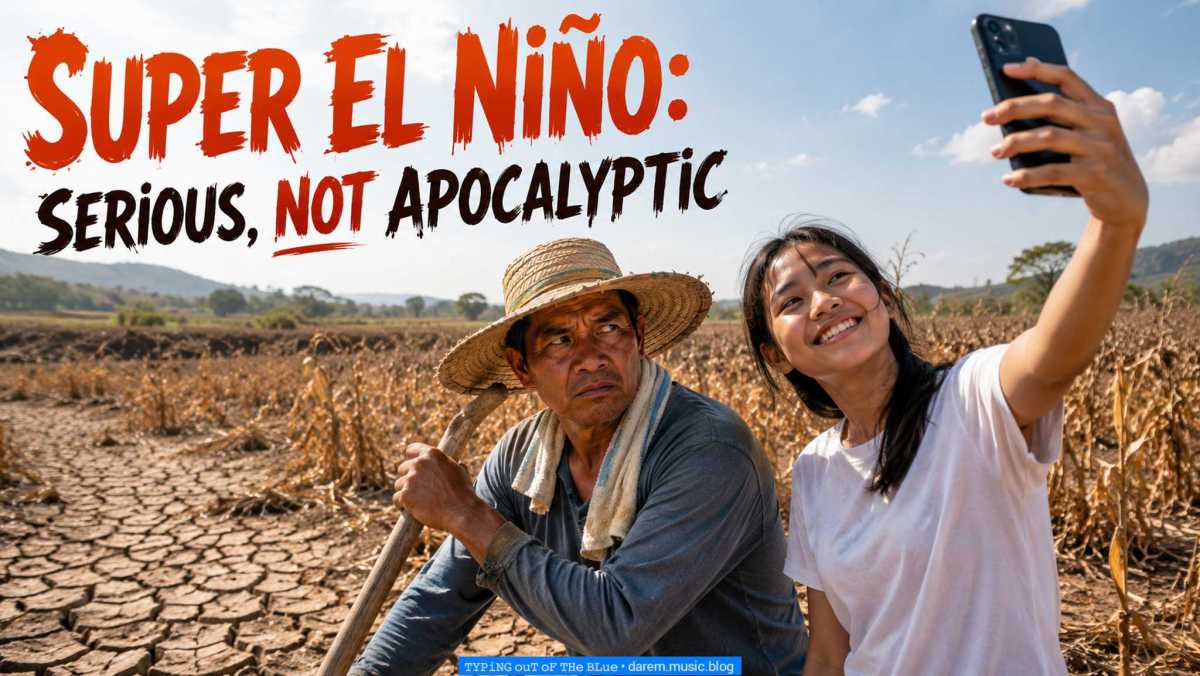
Super El Niño: Serious, Not Apocalyptic

Prepare for the heat. Ignore the hype.

Social media is full of warnings about a possible Super El Niño. Some posts make it sound like the end of the world is just around the corner. The reality is less dramatic than that, but still worth taking seriously.

If a very strong El Niño develops, the most likely effects will be things people can actually see and feel in everyday life:

🌡️ A long period of unusually hot weather.
💧 Water shortages in some dams and water districts.
🌾 Lower yields of rice, corn, and other crops.
🔥 Higher risk of grass fires and forest fires in dry areas.
⚡ Increased demand for electricity as more people use fans and air conditioners.
💰 Higher prices for some food products.

These are real concerns. They can affect communities, livelihoods, and household budgets.

But a Super El Niño is not an asteroid heading toward Earth. It is not a global extinction event. It is not the end of civilization.

Some of the strongest El Niño events in modern history have already happened. They brought droughts, floods, crop losses, and economic challenges. Yet life went on.

A simple comparison:

🎵 Normal El Niño = a warm summer song.
🎵 Strong El Niño = the volume turned way up.
🎵 Super El Niño = the speakers shaking the windows.
☄️ An extinction-level event = a completely different concert.

So if a Super El Niño does develop, the most likely challenge is not survival. It is dealing with water shortages, pressure on agriculture, public health concerns, and rising costs over many months.

That is serious. But it is very different from the doomsday scenarios often seen on social media.

That is why preparation is more useful than panic.

💧 Use water wisely. Fix leaks and avoid unnecessary waste.
🌡️ Prepare for hotter days by staying hydrated and avoiding prolonged exposure to extreme heat.
⚡ Expect higher electricity consumption as fans and air conditioners work harder.
🥫 Keep a reasonable supply of essentials, not because society is collapsing, but because droughts and supply disruptions can sometimes affect prices and availability.
🌱 If you grow plants, adjust early. Use water efficiently and choose heat-tolerant varieties when possible.
💰 Keep an eye on your budget, as food prices can rise when agricultural production suffers.

A Super El Niño is not usually defined by a single catastrophic event. Its effects are more often felt gradually through heat, drought, pressure on water supplies, and rising costs.

The world is not ending. It may simply become hotter, drier, and more expensive for a while. 🌦️🙂

⌨ ᴛʸᵖⁱⁿᵍ ᴏᵘᵗ ᵒᶠ ᵗʰᵉ ʙˡᵘᵉ ᵈᵃʳᵉᵐ ᵐᵘˢⁱᶜ ᵇˡᵒᵍ

Sky-Low • Darem Placer

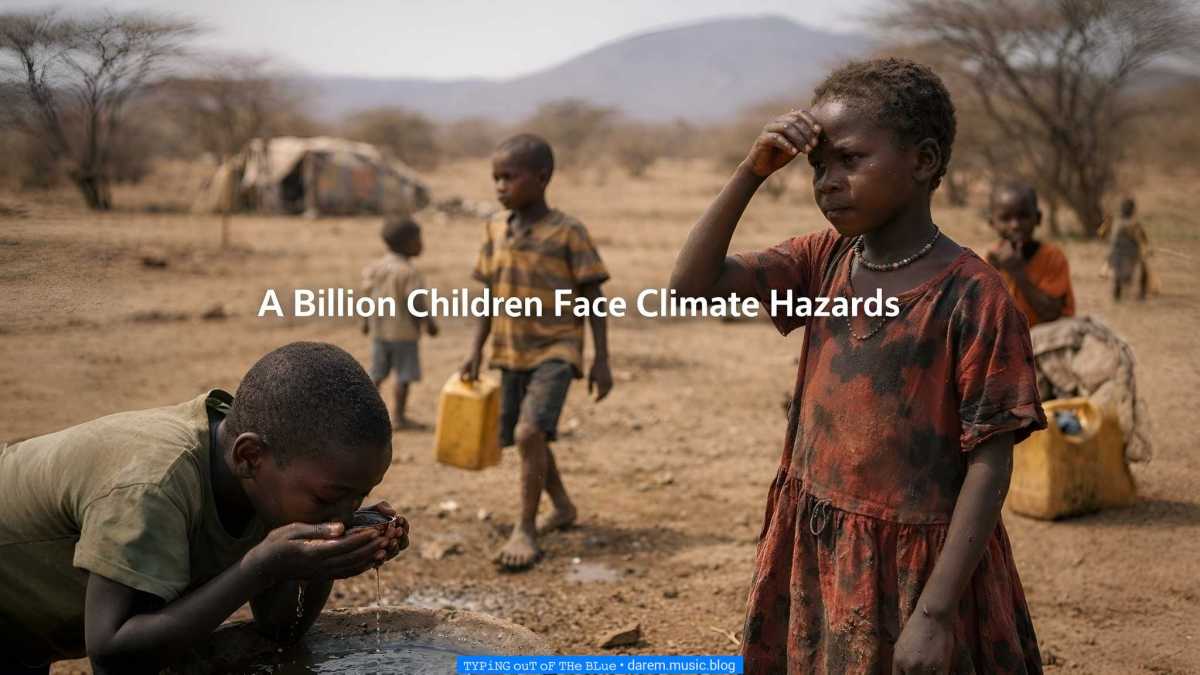
A Billion Children Face Climate Hazards

Climate-related hazards are becoming a growing challenge for children worldwide.

A UNICEF report shows how different climate hazards are affecting children in many parts of the world.

Around 2.4 billion children live in the world today, and 1.1 billion are exposed to at least three climate hazards at the same time.

UNICEF studied eight major climate hazards:

• Coastal flooding
• River flooding
• Drought
• Tropical storms
• Heatwaves
• Extreme heat
• Wildfires
• Sandstorms

The most common triple threat is:

• Drought
• Extreme heat (above 35°C)
• Heatwaves

This combination affects about 296 million children worldwide.

UNICEF says children are among the most vulnerable to climate change because their bodies and development are still in critical stages.

These hazards can lead to:

• Hunger and food insecurity
• Water shortages
• Health problems
• Interrupted education
• Displacement of families
• Increased poverty

Countries with the largest numbers of children facing this triple threat:

• Nigeria: 74 million
• Pakistan: 34 million
• India: 32 million

Climate hazards affect children on a large scale:

• 2.3 billion children are exposed to at least one climate hazard.
• 2 billion are exposed to at least two hazards.
• 364 million face at least four hazards.

About 123,000 children are exposed to seven or more climate hazards, with Myanmar accounting for around 46,000 of them.

The number of children exposed to three or more climate risks has risen sharply over the last 20 years.

The worst-affected regions are:

• Sub-Saharan Africa
• The Sahel region
• Parts of South Asia

Chad, a country in Africa, is one of the hardest-hit nations, with more than 95% of children exposed to at least three climate hazards.

Small island nations face greater risks because of:

• Limited freshwater supplies
• Dependence on imported goods
• Few options for relocation after disasters

UNICEF is calling on governments to invest in:

• Protection against climate impacts
• Stronger schools and hospitals
• Water and sanitation systems
• Disaster preparedness
• Emissions reduction efforts

As ordinary citizens, we can:

• Conserve water whenever possible
• Reduce energy consumption at home
• Minimize waste and recycle properly
• Plant and care for trees and other vegetation
• Support local environmental efforts in our communities
• Teach children the importance of caring for the environment

Every child deserves the chance to grow, learn, and dream in a safe environment. The choices we make today can help preserve the simple sounds of childhood, from laughter in schoolyards to songs carried by future generations.

Source: UN News, June 15, 2026.

⌨ ᴛʸᵖⁱⁿᵍ ᴏᵘᵗ ᵒᶠ ᵗʰᵉ ʙˡᵘᵉ ᵈᵃʳᵉᵐ ᵐᵘˢⁱᶜ ᵇˡᵒᵍ
A Peace of War • Darem Placer • Full album. Press play.