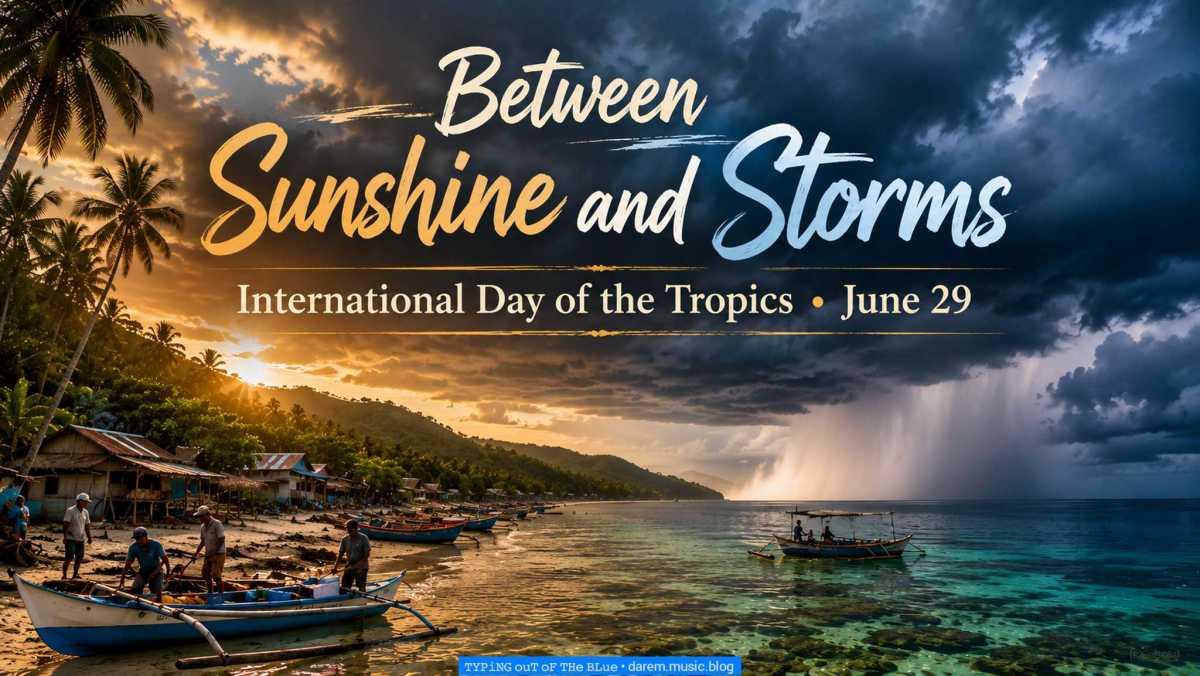
Between Sunshine and Storms

From birds at dawn to storms at sea, life in the tropics moves to its own rhythm.

If you live in the Philippines, you live in the tropics. This is why coconut trees seem to grow everywhere and why weather updates sometimes become the most watched show of the week.

The tropics are warm, alive, and full of rhythm. Birds sing before sunrise. Frogs hold concerts after rain. Crickets take the night shift. Nature here rarely stays quiet for long.

But living in the tropics also comes with concerns.

Many communities face stronger typhoons and hotter summers. Coral reefs come under increasing pressure. Forests shrink. Coastal communities worry about rising seas while farmers keep one eye on the sky and another on the calendar.

The tricky part is that there is no magic trick for any of this.

We cannot ask storms to change course. We cannot press Ctrl+Z on a forest once it is gone. Some problems are simply larger than any one person.

Still, that does not make ordinary people powerless.

• Keep waterways free of trash to help reduce flooding.

• Protect trees and mangroves that serve as natural shields during storms.

• Support responsible farming and fishing to help keep tomorrow’s dinner from disappearing from today’s oceans.

• Reduce waste and avoid making environmental problems worse.

• Prepare for disasters instead of waiting for disasters to prepare us.

The tropics have their own rhythm. Learning to live with it may be one of the oldest lessons the tropics can teach us.

We may not be the conductors of the world’s orchestra, but the performance still needs our participation.

⌨ ᴛʸᵖⁱⁿᵍ ᴏᵘᵗ ᵒᶠ ᵗʰᵉ ʙˡᵘᵉ ᵈᵃʳᵉᵐ ᵐᵘˢⁱᶜ ᵇˡᵒᵍ

Darem Placer on Apple Music

The Forest Within You

The world’s richest forests may seem far away, but the choices we make every day can still leave a mark.

Rainforests are among the most biodiverse places on Earth. Beneath their green canopies lives an astonishing variety of plants, animals, insects, and microorganisms, all sharing the same space. They cover only a small portion of the planet, yet they support an enormous amount of life.

They also help regulate climate, store carbon, protect water sources, and influence weather patterns far beyond their borders. Whether we realize it or not, we all benefit from what happens in these forests.

We do not need to chain ourselves to a tree in the Amazon.

We can:

• Waste less paper. Print only when needed. Use both sides of a page.

• Choose products linked to sustainable forestry. Things like paper, furniture, and wood products can come from responsibly managed forests.

• Reduce food waste. More land gets cleared when demand for food keeps rising unnecessarily.

• Plant native trees. One tree will not save a rainforest, but millions of people planting millions of trees adds up.

• Support organizations protecting forests. Donations, volunteering, or simply sharing credible information can help.

• Vote and advocate. Policies often have a bigger impact than individual actions.

• Learn where products come from. Deforestation is often driven by demand for timber, cattle, palm oil, soy, and minerals.

We will not stop deforestation on our own. The biggest drivers are governments, corporations, illegal logging operations, mining, and large-scale agriculture. Our role is to create enough public demand and pressure that those larger players change course.

A raindrop cannot make a rainforest. Yet a rainforest has never existed without raindrops.

Like a song, the final sound is made of countless individual notes. No single note carries the whole melody. Together, they do.

⌨ ᴛʸᵖⁱⁿᵍ ᴏᵘᵗ ᵒᶠ ᵗʰᵉ ʙˡᵘᵉ ᵈᵃʳᵉᵐ ᵐᵘˢⁱᶜ ᵇˡᵒᵍ

👉 Download Sky-Low on Bandcamp

💿 Just type 0 as the price, if you want to download the album for free.

Sky-Low
“Sky-Low” is not just an album—it’s an awareness campaign about climate change and a challenge to protect our planet.