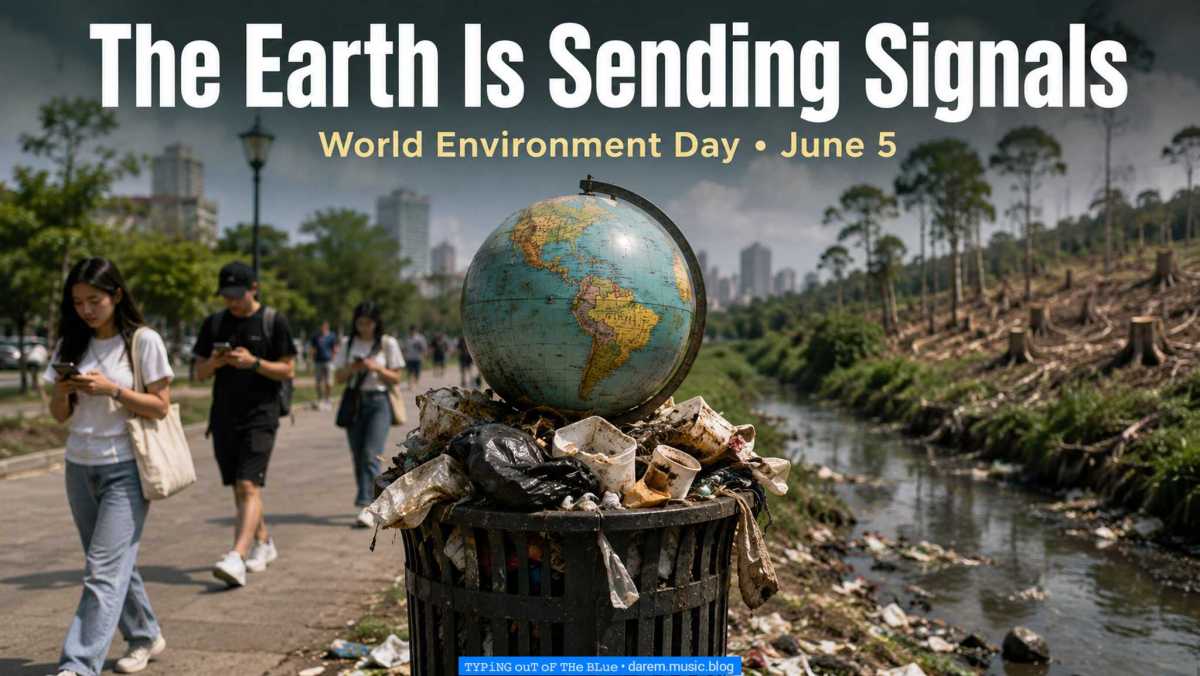
Most of us only see our trash until collection day.
After that, the story seems over. It’s gone. We no longer think about where it went.
One of the biggest environmental myths is that waste disappears once it’s out of sight.
A bag of trash may leave our hands, but it doesn’t leave the world. Whether it reaches a landfill, a recycling facility, a river, or the ocean depends on what happens next.
Wastewater follows the same pattern.
Once water disappears down a drain, it’s easy to stop thinking about it. Yet it still has somewhere to go. It may pass through treatment facilities, flow into rivers, or return to the environment in one form or another.
That’s why it’s worth paying attention to a few things:
• Plastic pollution. A plastic bottle or wrapper can remain in the environment for years and eventually reach waterways.
• Proper waste segregation. Separating biodegradable, recyclable, and residual waste helps reduce what ends up in landfills.
• Wastewater pollution. Water from homes, businesses, and industries can carry chemicals, oil, detergents, and bacteria.
• Drinking water protection. Polluted rivers and groundwater can affect the quality of the water we rely on every day.
• Flooding. Trash that blocks drains and canals can make heavy rains even more damaging.
• Public health. Poor waste management can attract pests and contribute to the spread of disease.
• Waste reduction. Reusable bags, bottles, and containers help reduce the amount of waste we generate.
• Water conservation. Using less water means less wastewater needs treatment before returning to the environment.
These may sound like small things.
Sometimes the biggest problem is not what we throw away, but how little thought we give it after it leaves our sight.
Every song is made of small notes. Remove enough of the right notes, and the melody falls apart. Keep adding the right ones, and something beautiful begins to take shape.
Communities work the same way.
Cleaner water and cleaner surroundings rarely come from one heroic act. They grow from ordinary people making better choices day after day.
What leaves our hands doesn’t leave the world.
⌨ ᴛʸᵖⁱⁿᵍ ᴏᵘᵗ ᵒᶠ ᵗʰᵉ ʙˡᵘᵉ ᵈᵃʳᵉᵐ ᵐᵘˢⁱᶜ ᵇˡᵒᵍ