Modern Life Came With a Cost

Take a closer look at the hidden environmental cost behind modern civilization.

The world now has more than 8 billion people, and according to a March 2026 study from Flinders University, Earth is already struggling to keep up.

The researchers say modern life became possible because of fossil fuels. Oil, gas, and coal helped power cities, transportation, factories, and large-scale food production. But the same things that helped civilization grow are also linked to pollution, climate damage, and environmental decline.

For a while, it worked.

But now the side effects are getting harder to ignore: hotter days, more pollution, rising food prices, water problems, forests disappearing, and seas getting emptier.

The study says humanity may have pushed the planet beyond what is safe long term. Not because people exist, but because modern life keeps demanding more and more from the same Earth every year.

More power. More land. More products. More buildings. More consumption.

The planet keeps giving. But nothing gives forever.

The study is not really telling people to stop having children. The bigger question is whether the current way civilization operates can keep growing forever without damaging the systems that keep life stable.

Many scientists say the problem is not just population, but also waste, overconsumption, pollution, and the constant demand for more.

A planet has limits. And sooner or later, those limits will start to show.

⌨ ᴛʸᵖⁱⁿᵍ ᴏᵘᵗ ᵒᶠ ᵗʰᵉ ʙˡᵘᵉ ᵈᵃʳᵉᵐ ᵐᵘˢⁱᶜ ᵇˡᵒᵍ
Sky-Low • Darem Placer
The Earth is struggling while we keep demanding more.

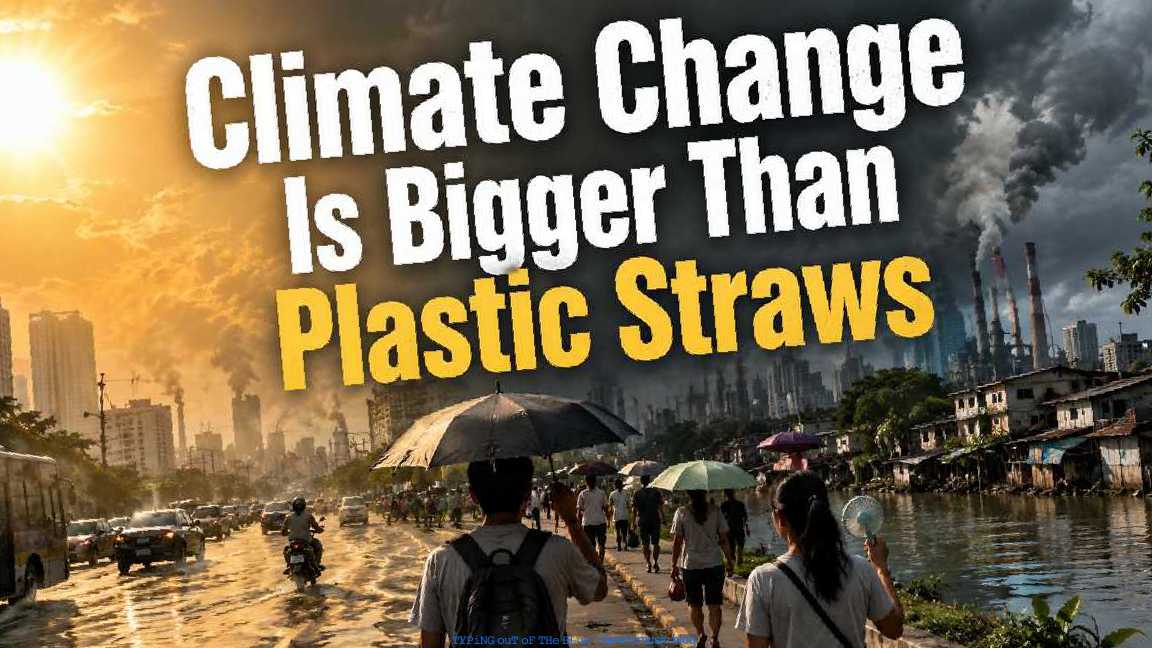
Climate Change Is Bigger Than Plastic Straws

Climate change is no longer a future problem. Most of us can already feel it in the heat, floods, and changing weather around us.

Climate change is not just about science terms, plastic straws, or online debates. Most of us can already feel it. The heat feels harsher. Floods come faster. Some places suffer drought while others drown in rain. Weather feels less predictable.

This is no longer just about “saving the future.” It is about dealing with the present.

But climate change is also misunderstood.

Many of us think solving it only depends on regular citizens using less plastic or turning off lights. Those things help, but ordinary people should not carry all the blame.

Big industries and poor systems create massive pollution too. Real change needs cleaner industries, better transport, smarter cities, stronger environmental laws, and leaders willing to think long term instead of chasing quick profit.

Still, small actions matter when millions of us do them together.

• waste less food
• buy things that last longer
• save electricity when possible
• plant and protect trees
• support cleaner public transport
• keep rivers and streets clean

Not for trends or online approval. Just because taking care of the place we live in should already be normal.

Climate action is not about becoming perfect. Nobody lives a completely pollution-free life. The goal is simply to move in a better direction.

And since climate change is already happening, we also need preparation. Cities need better drainage and flood control. Communities need more trees and shade. Homes need protection from extreme heat and stronger storms. Poor communities especially need support because they are often hit first and hardest.

Climate change is not only an environmental problem. It affects health, food, water, jobs, homes, and daily life itself.

But this is important: hope is not gone.

Human beings created many of these problems, but human beings can also repair them. Progress does not always begin with giant actions. Sometimes it starts with smaller choices repeated every day.

A cleaner street.
A planted tree.
Less waste.
A community that chooses care over neglect.

Small things can still shape the future.

⌨ ᴛʸᵖⁱⁿᵍ ᴏᵘᵗ ᵒᶠ ᵗʰᵉ ʙˡᵘᵉ ᵈᵃʳᵉᵐ ᵐᵘˢⁱᶜ ᵇˡᵒᵍ
Sky-Low • Darem Placer