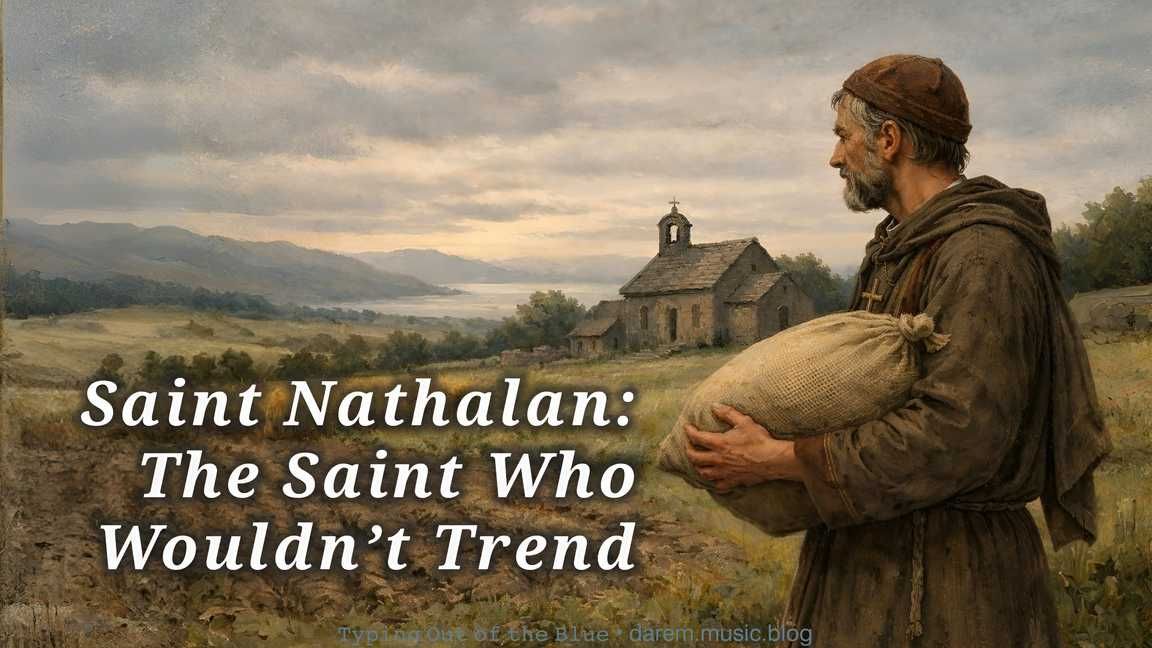
Saint Nathalan: The Saint Who Wouldn’t Trend

He lived without spectacle, fame, or explanation.

Nathalan lived in 8th-century Scotland. He was a bishop. He served his people. He lived upright. And that’s it.

No dramatic conversion. No martyrdom. No miracle scene worth retelling.

Which is exactly why almost no one writes about him.

Most saint stories survive because something happened. A turning point. A clash. A spectacle. Nathalan’s life had none of that. His holiness did not interrupt history. It blended into it.

And that makes him uncomfortable for our time.

Today, everything good is expected to be visible. If it is not posted, documented, or shared, it feels like it never happened. Even kindness feels incomplete without an audience. Nathalan fails that system completely. His goodness produced no content.

Yet people remembered him. Not because he was impressive, but because he was dependable. Not because he stood out, but because he never failed his role.

That is the color of his sainthood.

In the present time, Nathalan looks like the teacher no one thanks. The worker who keeps things running but never gets featured. The person who does the right thing so consistently that people stop noticing.

We rarely call those people saints. We barely notice them at all.

Holiness does not need a highlight reel. Saint Nathalan proves it.

If sainthood belonged only to the famous, the Church would be very small.

Saint Nathalan stands On the Edge of Silence. Nothing announced. Nothing recorded. Still holy. Even when no one is watching. Even when no one is writing about it.

Until now.

On the Edge of Silence • Darem Placer

Listen to Behind the Anhedonic Walls on Apple Music, Apple Music Classical, and YouTube Music.

Behind the Anhedonic Walls includes On the Edge of Silence

Learning the saints’ way—day by day.

⌨ ᴛʸᵖⁱⁿᵍ ᴏᵘᵗ ᵒᶠ ᵗʰᵉ ʙˡᵘᵉ ᵈᵃʳᵉᵐ ᵐᵘˢⁱᶜ ᵇˡᵒᵍ

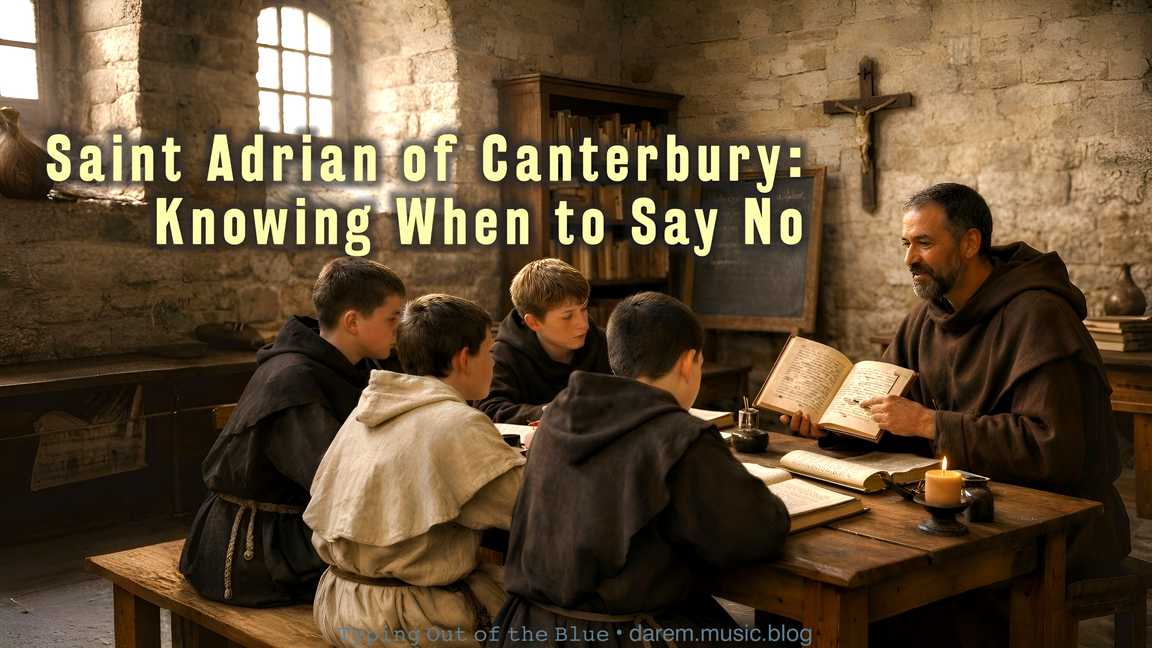
Saint Adrian of Canterbury: Knowing When to Say No

He shows how saying no, when done with discernment and faithfulness, can shape a life of holiness.

Adrian lived in the late 600s. He came from North Africa and later worked in Canterbury, England. He was a monk, a teacher, and later an abbot. His main work was education. He taught Scripture, language, poetry, and church music. He did this for many years, shaping how people learned and how the Church formed its leaders.

At one point, Adrian was offered a very high role in the Church. He was asked to become Archbishop of Canterbury. That position carried authority, public leadership, and long-term influence.

He refused the role.

The decision can be misunderstood. It can sound like avoiding responsibility or stepping away from leadership. But Adrian did not leave the mission. He identified someone he believed was more suited for the position. Then he stayed and worked under that leader. He chose the work he knew he could carry well.

Think of a student council today.

A student is encouraged to run for president. People say it is a strong move. Leadership experience. Future advantage. But the student knows another person is better suited to lead. He also knows that his own strength is in being secretary. Planning. Organizing. Supporting the whole group.

So he declines the top role. Not to escape work. Not because of fear. But because he understands where he is most effective. He accepts the supporting role and stays committed to it.

Saint Adrian did the same. He chose the right place in the mission and remained there for life. No pursuit of rank. No shifting roles. Just long faithfulness, carried through until the end.

That kind of faithfulness is rare. Truly saintly.

Learning the saints’ way—day by day.

⌨ ᴛʸᵖⁱⁿᵍ ᴏᵘᵗ ᵒᶠ ᵗʰᵉ ʙˡᵘᵉ ᵈᵃʳᵉᵐ ᵐᵘˢⁱᶜ ᵇˡᵒᵍ