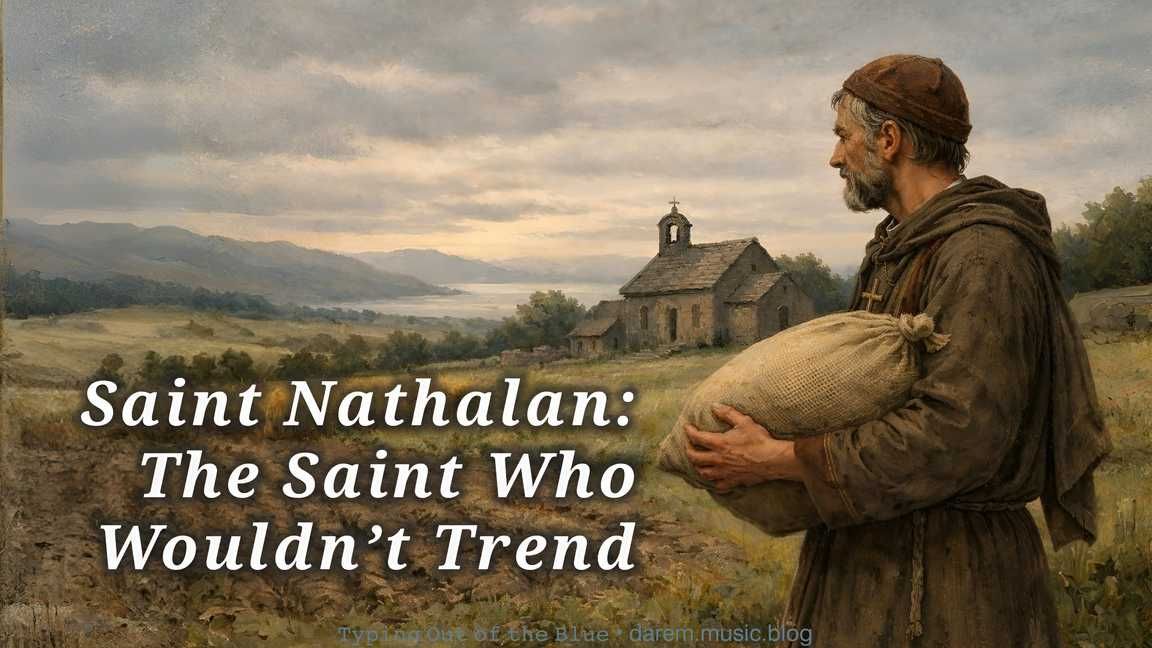
Saint Nathalan: The Saint Who Wouldn’t Trend

He lived without spectacle, fame, or explanation.

Nathalan lived in 8th-century Scotland. He was a bishop. He served his people. He lived upright. And that’s it.

No dramatic conversion. No martyrdom. No miracle scene worth retelling.

Which is exactly why almost no one writes about him.

Most saint stories survive because something happened. A turning point. A clash. A spectacle. Nathalan’s life had none of that. His holiness did not interrupt history. It blended into it.

And that makes him uncomfortable for our time.

Today, everything good is expected to be visible. If it is not posted, documented, or shared, it feels like it never happened. Even kindness feels incomplete without an audience. Nathalan fails that system completely. His goodness produced no content.

Yet people remembered him. Not because he was impressive, but because he was dependable. Not because he stood out, but because he never failed his role.

That is the color of his sainthood.

In the present time, Nathalan looks like the teacher no one thanks. The worker who keeps things running but never gets featured. The person who does the right thing so consistently that people stop noticing.

We rarely call those people saints. We barely notice them at all.

Holiness does not need a highlight reel. Saint Nathalan proves it.

If sainthood belonged only to the famous, the Church would be very small.

Saint Nathalan stands On the Edge of Silence. Nothing announced. Nothing recorded. Still holy. Even when no one is watching. Even when no one is writing about it.

Until now.

On the Edge of Silence • Darem Placer

Listen to Behind the Anhedonic Walls on Apple Music, Apple Music Classical, and YouTube Music.
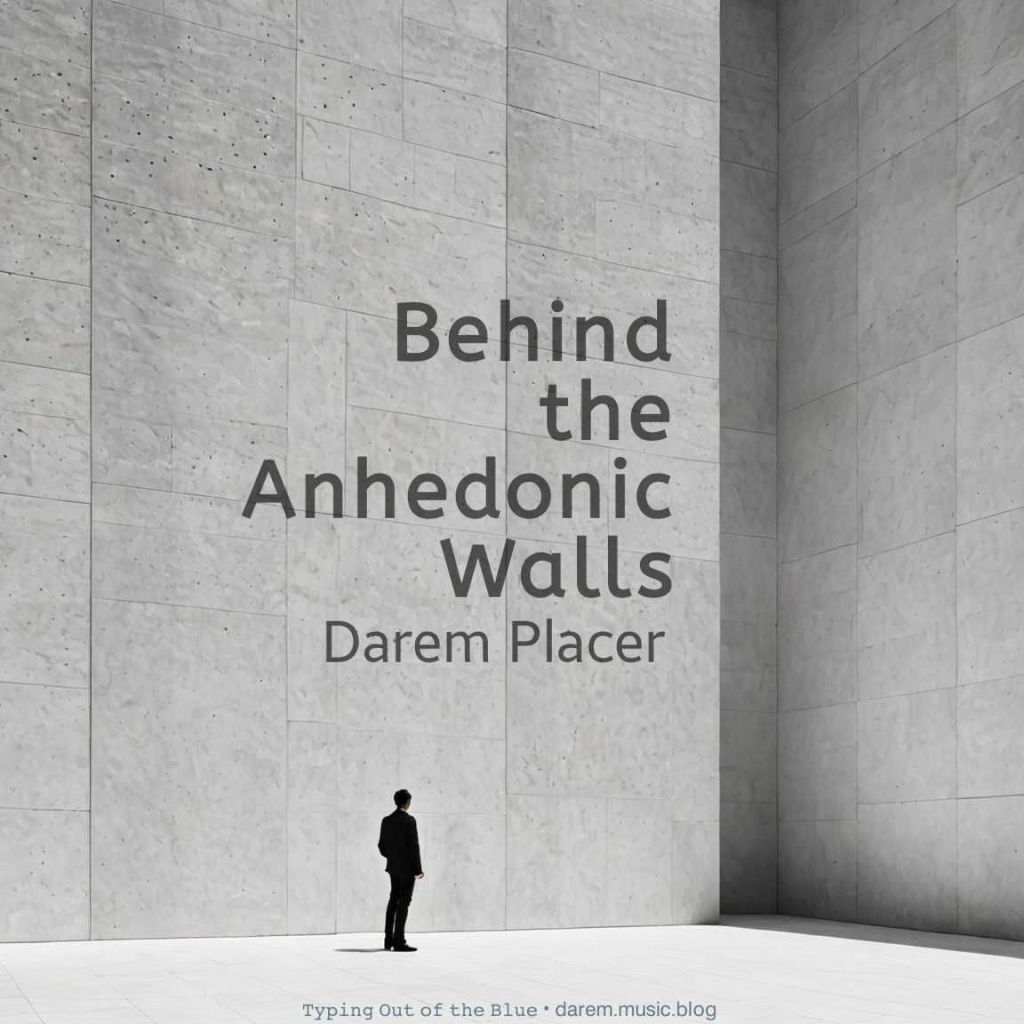
Behind the Anhedonic Walls includes On the Edge of Silence

Learning the saints’ way—day by day.

⌨ ᴛʸᵖⁱⁿᵍ ᴏᵘᵗ ᵒᶠ ᵗʰᵉ ʙˡᵘᵉ ᵈᵃʳᵉᵐ ᵐᵘˢⁱᶜ ᵇˡᵒᵍ

Saint Kuriakose Elias Chavara: Faith in Education and Family

A saint who lived faith through education, family life, and service in the world.

Born in Kerala, India in 1805, Kuriakose Elias Chavara was a priest, educator, writer, and reformer. He believed that faith should touch real life—education, family, and human dignity. Not only the altar. Not only prayers. But also the classroom, the home, and the conscience.

One of his most radical ideas for his time was education for all, especially the poor. He encouraged schools to be attached to churches so everyone could have access to learning. Today it sounds normal. Back then, it changed everything. For him, ignorance kept people trapped, while knowledge set people free.

He founded the Carmelites of Mary Immaculate (CMI), the first indigenous Catholic religious congregation for men in India, and also helped establish a women’s congregation. His vision was not an imported faith, but one rooted in local culture while remaining faithful to the Gospel.

He also cared deeply about family prayer. He believed that if the altar was peaceful but the home was in chaos, something was missing. Because of this, he promoted prayer inside homes, not only inside churches.

His holiness is marked by consistency, courage, and genuine concern for others.

Saint Chavara shows what holiness looks like when it is lived in the world itself—repairing what is broken—one school, one family, one silent act at a time.

⌨ ᴛʸᵖⁱⁿᵍ ᴏᵘᵗ ᵒᶠ ᵗʰᵉ ʙˡᵘᵉ ᵈᵃʳᵉᵐ ᵐᵘˢⁱᶜ ᵇˡᵒᵍ

Digital Albums by Darem Placer on Bandcamp
Listen. Buy. Download.