
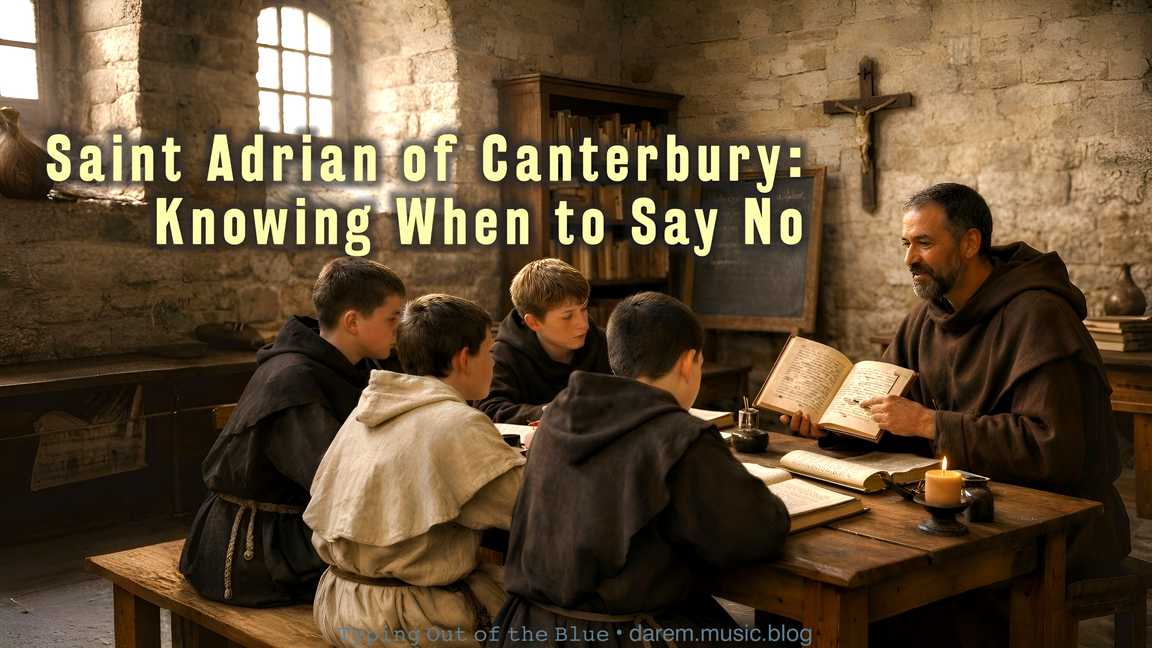
Adrian lived in the late 600s. He came from North Africa and later worked in Canterbury, England. He was a monk, a teacher, and later an abbot. His main work was education. He taught Scripture, language, poetry, and church music. He did this for many years, shaping how people learned and how the Church formed its leaders.
At one point, Adrian was offered a very high role in the Church. He was asked to become Archbishop of Canterbury. That position carried authority, public leadership, and long-term influence.
He refused the role.
The decision can be misunderstood. It can sound like avoiding responsibility or stepping away from leadership. But Adrian did not leave the mission. He identified someone he believed was more suited for the position. Then he stayed and worked under that leader. He chose the work he knew he could carry well.
Think of a student council today.
A student is encouraged to run for president. People say it is a strong move. Leadership experience. Future advantage. But the student knows another person is better suited to lead. He also knows that his own strength is in being secretary. Planning. Organizing. Supporting the whole group.
So he declines the top role. Not to escape work. Not because of fear. But because he understands where he is most effective. He accepts the supporting role and stays committed to it.
Saint Adrian did the same. He chose the right place in the mission and remained there for life. No pursuit of rank. No shifting roles. Just long faithfulness, carried through until the end.
That kind of faithfulness is rare. Truly saintly.
Learning the saints’ way—day by day.
⌨ ᴛʸᵖⁱⁿᵍ ᴏᵘᵗ ᵒᶠ ᵗʰᵉ ʙˡᵘᵉ ᵈᵃʳᵉᵐ ᵐᵘˢⁱᶜ ᵇˡᵒᵍ
