The Prayer in Seven Movements

A familiar prayer reveals a rhythm woven through its words.

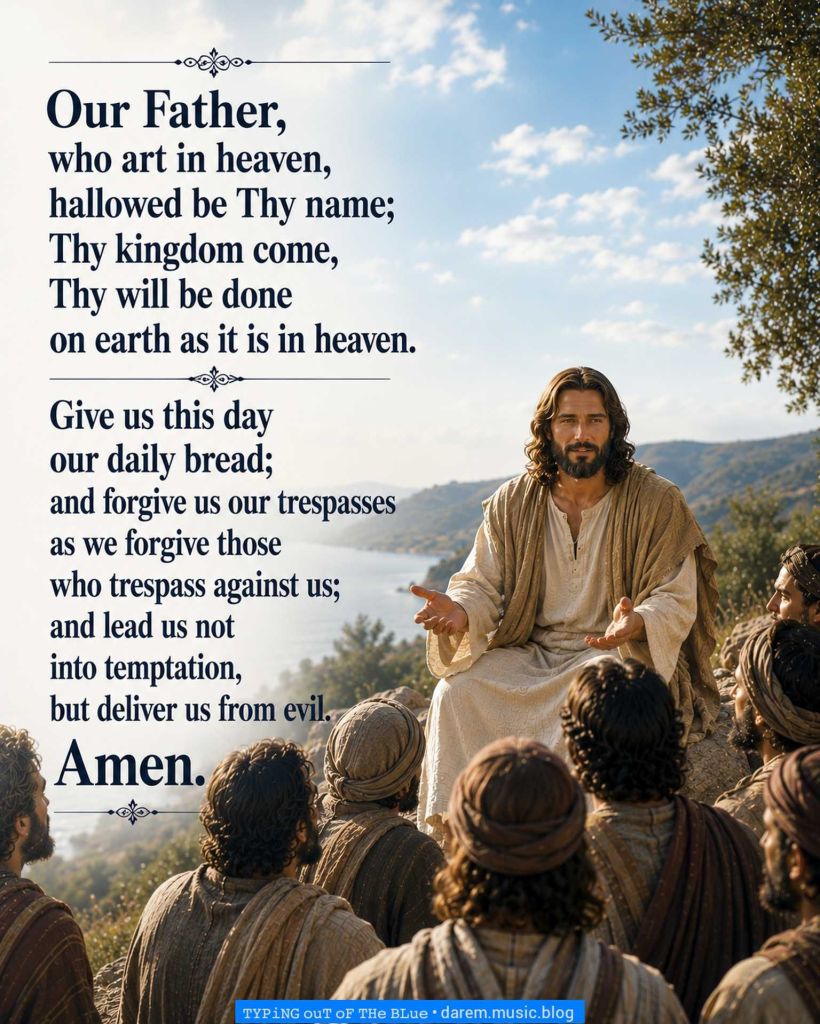
Most people remember the Lord’s Prayer, the prayer Jesus taught us, as a single prayer. It is easy to miss that after “Our Father” come seven distinct petitions, arranged with remarkable order.

The first three look entirely toward God:

1. Hallowed be Thy name.
2. Thy Kingdom come.
3. Thy will be done.

Only after these do the petitions turn toward us:

4. Give us this day our daily bread.
5. Forgive us our trespasses.
6. Lead us not into temptation.
7. Deliver us from evil.

The structure itself says something. Before bread comes God’s Kingdom. Before forgiveness comes God’s will. Before our worries, God’s name.

Saint Thomas Aquinas and Saint Augustine saw in the first petitions the purpose of human life itself: to glorify God and to share in His Kingdom. The remaining petitions place before God our needs for sustenance, mercy, strength, and protection from evil.

Its lasting power lies in its movement from eternity to everyday life, from heaven to the ordinary concerns of human life.

There is a rhythm to it: God first, then us. Heaven first, then earth.
⌨ ᴛʸᵖⁱⁿᵍ ᴏᵘᵗ ᵒᶠ ᵗʰᵉ ʙˡᵘᵉ ᵈᵃʳᵉᵐ ᵐᵘˢⁱᶜ ᵇˡᵒᵍ
Praying Without Words • Darem Placer • Full album. Press play.

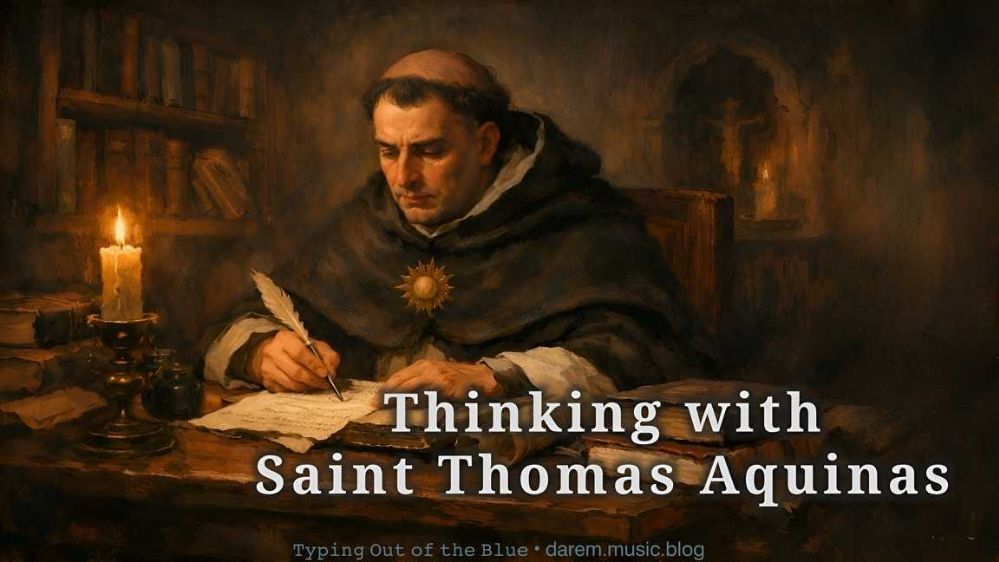
Thinking with Saint Thomas Aquinas

A quiet thinker who showed how faith and reason can move forward together.

Thomas Aquinas was a quiet giant of Christian thought, known for precision and depth.

He was born in Italy in 1225 to a noble family, but he chose the Dominican life. Study, prayer, teaching. His life was directed toward truth. Slowly. Patiently. With care.

His bold move for his time was taking reason seriously. For Thomas, faith and reason were not enemies. They worked together. He used Aristotle’s philosophy alongside Christian belief, and the connection made sense. Clear logic. Grounded faith.

His most famous work, Summa Theologica, is massive but calm. Question by question. Objection by objection. Nothing rushed. It reads like a long conversation that takes its time. Even today, scholars open it as a reference that still holds, and a PDF copy (35 MB download) is linked here for those who want to read it directly. Translated by Fathers of the English Dominican Province.

He was called “the Dumb Ox” when he was young because he was quiet. His teacher replied, “This ox will bellow so loud that the whole world will hear.” He was right.

In a noisy world full of quick opinions, Saint Thomas Aquinas stands for clear thinking, deep belief, and humility. Not everything true needs to be loud.

⌨ ᴛʸᵖⁱⁿᵍ ᴏᵘᵗ ᵒᶠ ᵗʰᵉ ʙˡᵘᵉ ᵈᵃʳᵉᵐ ᵐᵘˢⁱᶜ ᵇˡᵒᵍ

Digital Albums by Darem Placer on Bandcamp
Listen. Support. Buy. Download.