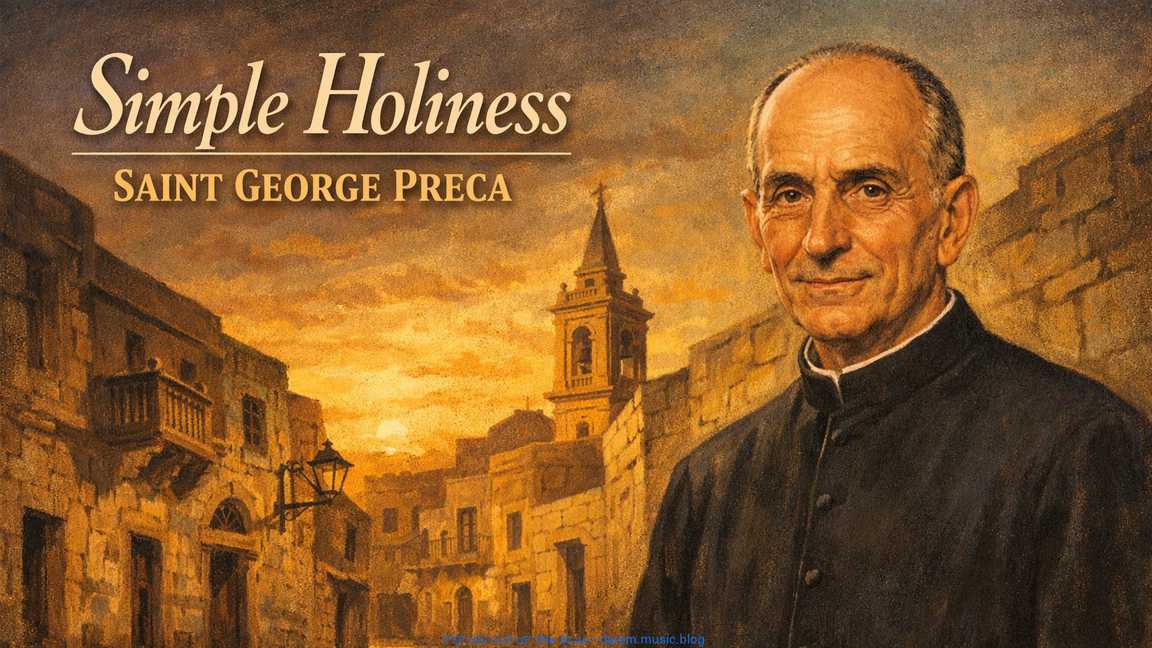
Simple Holiness

A quiet priest from Malta helped generations rediscover the Gospel through humility, simplicity, and everyday faith.

In the early 1900s, as modern life continued to grow through machines, radio, cinema, and new ideas, Saint George Preca quietly focused on something older and deeper: teaching ordinary people how to truly live the Gospel.

Born in Malta in 1880, Father George believed faith was not only for scholars or priests. Everyone could live it. Everyone could share it.

That belief led him to found the Society of Christian Doctrine, where laypeople were trained to teach the faith. His ideas were ahead of their time and helped shape Catholic life in Malta for generations.

He also deeply loved the Rosary. In 1957, he wrote five “Mysteries of Light” for his followers. Decades later, Catholics noticed how closely they resembled the Luminous Mysteries introduced by Pope John Paul II in 2002.

People respected Father George because his life felt real. He lived simply, stayed humble, and remained peaceful even during difficult moments. Many people in Malta already considered him a saint while he was still alive because they saw goodness, sincerity, and faith in the way he treated others every day.

The Church later recognized miracles connected to prayers asking for his intercession, including the healing of a detached retina and the recovery of a child with severe liver disease.

In 2007, Pope Benedict XVI canonized him as the first Maltese saint.

Saint George Preca’s story still feels fresh today because he showed that quiet faith, lived sincerely every day, can still change people’s lives.

Let’s keep learning the saints’ way—day by day.

⌨ ᴛʸᵖⁱⁿᵍ ᴏᵘᵗ ᵒᶠ ᵗʰᵉ ʙˡᵘᵉ ᵈᵃʳᵉᵐ ᵐᵘˢⁱᶜ ᵇˡᵒᵍ

Acoustic Thinking • Darem Placer

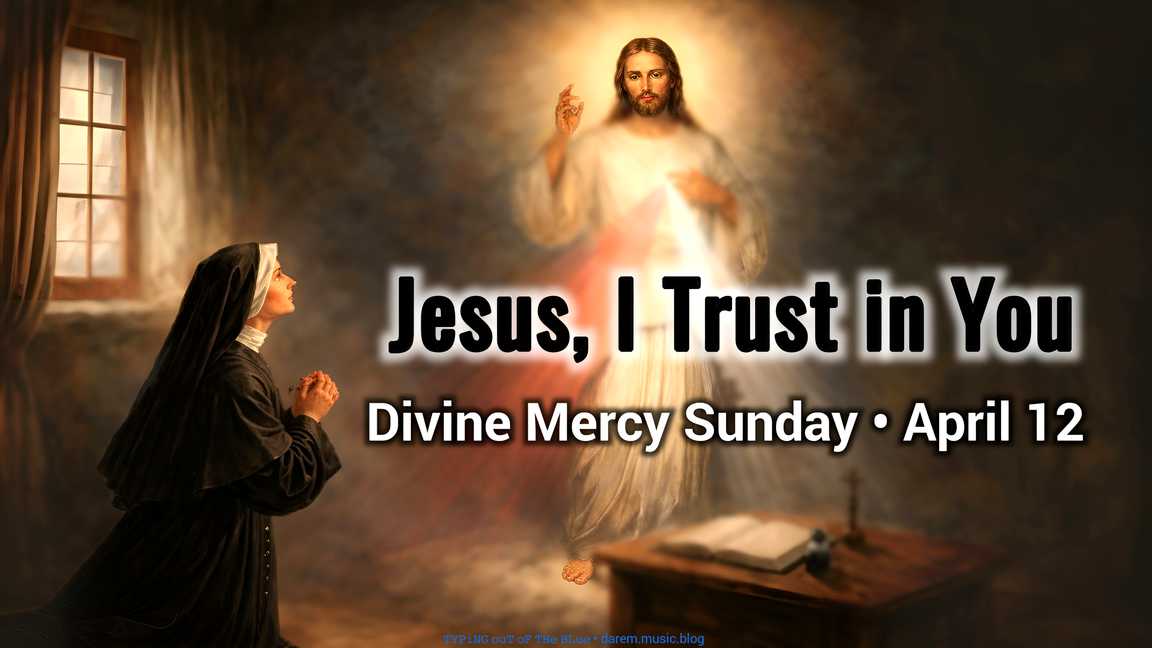
Jesus, I Trust in You

One vision in 1931 led to a feast for the whole Church—still centered on one thing: trust.

Divine Mercy Sunday • April 12

In 1931, Saint Faustina Kowalska, a Polish nun, reported a vision of Jesus. What she saw became the now-familiar image of Divine Mercy—Jesus with two rays flowing from His heart, one red, one pale. Along with the image came a simple message: trust in Him, and receive His mercy.

Faustina wrote these experiences in her diary throughout the 1930s. From there, the devotion slowly took shape. The Chaplet of Divine Mercy, the phrase “Jesus, I trust in You,” and the request for a special feast day all came from those entries.

After her death in 1938, the devotion spread, but not smoothly. Translation issues caused confusion, and for a time, the Church placed restrictions on it. The message was there, but it needed clarity.

That clarity came decades later. In 1978, Pope John Paul II became pope. Being Polish, he was already familiar with Faustina’s writings. Over time, he helped re-examine and affirm the devotion.

In 1993, Faustina was beatified. Then in 2000, she was canonized as a saint. On that same day, the Church officially established Divine Mercy Sunday for the whole world, to be celebrated on the Second Sunday of Easter.

Years later, in 2005, Pope John Paul II passed away on the vigil of Divine Mercy Sunday.

Today, it remains where it was placed—on the Second Sunday of Easter—calling people back to trust and to mercy.

Jesus, we trust in You.

⌨ ᴛʸᵖⁱⁿᵍ ᴏᵘᵗ ᵒᶠ ᵗʰᵉ ʙˡᵘᵉ ᵈᵃʳᵉᵐ ᵐᵘˢⁱᶜ ᵇˡᵒᵍ
Saint • Darem Placer