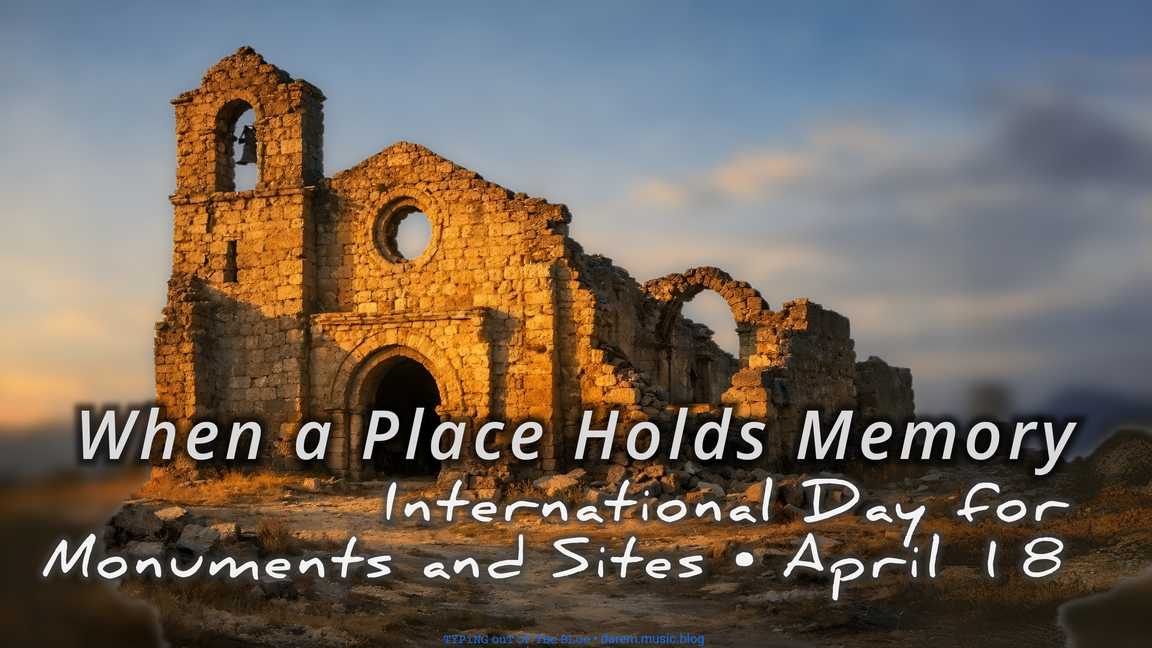
When a Place Holds Memory

Some places look ordinary, but they hold stories we cannot rebuild once they are gone.

International Day for Monuments and Sites • April 18

Some places are easy to walk past. Old walls, quiet ruins, a church that looks like it has seen too much time. We pass them like they are just part of the background.

But they are not.

Monuments and historic sites hold something that cannot be rebuilt once lost. They carry memory. Not just events, but the lives, choices, and faith of people who stood there long before us.

A house where people once gathered in secret. A church where generations prayed. A street that witnessed both struggle and hope.

These are not just locations. They are part of a living story.

Many of these places are not just aging. They are at risk. Conflict, disasters, and neglect can erase them faster than time ever could.

And when that happens, we do not just lose structures. We lose memory.

Today, we are used to fast changes. New buildings replace old ones. Modern spaces take over what came before. Sometimes, that is necessary.

But not everything old should be replaced.

Some things should be kept and protected. Because once they are gone, there is nothing to return to.

We do not need to be historians to care. We just need to see these places differently.

Not as leftovers from the past, but as quiet witnesses that still have something to say.

⌨ ᴛʸᵖⁱⁿᵍ ᴏᵘᵗ ᵒᶠ ᵗʰᵉ ʙˡᵘᵉ ᵈᵃʳᵉᵐ ᵐᵘˢⁱᶜ ᵇˡᵒᵍ

Behind the Anhedonic Walls•Darem Placer

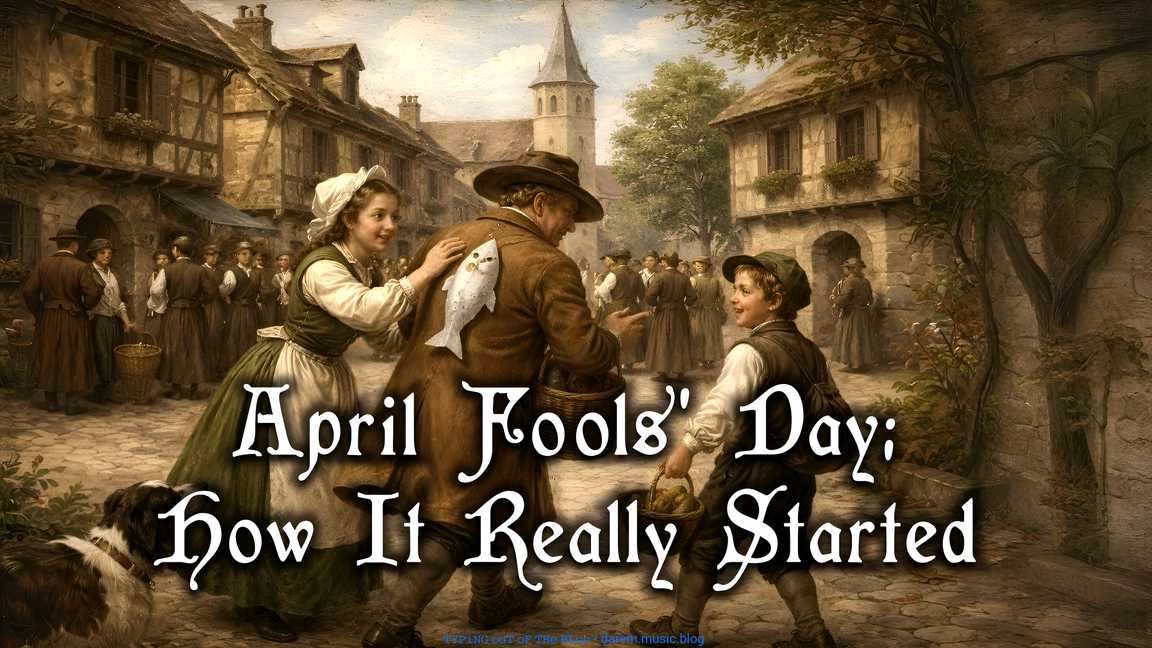
April Fools’ Day: How It Really Started

April Fools’ Day did not begin in one clear moment. But its strange path through history makes the tradition more interesting.

Every April 1, people expect jokes, pranks, and small tricks. Some laugh. Some get caught. Some pretend they saw it coming.

But where did this even begin?

There’s no single clear origin. No exact moment where someone decided to create a day for pranks. It formed slowly across places and years until it became what we know today.

One of the strongest explanations goes back to Europe in the late 1500s. In 1582, France adopted the Gregorian calendar, moving New Year to January 1. Before that, many parts of Europe celebrated the New Year around late March, ending on April 1.

Not everyone adjusted right away. Some continued celebrating in April. Others began to tease them, calling them “fools,” and playing small tricks on them for being out of sync.

By the 1600s, still in France, this had already led to playful traditions. One became known as “Poisson d’Avril,” or April Fish. People would secretly place paper fish on someone’s back. If you didn’t notice, you were the easy catch.

There’s also a simpler explanation. Spring itself feels unpredictable. The weather shifts without warning—bright in the morning, rain by afternoon, warm then suddenly cold. Some believe the day reflects that same pattern.

By the 1700s, pranks were already being recorded in England and Scotland. People were sent on fake errands or given impossible tasks, just for the joke. The tradition kept evolving.

In 1957, the BBC aired a segment showing people harvesting spaghetti from trees. Many viewers believed it.

That moment proved something simple. April Fools’ Day works because people trust what they see and hear.

And maybe that’s the real point. It’s not about making people look stupid. It’s about breaking the habit of taking everything too seriously.

For one day, things are allowed to be a little off. A little unexpected. A little lighter.

And if you get fooled? It just means, for a moment, you believed something good enough to be true.

⌨ ᴛʸᵖⁱⁿᵍ ᴏᵘᵗ ᵒᶠ ᵗʰᵉ ʙˡᵘᵉ ᵈᵃʳᵉᵐ ᵐᵘˢⁱᶜ ᵇˡᵒᵍ
There Was a Time • Darem Placer