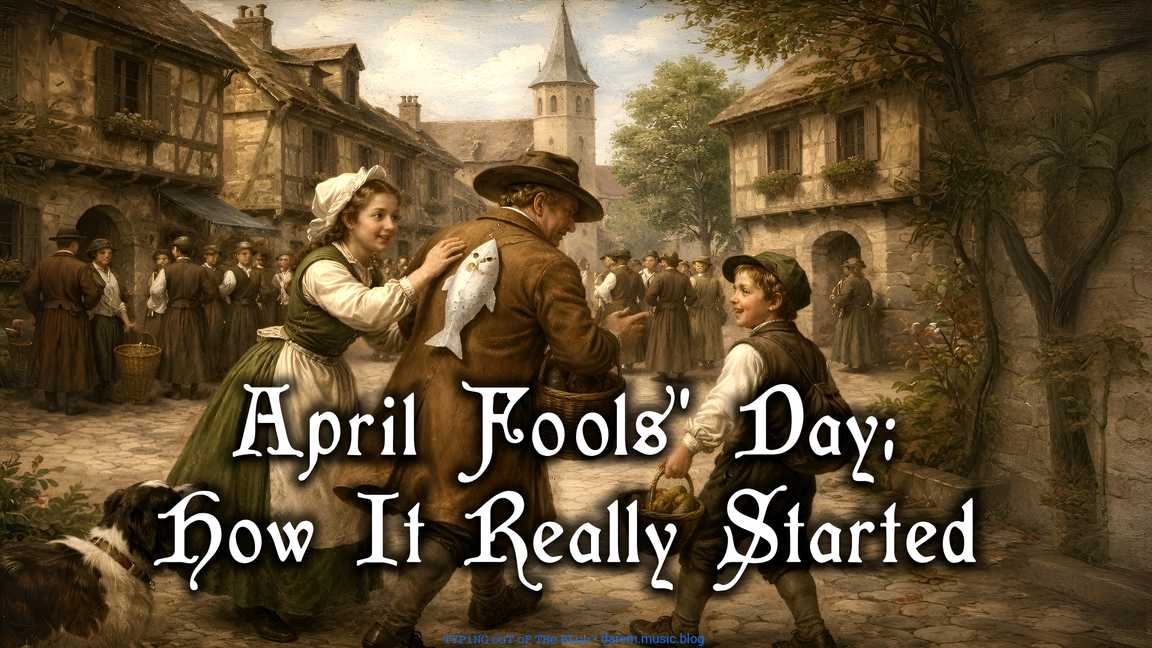
April Fools’ Day: How It Really Started

April Fools’ Day did not begin in one clear moment. But its strange path through history makes the tradition more interesting.

Every April 1, people expect jokes, pranks, and small tricks. Some laugh. Some get caught. Some pretend they saw it coming.

But where did this even begin?

There’s no single clear origin. No exact moment where someone decided to create a day for pranks. It formed slowly across places and years until it became what we know today.

One of the strongest explanations goes back to Europe in the late 1500s. In 1582, France adopted the Gregorian calendar, moving New Year to January 1. Before that, many parts of Europe celebrated the New Year around late March, ending on April 1.

Not everyone adjusted right away. Some continued celebrating in April. Others began to tease them, calling them “fools,” and playing small tricks on them for being out of sync.

By the 1600s, still in France, this had already led to playful traditions. One became known as “Poisson d’Avril,” or April Fish. People would secretly place paper fish on someone’s back. If you didn’t notice, you were the easy catch.

There’s also a simpler explanation. Spring itself feels unpredictable. The weather shifts without warning—bright in the morning, rain by afternoon, warm then suddenly cold. Some believe the day reflects that same pattern.

By the 1700s, pranks were already being recorded in England and Scotland. People were sent on fake errands or given impossible tasks, just for the joke. The tradition kept evolving.

In 1957, the BBC aired a segment showing people harvesting spaghetti from trees. Many viewers believed it.

That moment proved something simple. April Fools’ Day works because people trust what they see and hear.

And maybe that’s the real point. It’s not about making people look stupid. It’s about breaking the habit of taking everything too seriously.

For one day, things are allowed to be a little off. A little unexpected. A little lighter.

And if you get fooled? It just means, for a moment, you believed something good enough to be true.

⌨ ᴛʸᵖⁱⁿᵍ ᴏᵘᵗ ᵒᶠ ᵗʰᵉ ʙˡᵘᵉ ᵈᵃʳᵉᵐ ᵐᵘˢⁱᶜ ᵇˡᵒᵍ

There Was a Time • Darem Placer

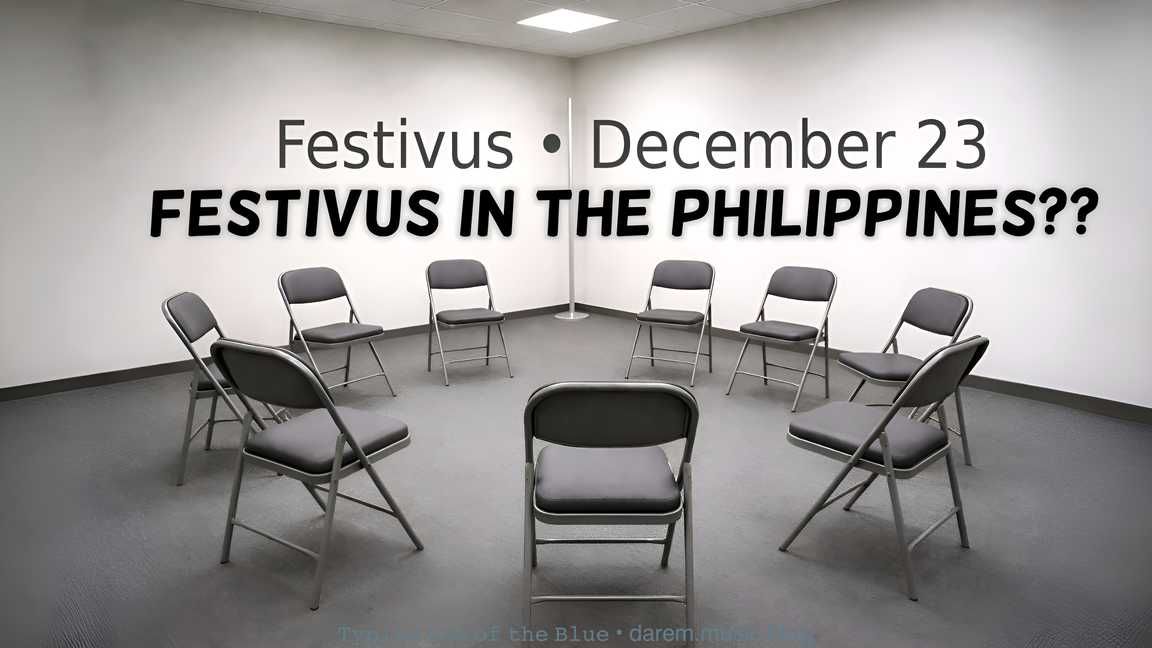
Festivus in the Philippines??

Why public honesty doesn’t work the same in the Philippines.

In the United States, there is an unofficial occasion called Festivus. It became known through the TV show Seinfeld, but the idea behind it exists beyond television comedy.

Festivus is observed on December 23. There are no gifts, no decorations, and no pressure to be cheerful. Instead, it centers on something unusual called the Airing of Grievances, where people openly say how others disappointed them during the year.

For Filipinos trying to visualize it, Festivus is often compared to an open forum—but the comparison only works on the surface.

In the Philippines, open forums usually have moderators and clear boundaries. You cannot openly humiliate someone. The goal is dialogue, not exposure. These forums are common in schools or youth groups, and they happen when needed, not as an annual tradition.

Festivus removes all of that structure. There is no moderator, no requirement to be constructive, and no expectation of resolution. People speak in front of everyone, the awkwardness is intentional, and the gathering simply moves on.

That difference alone explains why Festivus does not translate well to the Philippines.

Filipino culture places strong value on hiya, pakikisama, and protecting dignity. Public correction, especially without boundaries, is easily experienced as shaming. Instead of reflection, it triggers defensiveness or silence that lasts longer than the conversation itself.

What Festivus treats as satire, Filipino culture experiences as social risk.

In theory, Festivus promotes honesty. In practice, done locally, it would likely result in offended egos, no one admitting fault, and relationships quietly weakening.

This is not because Filipinos cannot handle truth. It is because truth is expected to be delivered with care.

In the Philippines, correction works best when done privately. One-on-one conversations preserve respect. Being right matters less than how and where something is said.

Some traditions are interesting to observe from a distance. Not all of them are meant to travel.

⌨ ᴛʸᵖⁱⁿᵍ ᴏᵘᵗ ᵒᶠ ᵗʰᵉ ʙˡᵘᵉ ᵈᵃʳᵉᵐ ᵐᵘˢⁱᶜ ᵇˡᵒᵍ
Digital Albums by Darem Placer on Bandcamp
Listen. Buy. Download.