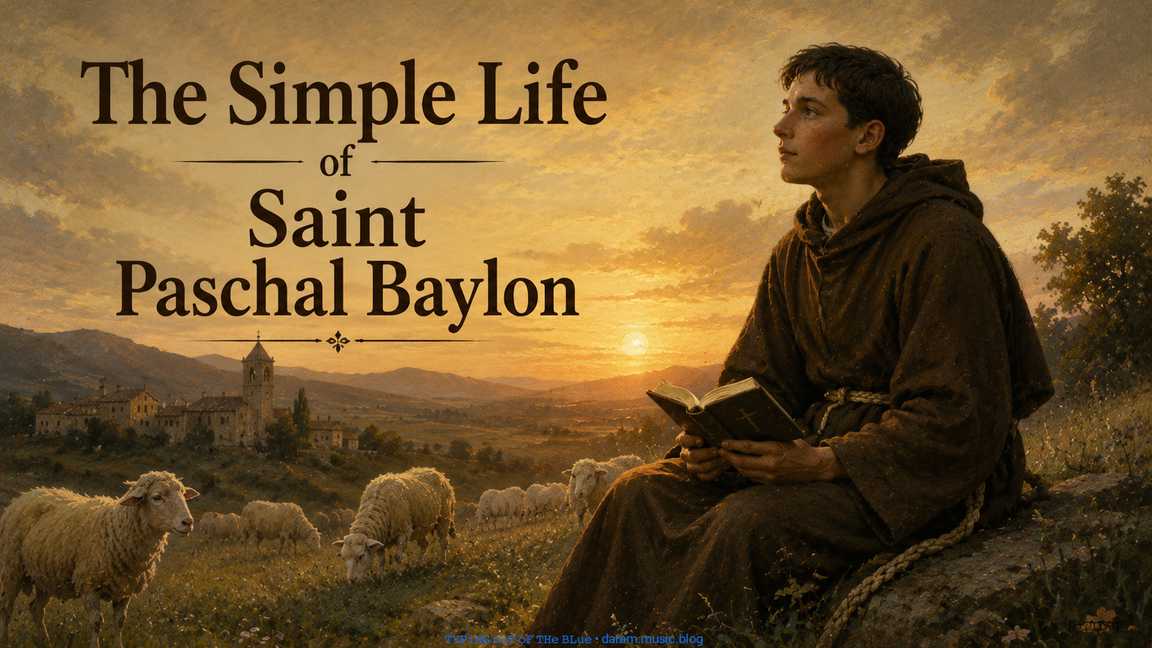
The Simple Life of Saint Paschal Baylon

People around him slowly changed because of the way he lived.

Paschal Baylon was not rich, famous, powerful, or highly educated. He was just a shepherd boy from Spain in the 1500s, spending his days taking care of sheep in open fields.

He did not grow up as a scholar. He learned to read by asking people to help him understand words because he wanted to read prayers and spiritual books. While other shepherds around him were known for cursing, fighting, and arguing, Paschal became known for being calm, honest, and respectful. Some even stopped using bad language around him because they respected the way he lived.

When poor people came to him, he shared part of his own food even though his family was not rich. If his sheep damaged somebody’s crops, he admitted it right away and offered payment. No excuses. No hiding.

His life was simple. But people trusted it.

Later, he became a Franciscan brother. Not a priest. Not a famous preacher. Just someone who quietly influenced people through the way he lived. Many were deeply inspired by his love for the Eucharist and the peace they felt around him.

Today, we have books everywhere.
We have churches nearby.
We have unlimited knowledge on our phones.

People spend hours watching videos about discipline, peace, kindness, and “how to live better.” Saint Paschal lived those things without trying to brand them, sell them, or turn them into content. He simply practiced them every day while taking care of sheep under the sun.

Living the way he lived is actually easier if people truly want to.

Let’s keep learning the saints’ way—day by day.

⌨ ᴛʸᵖⁱⁿᵍ ᴏᵘᵗ ᵒᶠ ᵗʰᵉ ʙˡᵘᵉ ᵈᵃʳᵉᵐ ᵐᵘˢⁱᶜ ᵇˡᵒᵍ

Rosette Two • Darem Placer

The Faith Folded in Paper

He turned prayer into healing—writing hope on paper so small, yet strong enough to carry faith through centuries.

Saint Frei Galvão and the Healing of Trust

In the late 1700s, in the quiet streets of São Paulo, Brazil, a Franciscan friar named Frei Galvão found a humble way to turn faith into healing. One day, a woman in unbearable pain came to him for help. With no medicine to give, he prayed, wrote a short Latin invocation to the Virgin Mary on a slip of paper barely the size of a fingernail, folded it three times—Father, Son, and Holy Spirit—and handed it to her. She swallowed the tiny paper, and soon, she recovered.

The prayer read:

“Post partum, Virgo, inviolata permansisti. Dei Genitrix, intercede pro nobis.”

(“After childbirth, O Virgin, you remained undefiled. Mother of God, intercede for us.”)

Word spread through Brazil. People came from everywhere asking for those folded prayers. They weren’t charms or cures; they were signs of faith—small enough to hold, strong enough to heal.

Centuries later, the tradition still lives. At the Monastery of the Light in São Paulo, nuns still write the same prayer, fold it the same way, and give it to anyone who asks. The miracle isn’t in the paper—it’s in the trust that something so small can reach Heaven, just as Saint Frei Galvão once believed.

⌨ ᴛʸᵖⁱⁿᵍ ᴏᵘᵗ ᵒᶠ ᵗʰᵉ ʙˡᵘᵉ ᵈᵃʳᵉᵐ ᵐᵘˢⁱᶜ ᵇˡᵒᵍ

Traces of courage, silence, and sacrifice—this is Saints.

Listen on Apple Music, Apple Music Classical, and YouTube Music