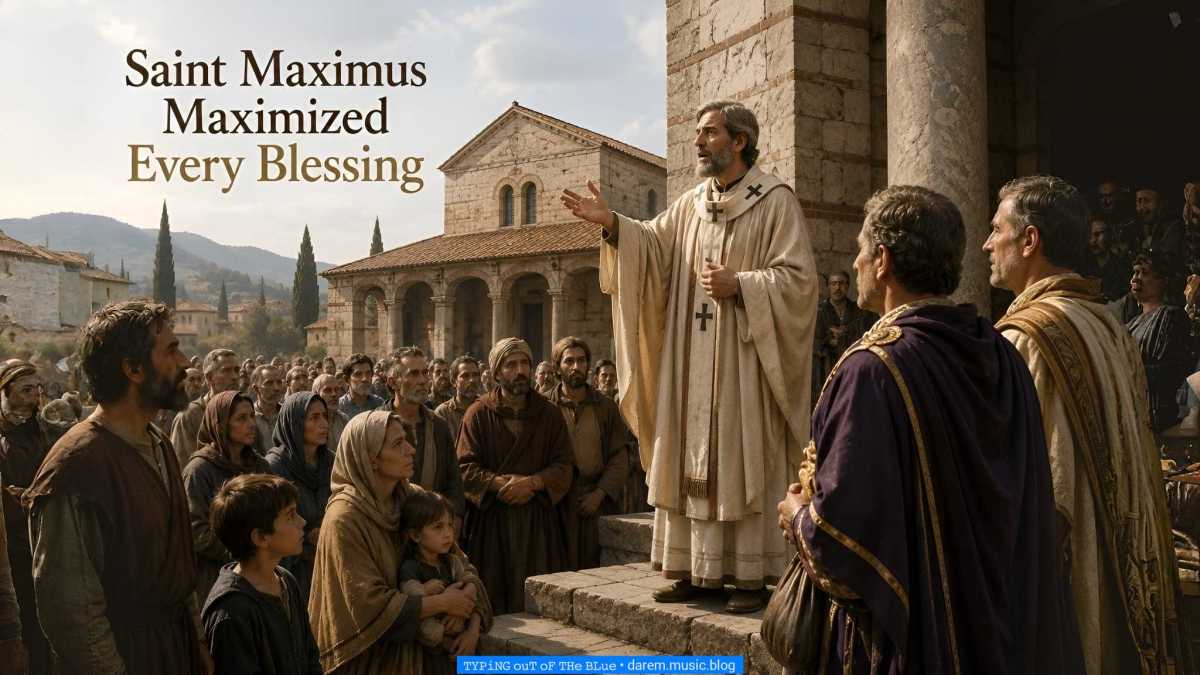
Saint Maximus Maximized Every Blessing

The greatest blessings are the ones that keep moving.

In the early 5th century, Maximus, Bishop of Turin in northern Italy, preached during a time when cities were shaken by invasions, fear, and uncertainty. Families were forced to leave their homes. Many lost everything overnight. While many searched for safety, others focused on protecting their wealth.

Bishop Maximus refused to stay silent.

He reminded those who had more that abundance is not a trophy. It is a responsibility. Wealth becomes meaningful only when it eases another person’s burden. Food stored while neighbors go hungry is not wisdom. It is a missed opportunity to love.

His message did not end with generosity. He also urged Christians to fulfill their civic responsibilities, including paying taxes, even when times were difficult. Faith is not an escape from society. It is a way of helping society become better.

Every crisis reveals what we value most. We can cling to what we have, or use it to lift the people around us. Compassion without responsibility is incomplete. Responsibility without compassion grows cold.

For Saint Maximus, blessings were never meant to end with the one who received them. A blessing kept to ourselves is like a song never played. Its beauty is heard only when it is shared.

Let’s keep learning the saints’ way—day by day.

⌨ ᴛʸᵖⁱⁿᵍ ᴏᵘᵗ ᵒᶠ ᵗʰᵉ ʙˡᵘᵉ ᵈᵃʳᵉᵐ ᵐᵘˢⁱᶜ ᵇˡᵒᵍ
The Piano Outside • Darem Placer • Full album. Press play.

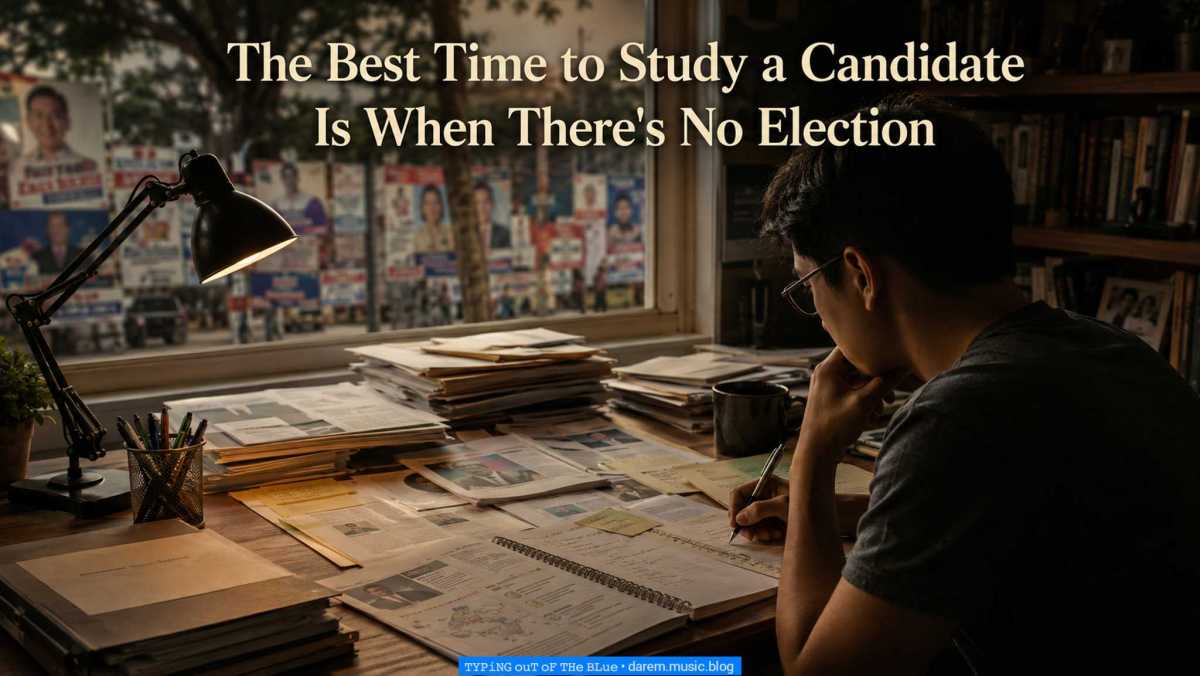
The Best Time to Study a Candidate Is When There’s No Election

Campaign season is the show. A candidate’s real story is usually found in the years before the spotlight.

Every election season feels like a concert. The lights turn on. The stage is ready. The speeches get louder. The promises get bigger. Suddenly, every candidate seems to have the answer to traffic, flooding, corruption, jobs, poverty, and everything else in between.

But elections are not auditions.

The best time to study a candidate is when there’s no election. Not when posters are everywhere and every interview sounds carefully prepared.

Look at the years before that.

Ano ginagawa nila when nobody’s paying attention? Ano mga projects na sinuportahan nila? Ano mga problems na tinulungan nilang ayusin? How nila ginamit ang public funds? How sila nag-react when things went wrong?

Those answers usually tell a better story than any promise made on a stage.

Imagine hiring someone. Sabi ng applicant, “Trust me. Masipag ako.”

Okay.

Pero malamang ang susunod mong tanong ay, “Ano ginawa mo sa last job mo?”

Ganun din dapat sa pagboto.

People can change. But a track record is one of the few things we can actually examine. Promises belong to the future. Records belong to reality.

The problem is that many voters start researching candidates a few weeks before Election Day. By then, naka-best behavior na ang lahat. New slogan. New commercial. New pangako.

A better habit is to start paying attention habang malayo pa ang election. Read beyond the headlines. Keep notes. Notice who suddenly becomes visible when votes are needed and who keeps working kahit walang cameras. Notice who explains policies and who survives on catchy lines. Notice who accepts responsibility and who always finds somebody else to blame.

Then when campaign season arrives, you’re not meeting the candidates for the first time. You’re simply checking if the performance matches the record.

Good leaders should not need a dramatic introduction every election.

The campaign may be the loudest part of the song, but the real story was already playing long before the speakers were turned on.

⌨ ᴛʸᵖⁱⁿᵍ ᴏᵘᵗ ᵒᶠ ᵗʰᵉ ʙˡᵘᵉ ᵈᵃʳᵉᵐ ᵐᵘˢⁱᶜ ᵇˡᵒᵍ

Rosette Two • Darem Placer • Full album. Press play.