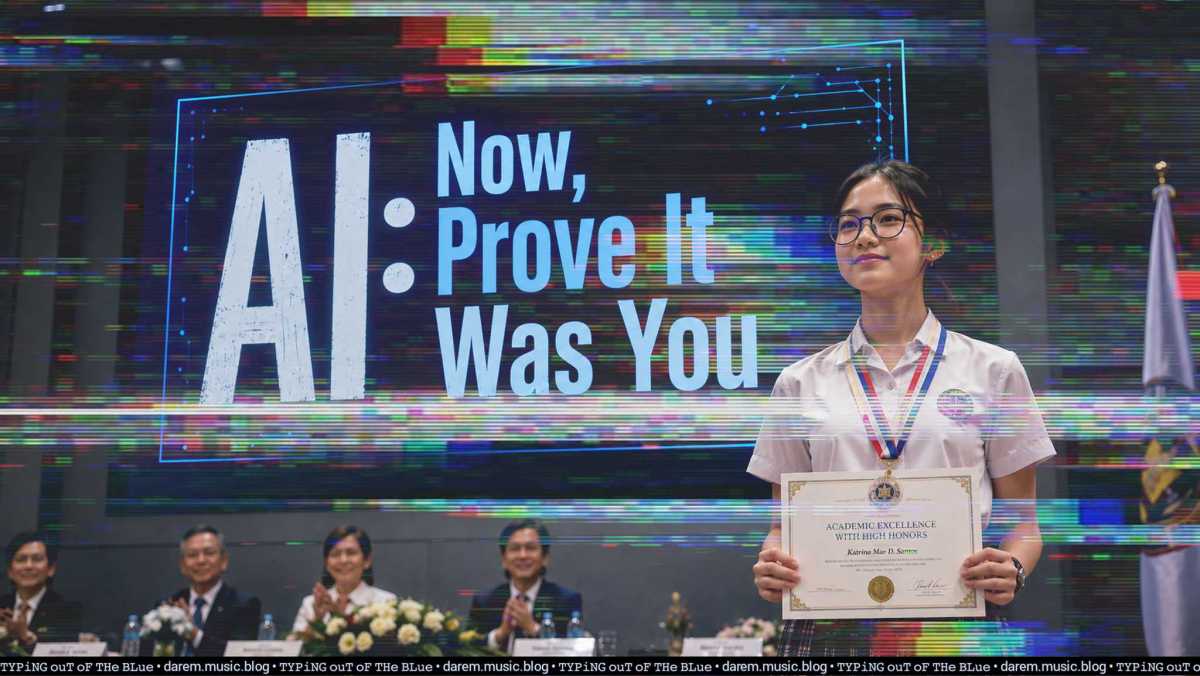
Learning What May Replace Us

Students now learn AI and robotics while quietly wondering if the future will still need them.

Years ago, when computers entered schools, people became excited. Parents told their children to learn computers because the future would need them. And they were right. Computers mostly expanded the need for human workers. Offices grew. The internet changed the world.

Today feels different.

Students now learn AI and robotics while also seeing news about workers losing jobs because of AI and automation. That creates a strange question inside the classroom.

“If these machines may replace people someday, why are we learning how to build them?”

Most students probably do not ask that question out loud. They just continue listening to the lesson, doing projects, and studying because that is what students are supposed to do.

Teachers continue teaching because it is part of the curriculum. Schools continue adding AI subjects because they believe students must understand the future. Parents continue encouraging their children because they want them to survive in a changing world.

But the question still stays there quietly.

A student learns automation while wondering if there will still be enough work for humans later. Another student studies AI because everybody says it is important, while reading headlines about companies replacing workers with AI systems.

It is hard to explain.

Technology helps people in many ways. AI can help doctors. Robots can enter places too dangerous for humans. Some inventions truly improve life. But students also see another side of the story. They see layoffs. They see companies reducing workers. They see fear growing online.

So the classroom becomes a strange place sometimes.

Students are told, “Learn this carefully. It is the future.” But some of them may quietly think, “What if the future needs fewer people?”

Even adults do not fully know how to answer that question yet.

So the lessons continue. The screens stay bright. The keyboards keep clicking softly like a slow song inside the room.

And somewhere in the class, a student probably still wonders if learning how to build the machine also means learning how to compete against it someday.

Do you ever wonder too?

⌨ ᴛʸᵖⁱⁿᵍ ᴏᵘᵗ ᵒᶠ ᵗʰᵉ ʙˡᵘᵉ ᵈᵃʳᵉᵐ ᵐᵘˢⁱᶜ ᵇˡᵒᵍ

Artificial Blue Sky•Darem Placer

Peace Through Fear

The world keeps changing its weapons, but the question about peace remains the same.

For thousands of years, humans have tried to keep peace in two ways. One way says, “Teach people to love.” The other says, “Make war too dangerous to start.”

That second idea is why Spotify founder Daniel Ek’s defense-tech investment became controversial.

Ek recently backed another massive funding round for Helsing worth around $1.2 billion, reportedly pushing the company’s valuation to around $18 billion. Helsing builds AI military systems and drones for Europe. Supporters say it helps protect countries from future attacks. Their belief is simple: “If bad people know you are strong, they think twice before starting war.”

That idea is often called “peace through strength.”

It’s old. Castles had walls. Countries built missiles. Now the world is building AI defense systems.

But many listeners and artists became uncomfortable after learning about Ek’s investments. Some even boycotted Spotify or removed their music because they felt music and war should never stand in the same room together.

So the issue now is not really “Spotify bad.” It’s more like:

“Should money from music culture connect to war technology?”

Some people see protection. Others see preparation for bigger wars.

That’s the strange thing about peace.

Sometimes people try to protect it with kindness. Sometimes with fear. Sometimes with machines.

And history keeps asking the same question in different centuries:

Can weapons truly create peace, or only pause the next war?

Boycott Spotify.

⌨ ᴛʸᵖⁱⁿᵍ ᴏᵘᵗ ᵒᶠ ᵗʰᵉ ʙˡᵘᵉ ᵈᵃʳᵉᵐ ᵐᵘˢⁱᶜ ᵇˡᵒᵍ