
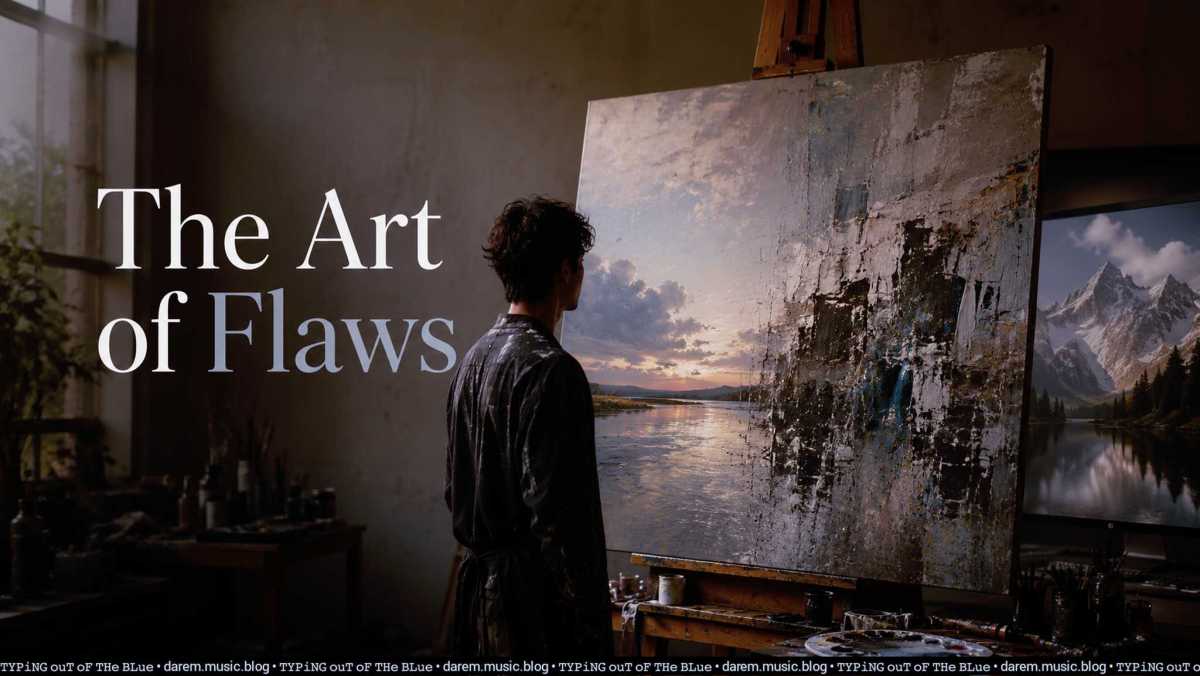
Something remarkable happens on screen. A person performs an incredible athletic move, sings an almost impossible note, or creates something unusually beautiful. The comments arrive: “AI.”
We have become so used to AI-generated images, videos, voices, and writing that even extraordinary human work can now look suspicious. We are losing some of our admiration for what people can do.
The AI label has an important purpose. It can tell us when a photo or video has been generated or altered, especially when it is used to deceive people or spread fake news. But in art, the label can become a reason to dismiss the work before we even see its value. It has also created a divide between people who are comfortable using AI and those who reject it completely.
Now it is affecting how some people create. A photo can be made cleaner, but someone may decide not to fix it. A performance can be retaken, but the imperfect take is kept. A piece of writing can be polished, but the rough line stays, not because the flaw makes it better, but because if the work looks too polished, someone might call it AI.
There is beauty in natural imperfection. A cracked note or rough brushstroke can give a work its character. But an unnecessary mistake does not become meaningful just because a human made it. If we start keeping flaws simply to make our work look human, quality suffers.
We should not have to leave things unfinished or unpolished just to prove that a person made them.
Are we building a better world, or leaving flaws as scars just to prove that we are still human?
⌨ ᴛʸᵖⁱⁿᵍ ᴏᵘᵗ ᵒᶠ ᵗʰᵉ ʙˡᵘᵉ ᵈᵃʳᵉᵐ ᵐᵘˢⁱᶜ ᵇˡᵒᵍ