
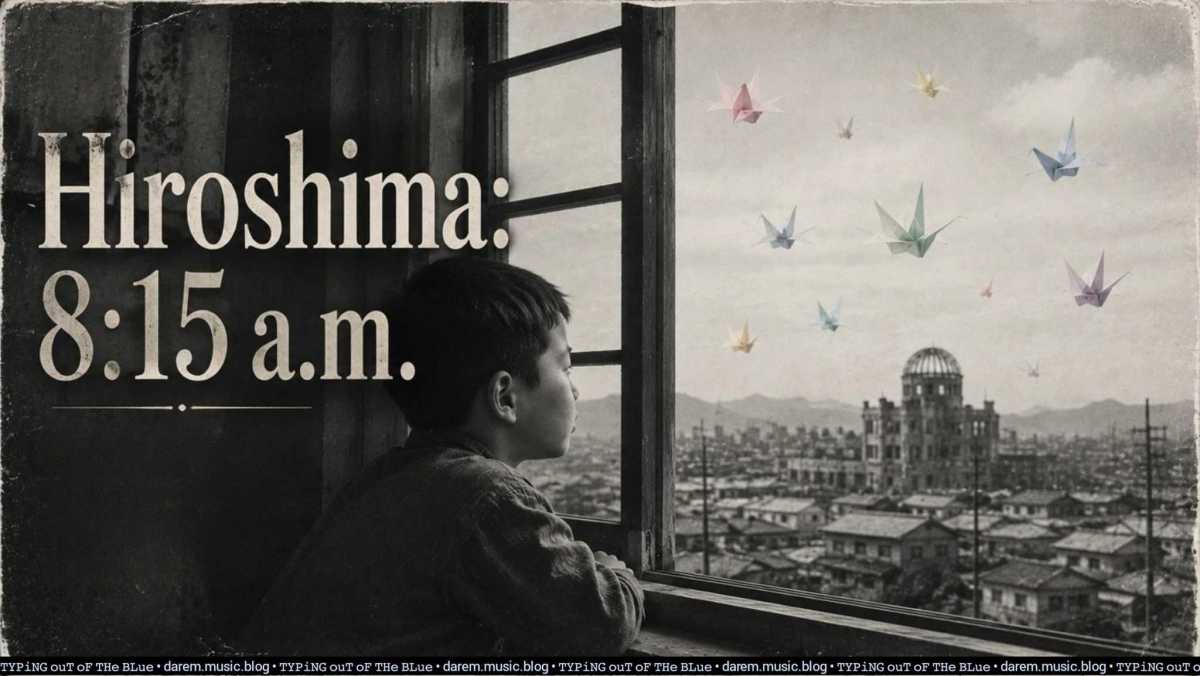
It started like any other morning.
People were going to work. Children were walking to school. Shop owners were opening their stores. Nothing seemed unusual. No one knew that before breakfast was over, history would never look the same again.
Before 8:15 a.m.
A City Still Standing
While many Japanese cities had already been reduced to rubble, Hiroshima was different. Streets were busy. Buildings were still there. Its military importance, along with the fact that much of the city remained intact, made Hiroshima one of the chosen targets for the first wartime use of an atomic bomb.
The Morning Was Clear
The sky was almost cloudless. It promised another warm summer day. People looked up and saw nothing unusual.
The Alarm That Ended Too Soon
Early that morning, American reconnaissance aircraft appeared over Hiroshima, triggering an air raid alarm. People stopped, waited, and watched the sky. When the planes moved on, the all-clear was sounded. Relief spread quickly. People stepped outside and carried on with their day.
Children Already at Work
Thousands of students were clearing buildings to help slow the spread of fire during future air raids. It was hard work, but it had become part of daily life. None of them knew what was only minutes away.
8:15 a.m.
At about 8:15 a.m. on August 6, 1945, the United States dropped the atomic bomb Little Boy over Hiroshima. In seconds, much of the city disappeared. Tens of thousands of people died almost instantly. Many others later died from burns, injuries, and radiation. By the end of 1945, an estimated 140,000 people had lost their lives.
After 8:15 a.m.
Shadows That Stayed
When the blinding flash faded, dark silhouettes remained on walls and stone. They were not the people themselves, but marks left by the intense heat. Some of those shadows are still preserved today.
Time Stood Still
Among the ruins were watches that had stopped at exactly 8:15. Their hands never moved again.
The Sound That Returned
Only three days later, a streetcar rolled through Hiroshima once more. It did not erase the loss, but for many survivors, that familiar sound meant Hiroshima was not completely silent.
Life Found a Way
Some believed nothing would grow there for years. They were wrong. Green shoots appeared much sooner than expected. Even gingko trees burned by the blast came back to life. Some still stand in Hiroshima today.
One Thousand Cranes
Years later, a young girl named Sadako Sasaki became sick from radiation. While hoping to recover, she folded paper cranes. Her story turned a simple paper bird into a symbol of peace around the world.
The Debate That Never Ended
Why did the United States use the atomic bomb?
The decision came after years of war. Germany had already surrendered, but Japan was still fighting. American leaders feared that invading Japan could cost hundreds of thousands of lives. They believed the bomb would force Japan to surrender and bring the war to an end more quickly.
Just days before the attack, the Allies had issued the Potsdam Declaration, demanding Japan’s unconditional surrender and warning of “prompt and utter destruction.” The atomic bomb was never mentioned because it was still a closely guarded secret. Japan’s leaders remained divided. Some wanted peace. Others wanted to keep fighting.
More than eighty years later, people still disagree. Some believe the bombing ended the war sooner and saved lives that might have been lost in an invasion. Others believe different choices should have been made. The debate continues because no answer can erase what happened that morning.
Long after the war ended, Hiroshima remained. Not as a symbol of victory, but as a measure of what human hands can create… and destroy.
Building power is easy. Knowing when not to use it is harder.
⌨ ᴛʸᵖⁱⁿᵍ ᴏᵘᵗ ᵒᶠ ᵗʰᵉ ʙˡᵘᵉ ᵈᵃʳᵉᵐ ᵐᵘˢⁱᶜ ᵇˡᵒᵍ