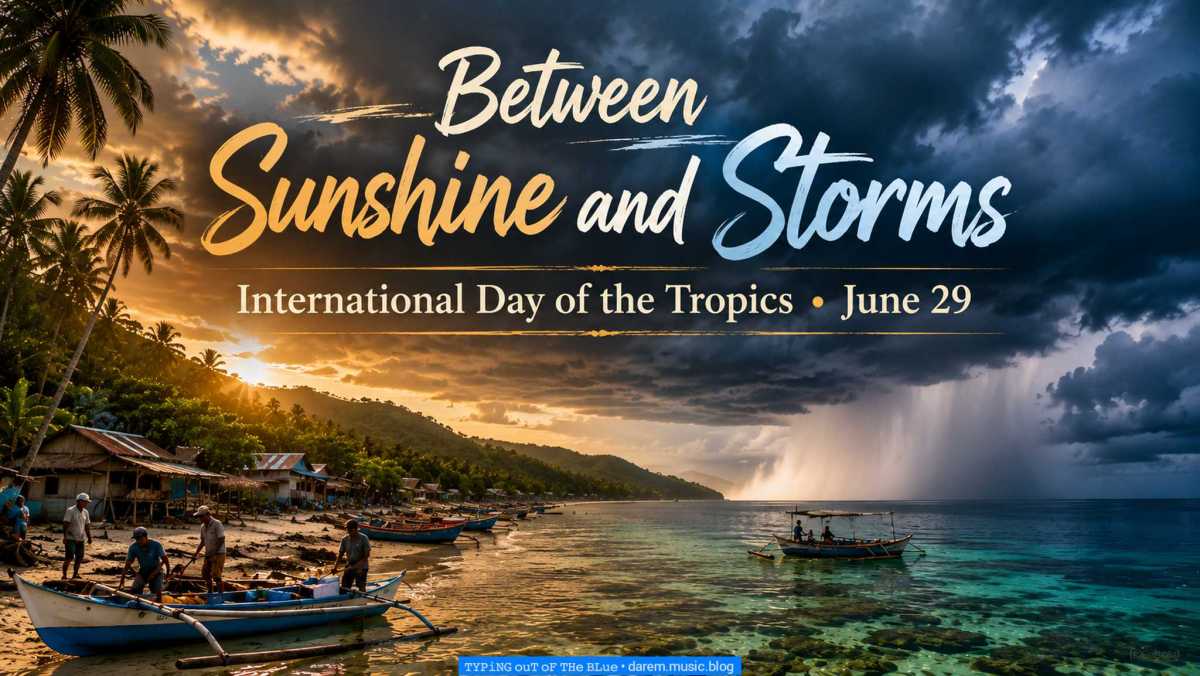
If you live in the Philippines, you live in the tropics. This is why coconut trees seem to grow everywhere and why weather updates sometimes become the most watched show of the week.
The tropics are warm, alive, and full of rhythm. Birds sing before sunrise. Frogs hold concerts after rain. Crickets take the night shift. Nature here rarely stays quiet for long.
But living in the tropics also comes with concerns.
Many communities face stronger typhoons and hotter summers. Coral reefs come under increasing pressure. Forests shrink. Coastal communities worry about rising seas while farmers keep one eye on the sky and another on the calendar.
The tricky part is that there is no magic trick for any of this.
We cannot ask storms to change course. We cannot press Ctrl+Z on a forest once it is gone. Some problems are simply larger than any one person.
Still, that does not make ordinary people powerless.
• Keep waterways free of trash to help reduce flooding.
• Protect trees and mangroves that serve as natural shields during storms.
• Support responsible farming and fishing to help keep tomorrow’s dinner from disappearing from today’s oceans.
• Reduce waste and avoid making environmental problems worse.
• Prepare for disasters instead of waiting for disasters to prepare us.
The tropics have their own rhythm. Learning to live with it may be one of the oldest lessons the tropics can teach us.
We may not be the conductors of the world’s orchestra, but the performance still needs our participation.
⌨ ᴛʸᵖⁱⁿᵍ ᴏᵘᵗ ᵒᶠ ᵗʰᵉ ʙˡᵘᵉ ᵈᵃʳᵉᵐ ᵐᵘˢⁱᶜ ᵇˡᵒᵍ