The observance may sound distant from the Philippines, yet its message lands closer than many of us think.
Every June 30, the world observes the International Day of Parliamentarism.
At first, it may sound like something meant only for countries with parliaments such as the United Kingdom or Japan. After all, the Philippines does not have a parliament. We have a President, a Senate, and a Congress.
So why should we care?
Because the idea behind the observance goes beyond parliaments. It is about the people and institutions responsible for creating the laws that shape our daily lives.
The prices we pay, the taxes we contribute, the schools we attend, the roads we use, and the public services we receive are all affected by decisions made by our elected representatives.
Many of us pay close attention during elections. But after the campaign posters disappear and the ballots are counted, the work of governing continues.
Bills are proposed. Laws are reviewed. National budgets are debated. Decisions are made that can affect our lives for years.
The International Day of Parliamentarism reminds us that democracy is not only about choosing leaders. It is also about understanding how our laws are made and who makes them.
The Philippines may not have a parliament, but the message of the day still applies to us. A healthy democracy depends not only on elected officials, but also on citizens who stay informed and involved.
A changing world may call for a few old habits to make a quiet comeback.
Grocery prices rarely become a topic of conversation until they start climbing faster than our paychecks.
According to a recent warning from Goldman Sachs, Southeast Asia could face a food-supply shock as higher oil prices, rising fertilizer costs linked to tensions in the Middle East, and the possibility of a strong El Niño event in late 2026 put pressure on food production and transportation.
Among Southeast Asian countries, the Philippines and Singapore are considered particularly exposed because both rely heavily on imported food. When global food prices rise, countries that buy much of their food from abroad often feel the impact quickly.
For the Philippines, the concern is less about empty supermarket shelves and more about higher grocery bills. Rice, bread, meat, fish, vegetables, and cooking oil could become more expensive if fuel costs continue rising and local harvests are affected by drought.
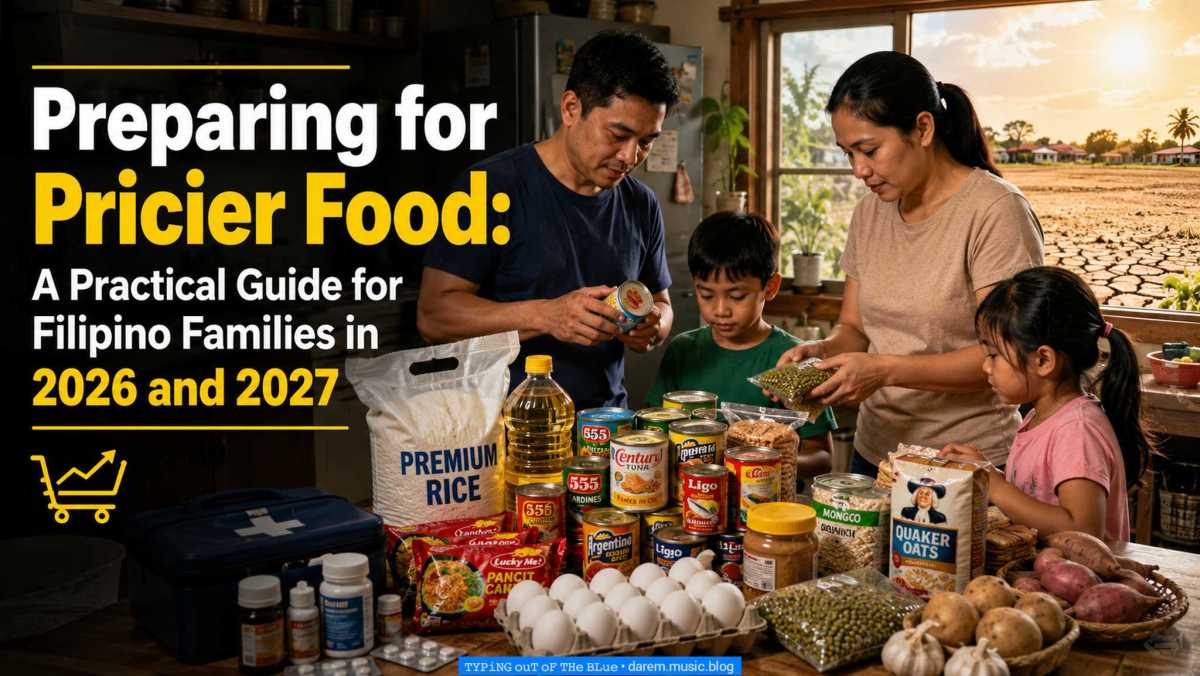
Fortunately, preparation does not require panic buying or turning our homes into mini warehouses. Even a few extra days of food at home can provide us with valuable breathing room during sudden price increases, typhoons, transport disruptions, or emergencies.
Not every Filipino family can afford to keep large stockpiles of food at home, and that is perfectly understandable. Many of us work within tight daily or weekly budgets.
Preparedness also does not have to be expensive. An extra few kilos of rice, a handful of canned goods, or buying one additional essential item during regular grocery trips can already make a difference.
In many ways, Filipino families have been practicing this for generations without giving it a name. The extra sack of rice before typhoon season, the canned goods quietly waiting in the cupboard, and the habit of buying essentials while prices are still reasonable are all forms of preparation.
Here is a practical food preparedness checklist for Filipino households for 2026 and 2027.
For a household of 2 people aiming for 2 to 4 weeks of food reserves:
• Rice: 10 to 15 kg • Canned fish and meat: 12 to 20 cans • Instant noodles: 10 to 20 packs • Pasta and sauce: 2 to 4 packs or jars • Oatmeal: 1 to 2 kg • Crackers or biscuits: 2 to 4 packs • Cooking oil: 1 to 2 liters • Sugar: 1 kg • Salt: 1 kg • Coffee or tea according to household consumption • Powdered milk: 1 pack or can • Basic medicines and first aid supplies
For a household of 4 people:
• Rice: 20 to 30 kg • Canned fish and meat: 24 to 40 cans • Instant noodles: 20 to 40 packs • Pasta and sauce: 4 to 8 packs or jars • Oatmeal: 2 to 3 kg • Crackers or biscuits: 4 to 8 packs • Cooking oil: 2 to 4 liters • Sugar: 2 kg • Salt: 1 kg • Powdered milk: 2 packs or cans • Basic medicines and first aid supplies
For a household of 6 people:
• Rice: 30 to 45 kg • Canned fish and meat: 36 to 60 cans • Instant noodles: 30 to 60 packs • Pasta and sauce: 6 to 12 packs or jars • Oatmeal: 3 to 5 kg • Crackers or biscuits: 6 to 10 packs • Cooking oil: 3 to 6 liters • Sugar: 3 kg • Salt: 1 to 2 kg • Powdered milk: 3 packs or cans • Basic medicines and first aid supplies
Fresh and affordable foods can also help us stretch our budget during periods of inflation. Eggs, monggo, potatoes, sweet potatoes, onions, garlic, frozen vegetables, frozen chicken, dried fish, and peanut butter can go a long way in keeping our meals nutritious and affordable.
A few simple habits matter just as much as what sits on the shelf:
• Rotate supplies and use older items first. • Buy a little extra during regular grocery trips instead of panic buying. • Reduce food waste wherever possible. • Keep some financial breathing room for unexpected price increases. • Learn recipes that can adapt to changing ingredient prices and availability.
Food shocks rarely arrive overnight. They usually move slowly, one price tag at a time. Families that prepare early are often the ones that notice them the least.
The aim is not fear or hoarding. It is simply giving ourselves and our families a little more breathing room when uncertain times arrive.