More Than a One-Day Habit

What happens when July 3 is over? The challenge is not avoiding plastic bags for just one day.

Every July 3, the world observes International Plastic Bag Free Day, a reminder to reduce our dependence on single-use plastic bags and choose more sustainable alternatives.

Plastic bags are among the most convenient items ever invented. Unfortunately, they are also among the most persistent. A bag used for a few minutes can remain in the environment for hundreds of years.

Many eventually find their way into rivers, beaches, and oceans, where they can harm wildlife and damage ecosystems.

Fortunately, reducing plastic bag use does not require grand sacrifices or complicated technology. It often begins with simple habits such as:

• Bringing a reusable shopping bag when going out.
• Reusing bags that are still in good condition.
• Refusing an extra bag for small purchases.
• Supporting businesses that offer sustainable packaging options.

Are we only doing this because it happens to be International Plastic Bag Free Day?

Hopefully not.

That would be like exercising only on Fitness Day, drinking water only on World Water Day, or practicing the piano only on World Piano Day.

The purpose of the observance is not to create a 24-hour challenge but to encourage habits that continue long after July 3 has passed. Real change is not made from a single action but from small choices repeated until they become part of everyday life.

After all, the environment does not check the calendar before accepting plastic waste.

⌨ ᴛʸᵖⁱⁿᵍ ᴏᵘᵗ ᵒᶠ ᵗʰᵉ ʙˡᵘᵉ ᵈᵃʳᵉᵐ ᵐᵘˢⁱᶜ ᵇˡᵒᵍ

👉 Download Sky-Low on Bandcamp

💿 Just type 0 as the price, if you want to download the album for free.

Sky-Low
“Sky-Low” is not just an album—it’s an awareness campaign about climate change and a challenge to protect our planet.

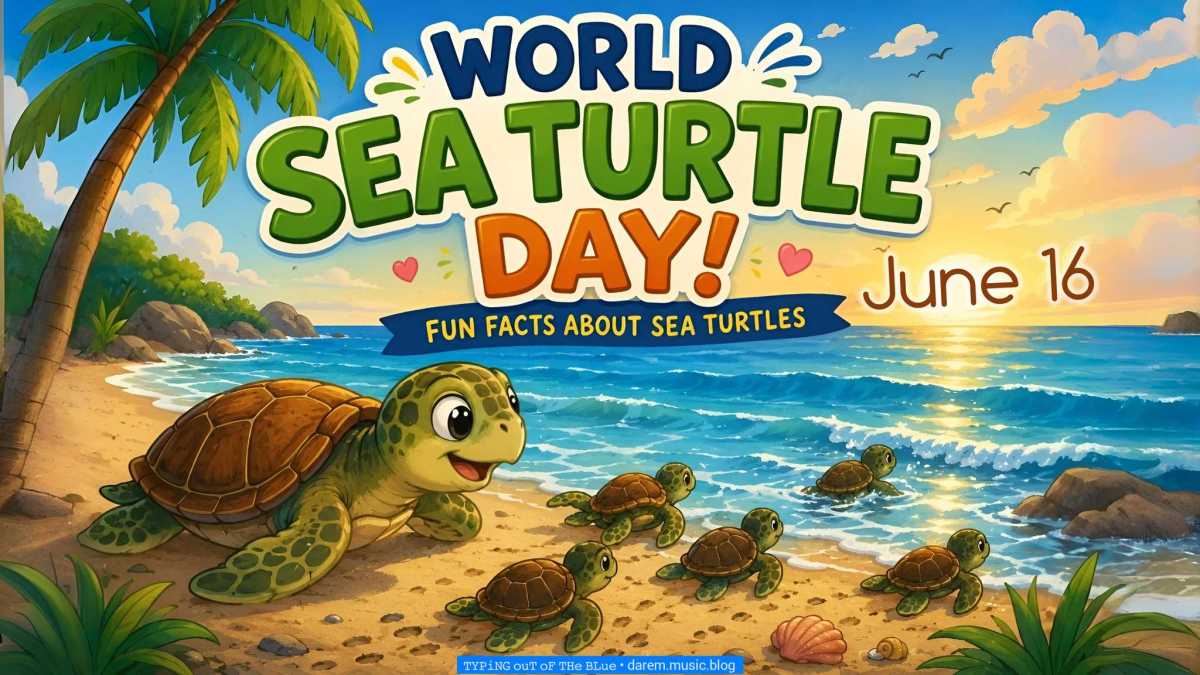
World Sea Turtle Day: Fun Facts About Sea Turtles

From baby turtles racing to the sea to giant turtles as heavy as a small car, these ocean animals are full of surprises.

Every June 16 is World Sea Turtle Day. It is a special day to learn about sea turtles, the turtles that spend their lives in the ocean.

There are many kinds of turtles. Some live in rivers and lakes. Some live on land. But today belongs to sea turtles.

Here are some fun facts about them:

• Some sea turtles travel thousands of kilometers across the ocean. That’s like flying from one country to another.

• A sea turtle can find its way back to the same area where it hatched, even after many years at sea.

• Sea turtles have special parts near their eyes that remove extra salt from ocean water. This can make them look like they are crying.

• The leatherback is the biggest sea turtle in the world. It can grow more than 2 meters (6.5 feet) long. That’s longer than many beds.

• A large leatherback can weigh more than 900 kilograms (2,000 pounds). That’s about as heavy as a small car.

• Leatherback sea turtles can dive deeper than 1,000 meters (3,280 feet). That’s deeper than a tall skyscraper.

• Sea turtles usually swim at about 1 to 3 kilometers per hour. That’s slower than a bicycle, but they can keep swimming for a very long time.

• Mother sea turtles come onto beaches to lay their eggs.

• One nest can hold more than 100 eggs.

• Baby sea turtles often hatch at night and race to the sea. Many are only about the size of your hand.

• Green sea turtles help keep underwater seagrass healthy.

• Hawksbill sea turtles help coral reefs by eating sponges.

• Sea turtles have been swimming in Earth’s oceans for millions of years. They were already around when dinosaurs roamed the Earth.

• Sea turtles are good at following the rhythms of nature. They follow waves, tides, seasons, and long journeys across the ocean. In a way, their lives move to the beat of the sea.

If the ocean had an orchestra, sea turtles would not be the singers. They would be the travelers, quietly following the music of the waves.

⌨ ᴛʸᵖⁱⁿᵍ ᴏᵘᵗ ᵒᶠ ᵗʰᵉ ʙˡᵘᵉ ᵈᵃʳᵉᵐ ᵐᵘˢⁱᶜ ᵇˡᵒᵍ

Underplayground • Darem Placer • Full album. Press play.