When the Rhythm Grew Deeper

A genre born for the dance floor slowly found a much larger conversation waiting for it.

Reggae was born in Jamaica in the late 1960s, emerging from the energetic rhythms of ska and the slower grooves of rocksteady. The island was young in its independence but still wrestling with poverty, inequality, political tensions, and questions about identity and the future. Those realities soon found their way into the music.

As reggae grew, it carried songs about struggle and hope, resistance and resilience, faith and humanity. It spoke of freedom without forgetting responsibility, and of hardship without losing sight of better days. Some songs challenged injustice. Others celebrated community, love, and everyday life. Over time, reggae became closely associated with conversations about dignity, identity, spirituality, and the human experience itself.

Ironically, the song that helped give reggae its name was not a protest anthem at all. In 1968, Toots and the Maytals released Do the Reggay, a lively dance tune inviting people to join a new musical craze. The genre that would later become closely associated with conversations about justice, resistance, and humanity began with an invitation to dance.

What began as music to move the feet gradually became music that moved something deeper.

Toots Hibbert and Toots and the Maytals are widely regarded as among the first reggae artists, and their 1968 song Do the Reggay helped give the genre its name.

⌨ ᴛʸᵖⁱⁿᵍ ᴏᵘᵗ ᵒᶠ ᵗʰᵉ ʙˡᵘᵉ ᵈᵃʳᵉᵐ ᵐᵘˢⁱᶜ ᵇˡᵒᵍ

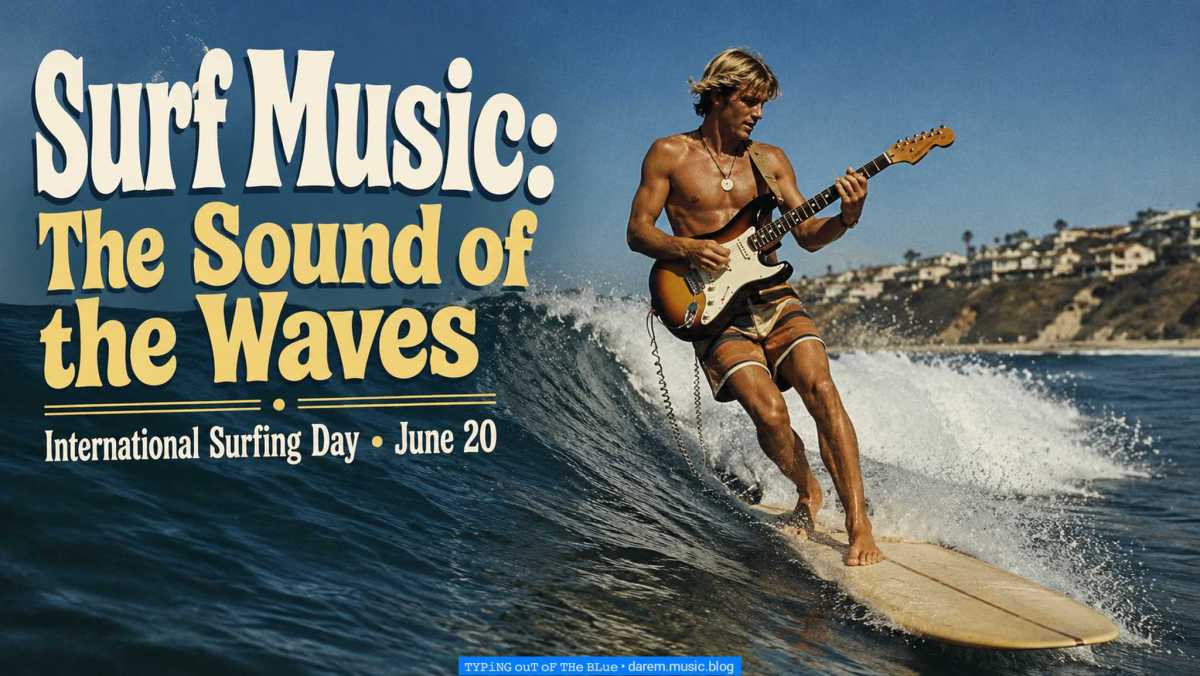
Surf Music: The Sound of the Waves

From the beach to the amplifier, surf culture found its way into music.

Most people celebrate Surfing Day by riding the waves or talking about boards, beaches, and surf culture.

But surfing also left something else behind: music.

Back in the 1960s, surfing became so popular that musicians started creating songs inspired by it. They used electric guitars with lots of reverb, making notes ring out like waves rolling toward the shore.

One of the pioneers was Dick Dale. Unlike many surf musicians who came later, he was actually a surfer. He wanted his guitar to capture the energy and power of the ocean.

The funny thing is that some of the most famous surf music was not made by surfers.

The Beach Boys helped popularize surfing culture through music, yet key songwriter Brian Wilson was not known as a surfer. He was better at riding melodies.

Surf music is no longer as popular as it once was, but it never completely disappeared. New bands still record it. Old fans still listen to it. And every time a guitar drenched in reverb appears in a song, a little piece of surf music comes back to life.

Not bad for a music genre inspired by people trying not to fall off a board.

Some people ride the waves. Others turn them into songs.

Dick Dale’s “Misirlou” is probably the most famous surf music recording ever made.

Even if you have never heard of Dick Dale, there is a good chance you have heard this song somewhere before.

⌨ ᴛʸᵖⁱⁿᵍ ᴏᵘᵗ ᵒᶠ ᵗʰᵉ ʙˡᵘᵉ ᵈᵃʳᵉᵐ ᵐᵘˢⁱᶜ ᵇˡᵒᵍ