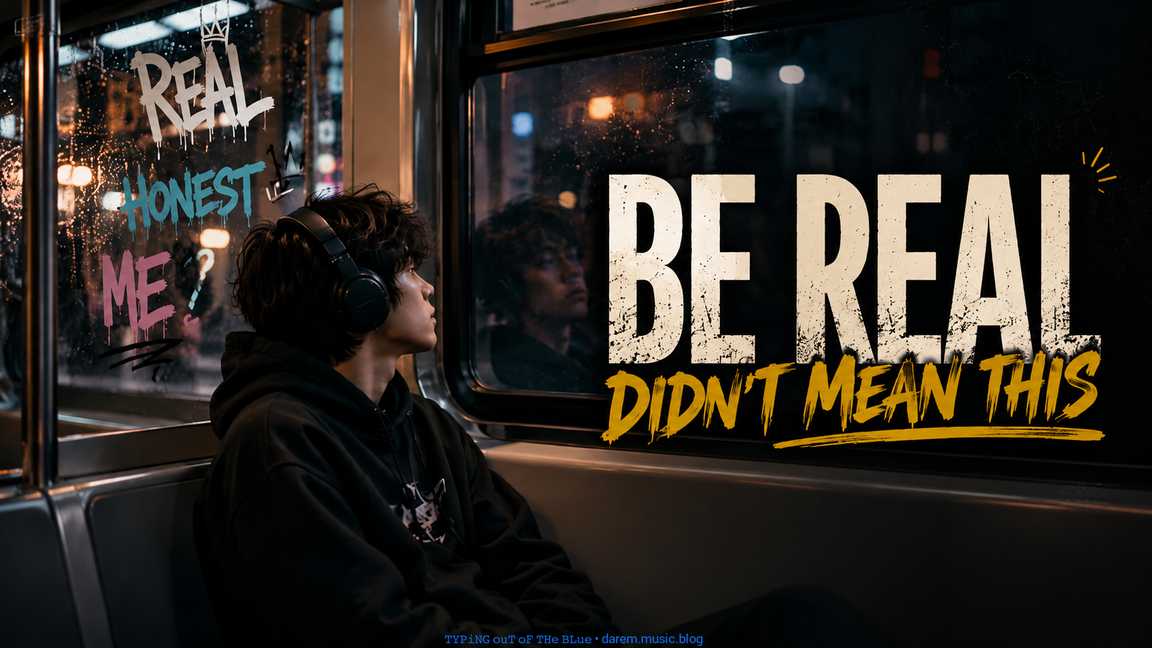
“Be Real” Didn’t Mean This

Sometimes “being real” gets confused with bad behavior. But authenticity was never meant to lose kindness.

“Be real.”

Simple phrase. But somewhere along the road, it changed clothes.

Now sometimes it means:

“Just accept my attitude.” 
“This is how I am.” 
“If I hurt people, at least I’m honest.”

But that was never the original spirit of it.

Being real was supposed to mean sincerity. Not hiding behind fake personalities, but also not treating bad behavior as our truest self.

Not, “I’m acting badly right now, so this is my true self.”

Sometimes we confuse authenticity with emotional dumping. Whatever we feel, we throw outside immediately and call it “real.” Anger. Bitterness. Cruel words. Pride.

But not every impulse is the real us.

Pain changes people. Bad experiences change people. Rejection, unfairness, loneliness. After a while, we can become so protective of our wounds that we mistake them for personality.

Then society gets even more confused.

Cruelty becomes “brutal honesty.” 
Selfishness becomes “self-love.” 
Being disrespectful becomes “confidence.”

And if enough people clap for it, suddenly it looks normal.

But deep inside, we still recognize what feels true.

A calm person. A kind person. Someone honest without humiliating others.

That kind of realness feels different. Quiet but solid. Like an old song that still sounds good even without the noise.

Realness is not asking people to accept our worst side. Realness is knowing our flaws without turning them into our identity.

⌨ ᴛʸᵖⁱⁿᵍ ᴏᵘᵗ ᵒᶠ ᵗʰᵉ ʙˡᵘᵉ ᵈᵃʳᵉᵐ ᵐᵘˢⁱᶜ ᵇˡᵒᵍ

Rosette Two • Darem Placer

When “Never Too Late” Sends the Wrong Message

Messages shape the choices people make while they’re still building their future.

Every few months, a story goes viral about someone achieving a long-delayed dream at an old age. People celebrate it online, repeating the same comforting line: “It’s never too late to chase your dreams.”

It sounds encouraging. It feels warm and hopeful. But when this message reaches the youth, the effect isn’t always what adults imagine.

Many young people end up thinking, “If they can do it that late, then I can take my time. I’ll enjoy life now and worry about my goals when I’m older.” The message gets flipped. What was meant to motivate becomes an excuse to delay.

Late achievements are inspiring, but early decisions still matter.

Starting young gives you room to grow. You have more energy, fewer responsibilities, and more time to make mistakes without breaking your future. You get years to build real skill instead of rushing everything when life is heavier and the window is smaller.

Late success should bring hope—not a loophole.

It was never meant to tell the youth, “Relax, you’ll get there eventually.” It was meant to say, “Even if you’re behind, you can still rise.” Those are two very different messages.

These stories should remind young people of something practical: it feels good to achieve a dream early, while you still have the full strength to enjoy the journey.

“Never too late” is comfort for those already catching up.

“Start now” is guidance for those who still have time.

The youth deserve the right message—one that moves them forward, not one that lets them drift.

⌨ ᴛʸᵖⁱⁿᵍ ᴏᵘᵗ ᵒᶠ ᵗʰᵉ ʙˡᵘᵉ ᵈᵃʳᵉᵐ ᵐᵘˢⁱᶜ ᵇˡᵒᵍ