10 of the Healthiest Vegetables in the Philippines

Some of the strongest foods in the Philippines have been quietly growing in plain sight.

Vegetables have a marketing problem.

Nobody writes songs about them. Nobody hangs posters of them on bedroom walls. Nobody says, “I can’t wait to get home and eat more vegetables.”

Yet some of the most powerful foods in the Philippines have been quietly growing in gardens, farms, and market stalls this whole time.

Here are 10 of the healthiest vegetables commonly found in the Philippines.

MALUNGGAY

If vegetables had a hall of fame, malunggay would probably have its own wing.

It is packed with vitamins, minerals, antioxidants, and plant compounds linked to overall health. The leaves may be small, but they carry enough nutrition to make larger vegetables feel slightly uncomfortable.

Malunggay is the lead guitarist who never needs a spotlight.

KANGKONG

Kangkong grows so easily that it almost seems unfair.

It provides fiber, Vitamin A, Vitamin C, and antioxidants while remaining affordable and widely available.

Some vegetables demand attention. Kangkong just shows up, does its job, and goes home.

PECHAY

Pechay is rich in Vitamins A, C, and K, along with minerals that support bones and overall health.

It is light, versatile, and works with almost anything.

Like a dependable drummer, pechay makes the whole meal work without trying to steal the show.

AMPALAYA

Ampalaya has spent decades losing popularity contests and winning nutrition contests.

It contains fiber, antioxidants, and compounds studied for their role in blood sugar management.

Nobody eats ampalaya because it tastes like dessert.

That is probably why the vegetable respects itself.

KALABASA

Kalabasa is loaded with beta-carotene, which the body converts into Vitamin A.

It supports eye health, immunity, and overall nutrition while bringing natural sweetness to meals.

Kalabasa feels like the warm acoustic track in an album full of louder songs.

TALONG

Eggplant provides fiber, antioxidants, and beneficial plant compounds.

It absorbs flavors beautifully and somehow manages to work in dishes ranging from simple home cooking to restaurant menus.

Talong is proof that versatility is its own talent.

SITAW

Sitaw contains fiber, Vitamins A and C, and nutrients that support digestion and general wellness.

Long, simple, and often overlooked, it quietly contributes more than people realize.

Like a bass player, people notice when it is missing.

REPOLYO

Cabbage is rich in Vitamin C, fiber, and antioxidants.

It is inexpensive, filling, and capable of appearing in soups, stir-fries, salads, and countless other dishes.

Repolyo may never become fashionable, but it keeps showing up year after year for a reason.

OKRA

Okra contains fiber, antioxidants, and nutrients that support digestion and heart health.

Its texture has started more debates than some political campaigns.

Love it or avoid it, okra is undeniably nutritious.

GABI LEAVES

The leaves of the gabi plant contain fiber, Vitamins A and C, and important minerals when properly prepared.

They are a key ingredient in several beloved Filipino dishes and have been feeding communities for generations.

Some foods survive trends. Gabi leaves survive centuries.

⌨ ᴛʸᵖⁱⁿᵍ ᴏᵘᵗ ᵒᶠ ᵗʰᵉ ʙˡᵘᵉ ᵈᵃʳᵉᵐ ᵐᵘˢⁱᶜ ᵇˡᵒᵍ
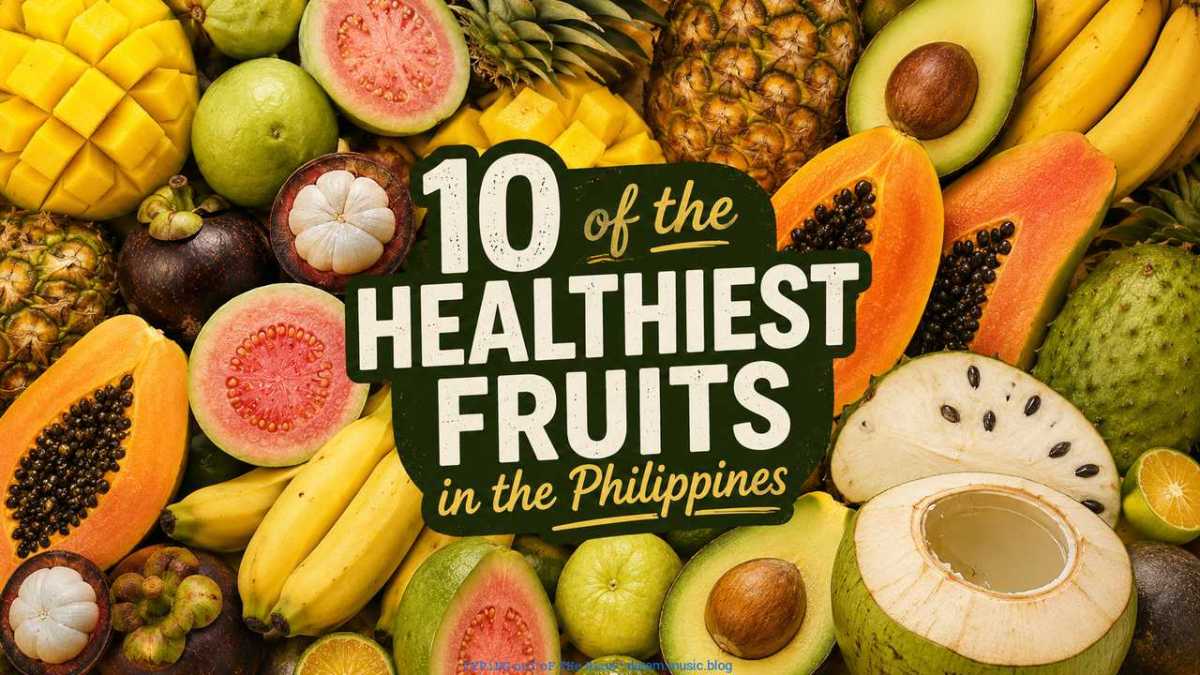
10 of the Healthiest Fruits in the Philippines

Not every superfood arrives with imported packaging and influencer lighting.

Some of the healthiest fruits in the world are not imported or expensive. They are already hanging in sari-sari stores, growing in backyards, or rolling around local markets beside karaoke speakers playing old love songs at full volume.

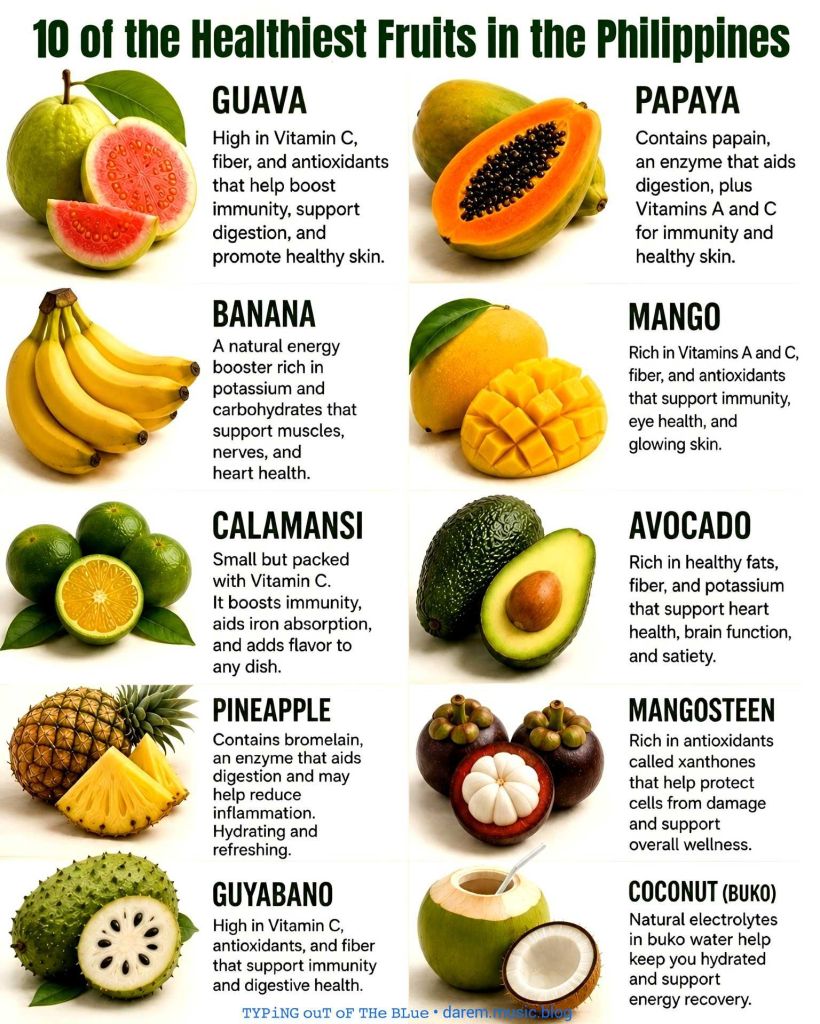
Here are 10 of the healthiest fruits commonly found in the Philippines.

GUAVA

Guava does not look impressive at first glance. But nutrition-wise, it is a monster.

It contains huge amounts of Vitamin C, fiber, and antioxidants. It helps the immune system, digestion, and skin repair.

But why does Juan still look unhealthy even though he loves guava so much? Imagine waiting under the tree all day with his mouth open, hoping the guava drops perfectly into it. Ah, tamad kasi. 😁

Even the healthiest fruit cannot save a lifestyle powered entirely by sitting.

Guava is like that quiet guitarist nobody notices until the live performance starts falling apart without him.

PAPAYA

Papaya has always been one of the calmest fruits in Filipino life. No hype. Just steady work.

It contains papain, an enzyme known for helping digestion, along with Vitamins A and C.

Some foods feel like fireworks. Papaya feels more like a slow Sunday radio song drifting through open windows.

BANANA

The banana might be the most practical fruit ever created.

It gives quick energy, potassium for muscles and nerves, and enough carbs to help people survive workouts, commute battles, or entire mornings fueled only by determination and bad sleep.

The banana is basically the rhythm section of the fruit world. Reliable. Always on time.

MANGO

Philippine mangoes taste almost illegal when perfectly ripe.

They contain Vitamin C, Vitamin A, fiber, and antioxidants. Yes, they are sweet, but sweetness alone does not make food unhealthy.

A cold ripe mango during peak summer feels like hearing your favorite song from a passing jeepney radio after a rough day.

CALAMANSI

Calamansi is proof that size means nothing.

Tiny fruit. Massive Vitamin C. It wakes up flavors instantly and somehow makes simple meals feel complete.

Filipino kitchens would sound emotionally quieter without calamansi.

AVOCADO

Avocado is rich in healthy fats, fiber, and potassium.

It supports heart health and brain function while keeping you full longer than most fruits.

There is something old-school about avocado. It feels like vinyl records and handwritten recipes.

PINEAPPLE

Pineapple contains bromelain, an enzyme linked to digestion and inflammation support.

Fresh pineapple has brightness to it. Like a brass section suddenly entering a song at exactly the right moment.

MANGOSTEEN

Mangosteen contains antioxidants called xanthones that researchers continue studying for potential health benefits.

Some fruits scream for attention. Mangosteen just sits there quietly like an album that slowly becomes legendary.

GUYABANO

Guyabano is rich in Vitamin C, antioxidants, and fiber.

Too many exaggerated health claims have followed it online, but even without the myths, it is still genuinely nutritious.

COCONUT

Buko water naturally contains electrolytes that help hydration, especially during brutal Philippine heat.

For generations, coconuts helped people survive island life long before sports drinks existed.

Full album. Press play.

⌨ ᴛʸᵖⁱⁿᵍ ᴏᵘᵗ ᵒᶠ ᵗʰᵉ ʙˡᵘᵉ ᵈᵃʳᵉᵐ ᵐᵘˢⁱᶜ ᵇˡᵒᵍ