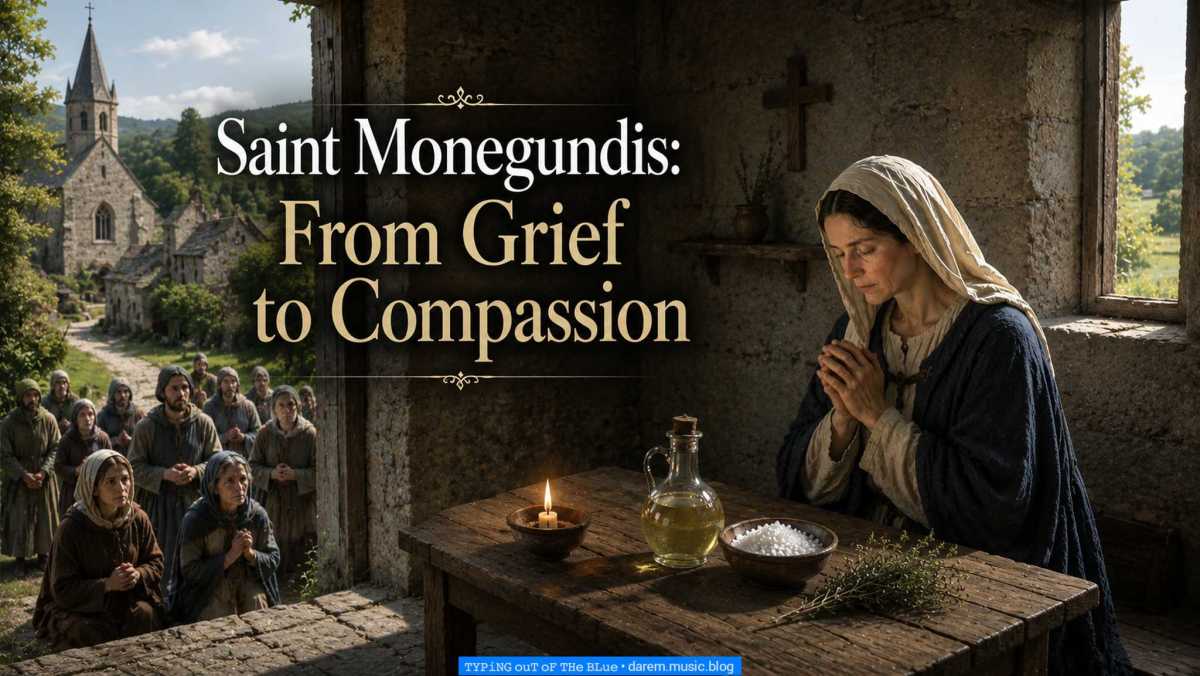
Saint Monegundis: From Grief to Compassion

History remembers kings and rulers. Some lives leave their mark through prayer, compassion, and quiet kindness.

Monegundis lived in 6th century France as a wife and mother. Her life changed forever when both of her young daughters died. Faced with a sorrow too heavy for words, she chose a path that surprised many around her. Rather than allowing grief to harden her heart, she turned toward prayer and a life of simplicity.

She withdrew from ordinary life and devoted herself to God, living in a small hermitage near her home. Her days became quiet and disciplined, marked by fasting, prayer, and reflection. What began as a personal search for peace slowly shaped a life centered on faith and compassion.

As word of her devotion spread, people in nearby communities began taking notice of her way of life. According to early Christian accounts, stories of healings connected to her prayers also began to circulate. Soon, people started making their way to her humble dwelling to seek prayers, guidance, and comfort during difficult times.

As her reputation grew, Monegundis chose not to seek recognition. Instead, she moved to Tours near the tomb of Saint Martin, whom she deeply admired. There, other women gathered around her example, and a small religious community eventually formed.

One of the most touching traditions connected to Monegundis comes from the final days of her life. According to early accounts, her followers worried about who would continue caring for the sick after her death. In response, she prayed over oil and salt that her companions could continue using in their ministry to those in need. Reports of healings continued even after she had passed away.

The story of Saint Monegundis shows that some of history’s strongest people were not those who conquered cities, but those who refused to let sorrow conquer them. She transformed personal pain into compassion and became a source of comfort for others carrying burdens of their own. Like a sorrowful melody that continues to comfort long after the final note has faded, her life became a quiet song of grief, faith, and hope that endured far beyond her own time.

Let’s keep learning the saints’ way—day by day.

⌨ ᴛʸᵖⁱⁿᵍ ᴏᵘᵗ ᵒᶠ ᵗʰᵉ ʙˡᵘᵉ ᵈᵃʳᵉᵐ ᵐᵘˢⁱᶜ ᵇˡᵒᵍ

Tears on an Empty Space • Darem Placer • Full album. Press play.

When Life Changes Key

Widows are often discussed as a group, yet their experiences can be as different as the lives they have lived.

The loss of a spouse can change the rhythm of daily life in ways that few experiences can. A familiar voice is gone. Shared routines disappear. Plans once written for two must suddenly be rewritten for one.

Yet widows are not all the same.

Some face financial difficulties after losing a partner. Others encounter legal challenges, social isolation, or the demands of managing a household alone. Many have strong support systems, stable finances, and active roles in their communities. Every story follows its own path.

Common challenges may include:

• Adjusting to life after the loss of a spouse
• Managing responsibilities that were once shared
• Navigating legal, financial, or inheritance matters
• Coping with grief and major life changes
• Rebuilding routines and future plans

Communities can help by:

• Staying connected beyond the initial period of mourning
• Offering practical assistance when needed
• Including widows in social and community activities
• Listening with patience and understanding

Governments can help by:

• Protecting inheritance and property rights
• Providing access to healthcare and social services
• Ensuring fair access to legal assistance
• Supporting economic opportunities for those who need them
• Protecting vulnerable individuals from discrimination and exploitation

A widow is not defined by loss alone. She may be a parent, professional, volunteer, entrepreneur, artist, caregiver, or community leader. While some may need support, others simply wish to be treated as they always have been: with respect, dignity, and understanding.

The loss of a spouse changes life’s rhythm in different ways for different people. Some learn a new tempo quickly, while others move through quieter passages before finding their next verse. Life’s melody does not follow the same score for everyone. The goal is not to assume what widows need, but to build communities where support is available, rights are protected, and every person is free to write the next part of their story.

⌨ ᴛʸᵖⁱⁿᵍ ᴏᵘᵗ ᵒᶠ ᵗʰᵉ ʙˡᵘᵉ ᵈᵃʳᵉᵐ ᵐᵘˢⁱᶜ ᵇˡᵒᵍ

Look Up in the Sky • Darem Placer