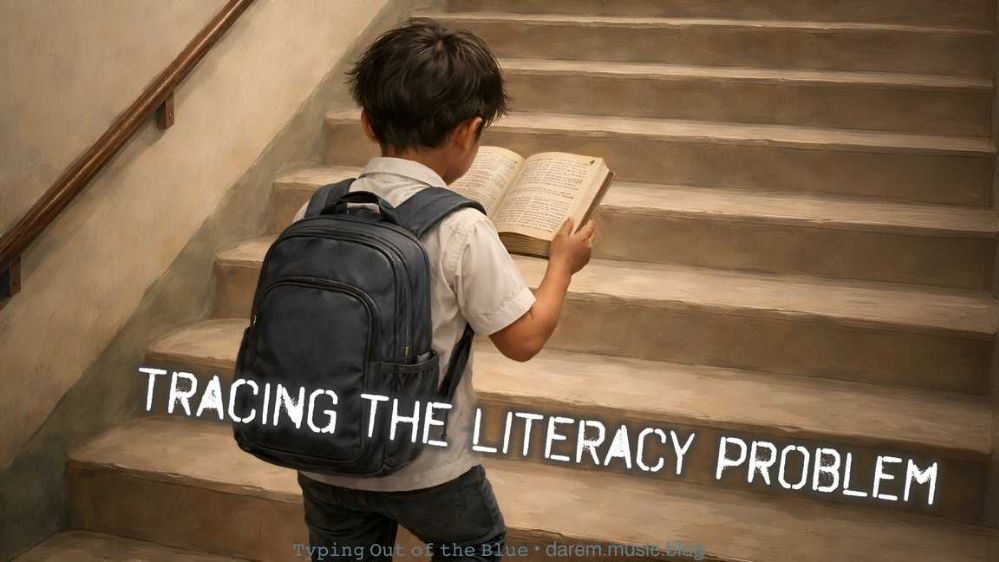
Tracing the Literacy Problem

Early reading gaps quietly grow into bigger learning problems.

EDCOM 2’s latest report, released on January 26, 2026, shows a clear pattern in Philippine education. Many students are progressing through school without strong reading and comprehension skills.

The issue begins early. In Grades 1 to 3, when reading foundations should be firmly built, many learners fall behind. These gaps often go unnoticed because students continue moving to the next grade and classes carry on as usual.

By Grade 7, the weakness becomes visible. High school assumes students can already read and understand longer texts. But many struggle. Lessons slow down. Teachers adjust. Students cope instead of learn.

By senior high, the outcome is clear. Very few students reach expected proficiency levels. This is not a sudden failure, but the result of years of unresolved learning gaps.

The data point to one conclusion: problems ignored early do not disappear. They simply resurface later, bigger and harder to fix.

⌨ ᴛʸᵖⁱⁿᵍ ᴏᵘᵗ ᵒᶠ ᵗʰᵉ ʙˡᵘᵉ ᵈᵃʳᵉᵐ ᵐᵘˢⁱᶜ ᵇˡᵒᵍ

Digital Albums by Darem Placer on Bandcamp
Listen. Support. Buy. Download.

A Summary of EDCOM 2’s Findings on Education in the Philippines

A breakdown of recent data showing how millions remain excluded from basic learning, support, and access to education.

On December 31, 2025, EDCOM 2 released its latest findings on the state of education in the Philippines, exposing serious gaps in literacy, inclusion, nutrition, and the delivery of basic services.

• Over 24 million Filipinos aged 10–64 are functionally illiterate, struggling with reading comprehension and practical use of information

• Around 5.8 million Filipinos are basically illiterate, with very limited reading and writing skills

• An estimated 5.1 million children with disabilities are not being served by the education system

• Only about 391,000 children with disabilities are enrolled in public schools, or roughly 8% coverage

• Government supplementary feeding programs reach only 43% of malnourished children aged 2–4

• Structural and coordination problems limit the reach of education and health programs

• Some national programs failed to reach BARMM due to funding and coordination issues

• Lawmakers are calling for a system reset to address these long-standing gaps

• Congress plans to apply the EDCOM review model to other sectors, including agriculture

⌨ ᴛʸᵖⁱⁿᵍ ᴏᵘᵗ ᵒᶠ ᵗʰᵉ ʙˡᵘᵉ ᵈᵃʳᵉᵐ ᵐᵘˢⁱᶜ ᵇˡᵒᵍ

Digital Albums by Darem Placer on Bandcamp
Listen. Buy. Download.