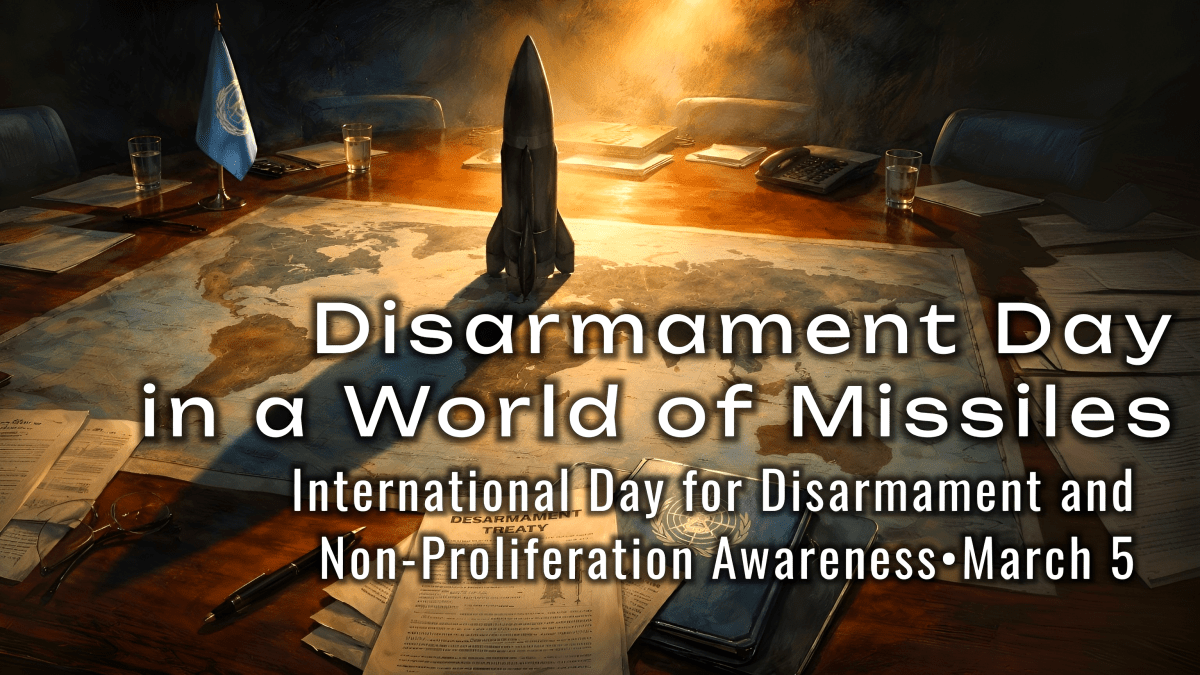
Disarmament Day in a World of Missiles

A day meant to remind the world about limiting weapons arrives while conflict headlines grow louder.

March 5 is marked as the International Day for Disarmament and Non-Proliferation Awareness.

The idea behind the day is simple: a world with fewer weapons is a world with fewer chances for war.

Most years, the day passes almost unnoticed.

But this year it arrives while tension involving Iran, Israel, and the United States continues to rise. Missiles, drones, warnings, retaliation. The headlines move quickly from one strike to another response.

In moments like this, the word “disarmament” stops sounding theoretical.

Because modern weapons change how conflicts unfold. A single strike can trigger another. One decision can travel quickly across borders. The technology designed to protect a nation can also pull entire regions into danger.

That is why this day exists.

Not as a celebration. Not as a speech about ideal peace.

More like a pause written into the calendar.

Humanity has become very skilled at building powerful weapons. Every year they become faster, smarter, and more destructive.

But the deeper question has never really been about technology.

If humanity can invest so much effort into creating weapons, can it also find the discipline to limit them?

⌨ ᴛʸᵖⁱⁿᵍ ᴏᵘᵗ ᵒᶠ ᵗʰᵉ ʙˡᵘᵉ ᵈᵃʳᵉᵐ ᵐᵘˢⁱᶜ ᵇˡᵒᵍ

Aliens•Darem Placer

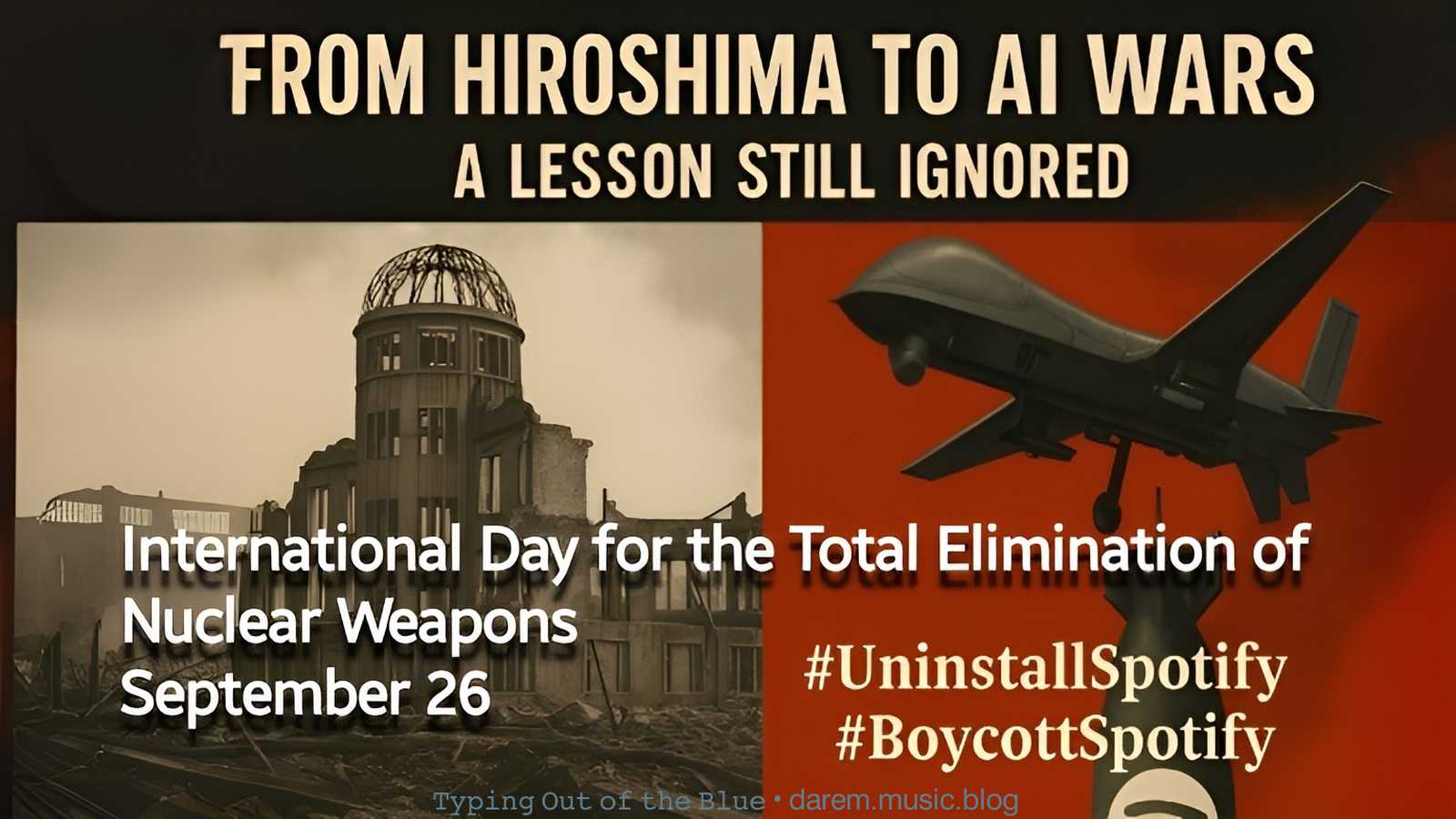
From Hiroshima to AI Wars — A Lesson Still Ignored

From nukes to AI: stop weaponizing, start redirecting. This world wasn’t created for war.

International Day for the Total Elimination of Nuclear Weapons • September 26

On August 6, 1945, at exactly 8:15 a.m., Hiroshima was wiped out in seconds. The world said, “Never again,” promising to keep human judgment ahead of technology. Yet warnings meant to save us often end up speeding up the very things they’re trying to stop.

In 1939, Albert Einstein and physicist Leó Szilárd warned the United States that Nazi Germany might develop atomic weapons. It was meant as defense—a heads-up to prevent disaster. That letter helped set in motion the Manhattan Project, and six years later the first atomic bomb didn’t fall on Germany—it fell on Japan. The warning meant to stop the monster ended up breathing life into it.

Today, 26 September, on the International Day for the Total Elimination of Nuclear Weapons, we’re reminded that the same pattern keeps repeating. German startup Helsing doesn’t build nuclear bombs—it builds AI fighter pilots, kamikaze drones, and underwater gliders, all in the name of “protecting democracy.” Spotify founder and Helsing chairman Daniel Ek backs it as a move to strengthen Europe’s defenses. But history whispers the same warning: every defensive breakthrough can become the next threat. One AI misread in a nuclear standoff could trigger a chain reaction—faster than any human can stop.

Hiroshima taught us that one mistake can erase a city. Einstein’s warning and Ek’s leadership are generations apart, but the lesson is the same: keep building ultimate weapons in the name of protection, and one day defense itself will become the disaster.

It’s past time to stop everything about nuclear weapons—and pivot our efforts toward nuclear science for peace: clean energy, medical use, climate solutions. Better yet: let’s imagine a world where all war weapons are obsolete. This world wasn’t created for war. Let’s prove it. And maybe it’s time we also rethink funding war through the platforms we use every day. When Spotify’s billionaire founder profits from your streams while steering an AI weapons company, maybe the most peaceful act is simple: uninstall Spotify.

ᴛʸᵖⁱⁿᵍ ᴏᵘᵗ ᵒᶠ ᵗʰᵉ ʙˡᵘᵉ ᵈᵃʳᵉᵐ ᵐᵘˢⁱᶜ ᵇˡᵒᵍ
A Plane Just Passed By • Darem Placer

Listen to Look Up in the Sky on Apple Music , Apple Music Classical , and YouTube Music

Look Up in the Sky includes A Plane Just Passed By