Climate Change: The Bad News and the Good News

Climate change is no longer distant. It now shapes health, daily life, and even global power.

For those who’d rather listen.

2026 Reality Check

Climate change used to be about nature.

Now it is about people, systems, and power.

It affects not just weather, but health, behavior, economies, and even politics between countries.

The Bad News

The impact is deeper than expected.

1. It is now reshaping global politics

Climate change is starting to redraw the political map of the world.

• Countries are competing for food, land, and resources 
• Access to fertile land can influence conflict and tension 
• Previously frozen or unused regions are becoming new areas of interest 

Example: 
As land becomes usable in colder regions, countries may start to compete more for access to these newly usable areas.

At the same time, highly productive regions are becoming more valuable because of their role in global food supply.

Climate change is quietly turning into a resource race.

And it doesn’t stop at borders.

2. It is now affecting human health directly

Disease is no longer separate from climate.

• Heat and rainfall patterns are driving outbreaks like dengue 
• Conditions that spread disease are becoming more common 
• Some diseases are expanding into new regions 

The environment is now influencing who gets sick, and where.

3. Weather is breaking its own rules

Seasons are losing structure.

• Heat arrives earlier than expected 
• Rain comes in the wrong amounts and timing 
• Familiar patterns no longer apply 

The calendar is no longer reliable.

4. Disasters are grouping together

Extreme events are no longer isolated.

• One system can trigger multiple disasters 
• Tornadoes, floods, and storms can happen together 
• More “outbreak days” instead of single incidents 

It is no longer one problem at a time.

5. Daily life is being quietly altered

Heat affects behavior.

• People move less when it is too hot 
• This increases long-term risks like heart disease and diabetes 
• Small changes build up over time 

Climate change is not just outside. It is shaping daily habits.

6. Nature is struggling to keep pace

Ecosystems are under pressure.

• Some are adapting more slowly 
• Recovery after damage is harder 
• Systems are becoming less stable 

The balance is weakening.

The Good News

There is still movement forward.

1. We now understand the problem better than before

Climate change is no longer abstract.

We can now clearly link it to:

• disease 
• weather patterns 
• human behavior 
• political tension 

Clarity is progress.

2. Solutions already exist, but they are not yet used fast enough

• Renewable energy is growing 
• Scientific innovation is improving 
• Natural solutions are being studied 

The tools are already here, but the pace needs to match the problem.

3. Global awareness is stronger, but action is uneven

Countries are treating climate as:

• a security issue 
• a policy priority 
• a long-term challenge 

It is no longer ignored, but progress is not consistent.

4. Some systems are still holding on

Not everything is collapsing.

There are still:

• stable ecosystems 
• recoverable environments 
• opportunities to act before damage becomes harder to reverse 

There is still time to respond.

The Real Picture

Climate change is no longer just environmental.

It is:

• physical (heat, storms, disease) 
• behavioral (how we live) 
• economic (food, resources) 
• political (land, power, conflict) 

Simple Takeaway

The bad news? 
Climate change is already affecting how we live.

The good news? 
We can see it clearly now.

And when something becomes clear, 
it becomes harder to ignore.

⌨ ᴛʸᵖⁱⁿᵍ ᴏᵘᵗ ᵒᶠ ᵗʰᵉ ʙˡᵘᵉ ᵈᵃʳᵉᵐ ᵐᵘˢⁱᶜ ᵇˡᵒᵍ
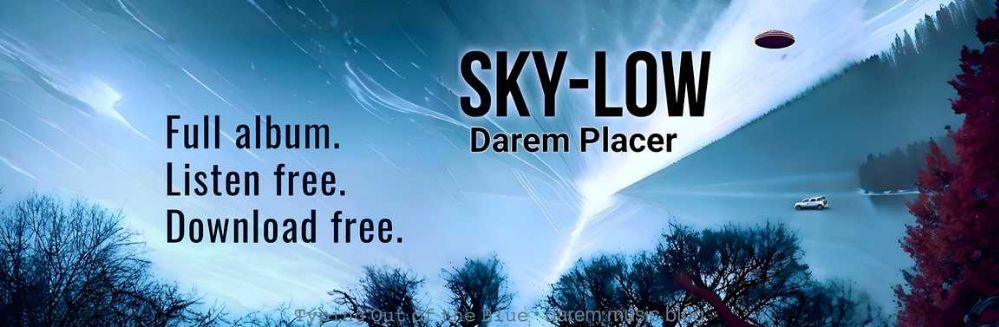
Sky-Low • Darem Placer

No One Escapes Climate Change

Climate change is not tomorrow’s problem. It’s today’s emergency—and no one gets a free pass from its effects.

The sky is getting low

The Earth has already warmed by 1.2°C. It sounds small — but it’s already killing people, wrecking homes, and reshaping life as we know it. Push past 1.5°C, and everything gets worse.

The Heat That Kills

This isn’t just about sweating more.
• Heatwaves now kill thousands — Europe lost 1,500 in a single summer.
• Imagine your grandparents in 40°C heat with no relief.
• Cities turn into giant ovens — deadly for the poor, the old, the sick.

The Ocean Fights Back

• 84% of the world’s coral reefs are already bleached.
• Warmer seas create monster typhoons — the Philippines, Japan, Caribbean are all targets.
• Fish populations collapse, and suddenly the cheapest meal on the table becomes unaffordable.
• The ocean, once our carbon sponge, is starting to leak CO₂ back into the air.

Ice Is Melting, Seas Are Rising

• Arctic air is now 5°C hotter than a century ago.
• Greenland and Antarctica bleed ice into the sea.
• Coastal towns and islands are slowly drowning. “Permanent flood” is no longer science fiction.

Forests on Fire

• The Amazon and other rainforests are drying, burning, and collapsing.
• When forests fall, carbon pours back into the sky.
• Hillsides stripped of trees crumble in mudslides, burying homes.

Food, Water, and Survival

• Crops fail in heat and flood alike. Rice, wheat, maize — the basics — are all at risk.
• Glaciers that once fed rivers are gone. Some taps run dry while others drown in floods.
• Food prices rise, hunger deepens. For millions, even plain rice or bread may slip out of reach.

The Disappearing Wild

• At 1.5°C warming, 14% of species face extinction.
• Coral reefs, mangroves, tundra — once full of life, now silent.
• Ecosystems unravel when keystone species vanish.

The Human Cost

This is where it hits hardest.
• Stronger storms and floods wipe out homes, schools, jobs.
• Indigenous peoples lose sacred lands and ways of life.
• Warmer climates spread diseases — dengue, malaria, heat stroke everywhere.
• Millions become climate refugees, forced to leave everything behind.
• The poor suffer most — least prepared, least resources, most exposed.

The Hard Truth

This is not tomorrow’s problem. It’s today’s emergency. Forests, oceans, poles, farmland — collapsing in real time.

If you think you’re safe, think again.
• Your food will cost more.
• Your water will run short.
• Your home may flood or burn.
• Your children will inherit the wreckage.

Every delay means more lives lost, more homes destroyed, more nature erased.

But Hope Still Breathes

The future is not written yet. We know what fuels this crisis — and we know how to fight back.

• Cut emissions fast.
• Protect forests, oceans, and wildlife.
• Build communities that can withstand storms and droughts.
• Hold leaders accountable, and live choices that push change.

The window is small, but it’s still open.
If we act now, we can turn the tide. Not just for us, but for every generation after.


🌍 A Soundtrack for Awareness

I created an instrumental album called Sky-Low — heavy, shifting, sometimes unsettling, just like the world we live in. Let it remind you of what’s at stake, but don’t get lost in the music. Awareness only matters if it leads to action.

💿 Just type 0 if you want to download the album for free. If you’d like to support my efforts, feel free to name your price.

👉 Download Sky-Low on Bandcamp

Sky-Low
“Sky-Low” is not just an album—it’s an awareness campaign about climate change and a challenge to protect our planet.


𝚃𝚢𝚙𝚒𝚗𝚐 𝙾𝚞𝚝 𝚘𝚏 𝚝𝚑𝚎 𝙱𝚕𝚞𝚎 • 𝖽𝖺𝗋𝖾𝗆.𝗆𝗎𝗌𝗂𝖼.𝖻𝗅𝗈𝗀