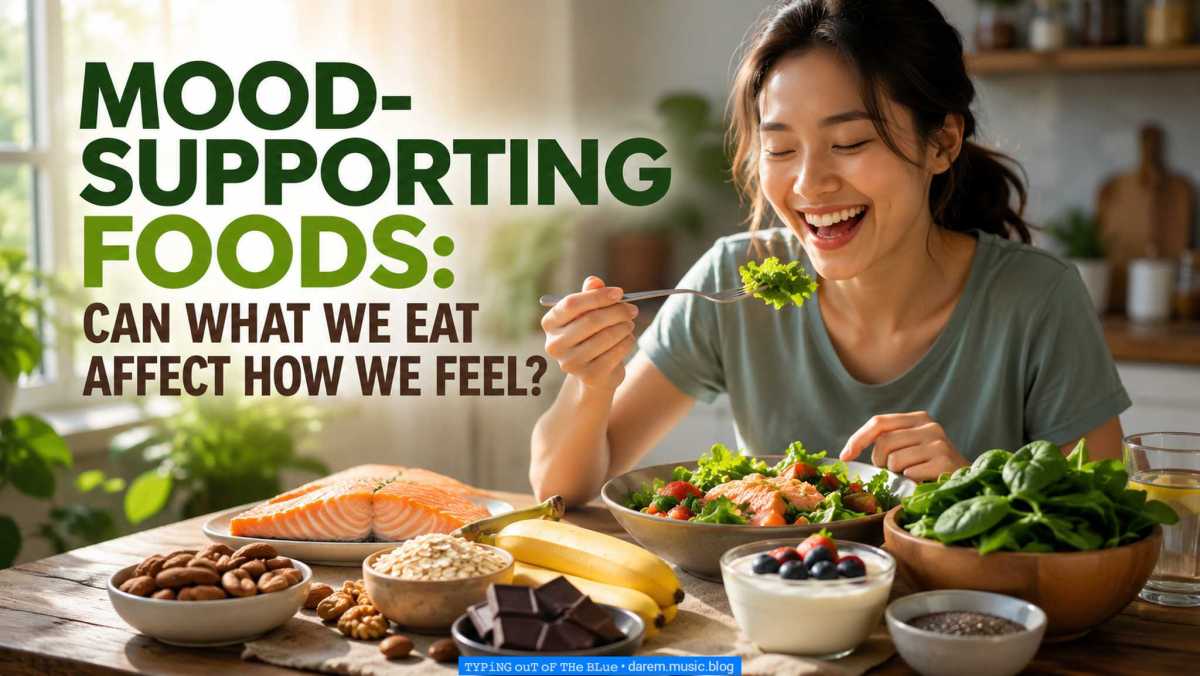
Mood-Supporting Foods: Can What We Eat Affect How We Feel?

The relationship between food and mood may be more interesting than we think.

The idea of “happy foods” sounds appealing, but experts prefer a more grounded term: mood-supporting foods.

No food can manufacture happiness on command. Life is not a vending machine where we insert a sandwich and receive three units of joy in return. But some foods can support brain health, steady our energy levels, and provide nutrients that help our brains and bodies function well.

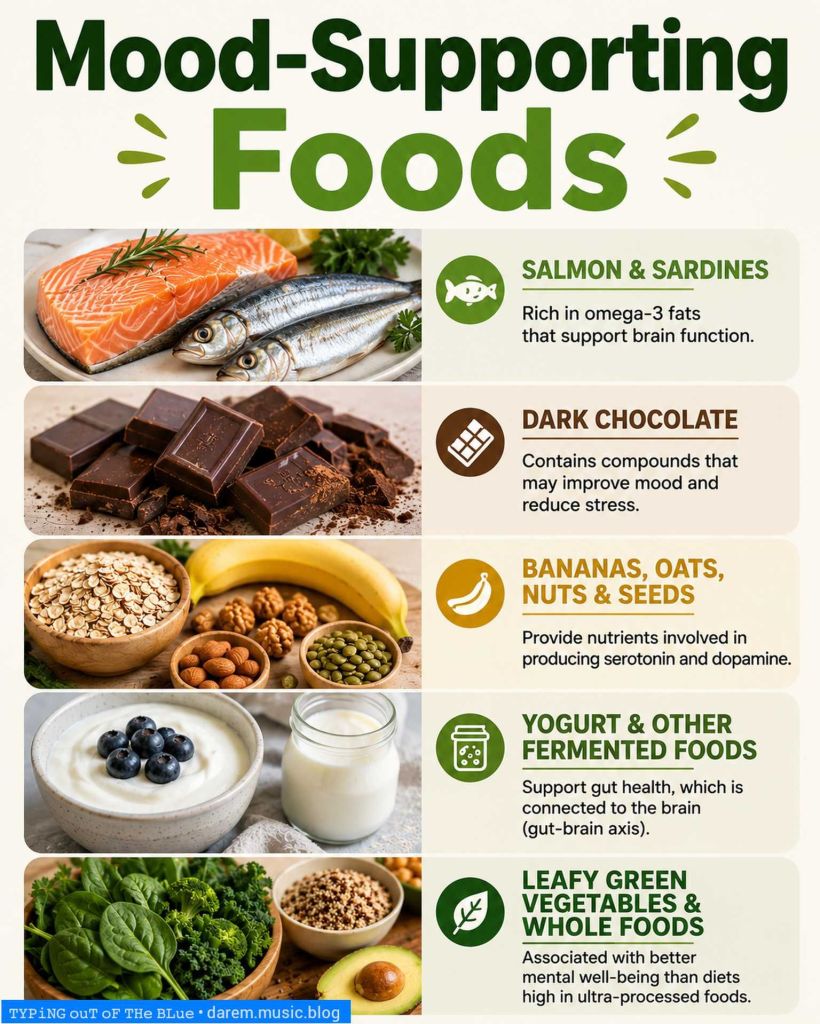
Foods commonly linked to mood support include:

• Salmon and sardines because they contain omega-3 fats that support brain function.

• Dark chocolate, which contains compounds that may help improve mood and reduce stress.

• Bananas, oats, nuts, and seeds, which provide nutrients involved in producing serotonin and dopamine.

• Yogurt and other fermented foods, thanks to the connection between the gut and the brain, often called the gut-brain axis.

• Leafy green vegetables and whole foods, which are generally associated with better mental well-being than diets high in ultra-processed foods.

The truth is that emotions rarely come from a single source. Food is only one instrument in a much larger band that includes sleep, movement, friendships, purpose, and moments of rest between the noise of everyday life.

Perhaps mood-supporting foods are real, but not in the way we often imagine.

Maybe a mood-supporting food is simply one that nourishes more than hunger.

A warm meal after a long day.
Fresh fruit on a hot afternoon.
Soup during the rain.
Bread shared across a table.

Sometimes a better mood does not arrive like a loud chorus.

Sometimes it arrives like a quiet melody… carrying a plate.
⌨ ᴛʸᵖⁱⁿᵍ ᴏᵘᵗ ᵒᶠ ᵗʰᵉ ʙˡᵘᵉ ᵈᵃʳᵉᵐ ᵐᵘˢⁱᶜ ᵇˡᵒᵍ

Beyond the Clouds of Worries in the Moment • Darem Placer • Full album. Press play.

Can Parkinson’s Be Avoided?

We can’t stop everything—but we’re not helpless.

Short answer: No, Parkinson’s isn’t fully avoidable.

But it’s not completely out of our hands either.

Parkinson’s disease is a condition where the brain slowly loses dopamine, a chemical that helps control movement. As dopamine levels drop, movements become harder to manage—things like walking, writing, or even simple gestures.

Parkinson’s is mostly not preventable. It usually comes from a mix of:

• genetics
• aging
• environmental exposure (like pesticides or toxins)

It’s not something we can fully block or outsmart.

It’s often known for movement problems, but it can also affect sleep, mood, and thinking.

Some risk factors are beyond our control:

• age (risk increases as we get older)
• genetics (even without family history, it can still happen)

These are built-in factors. No way around them.

But not everything is out of our control:

• long-term exposure to pesticides or toxic chemicals
• repeated head injuries
• lack of regular movement

Avoiding these does not guarantee safety, but it lowers our risk.

What helps is not prevention, but protection:

• stay physically active
• eat a balanced diet
• protect our head (helmets matter)
• reduce exposure to harmful chemicals

We cannot control everything. But we are not powerless.

We do not prevent Parkinson’s. We reduce the odds and strengthen our system.

⌨ ᴛʸᵖⁱⁿᵍ ᴏᵘᵗ ᵒᶠ ᵗʰᵉ ʙˡᵘᵉ ᵈᵃʳᵉᵐ ᵐᵘˢⁱᶜ ᵇˡᵒᵍ

Beyond the Clouds of Worries in the Moment • Darem Placer