

No alien encounter has ever been scientifically confirmed. Still, some stories have lingered for decades, refusing to fade like old radio signals drifting through the night.
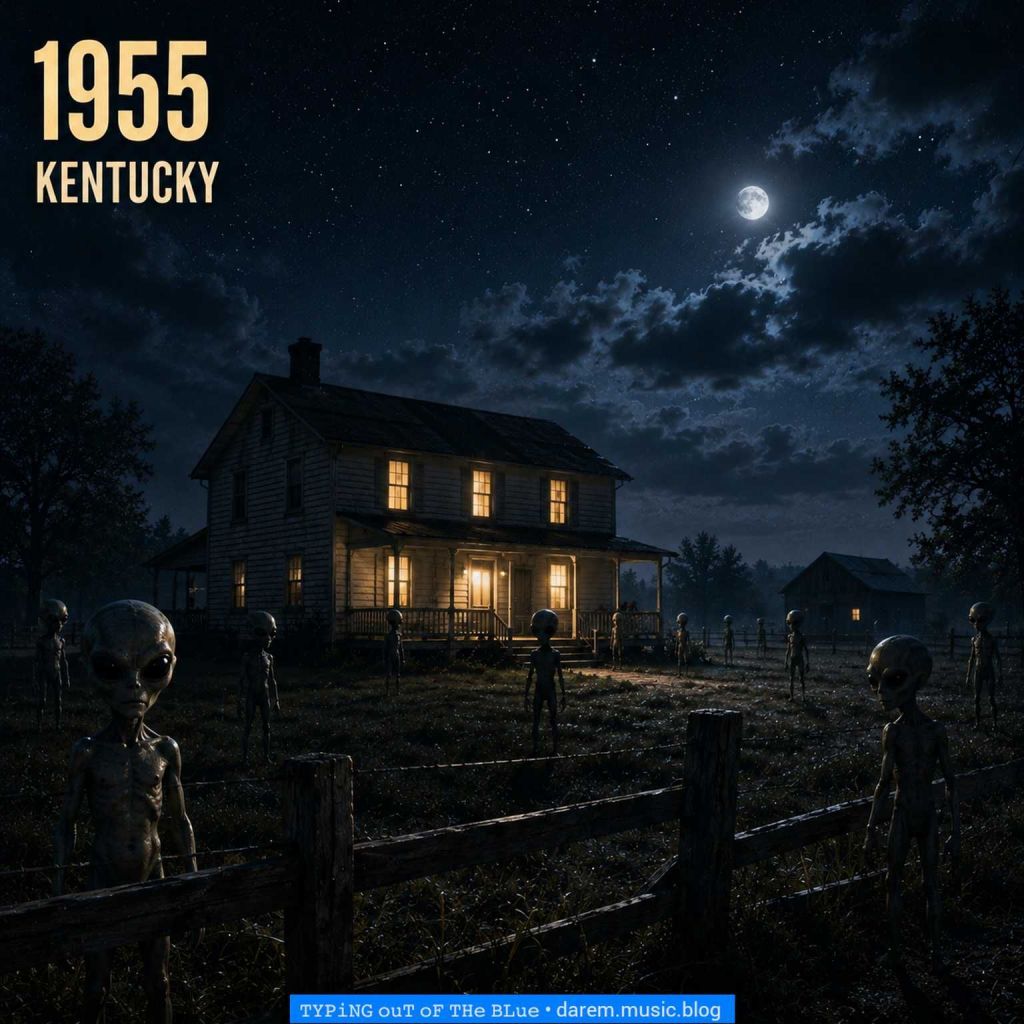
In 1955, a family in rural Kentucky claimed that small creatures with large eyes surrounded their farmhouse. Gunfire followed, fear filled the night, and by morning the visitors were gone without a trace.
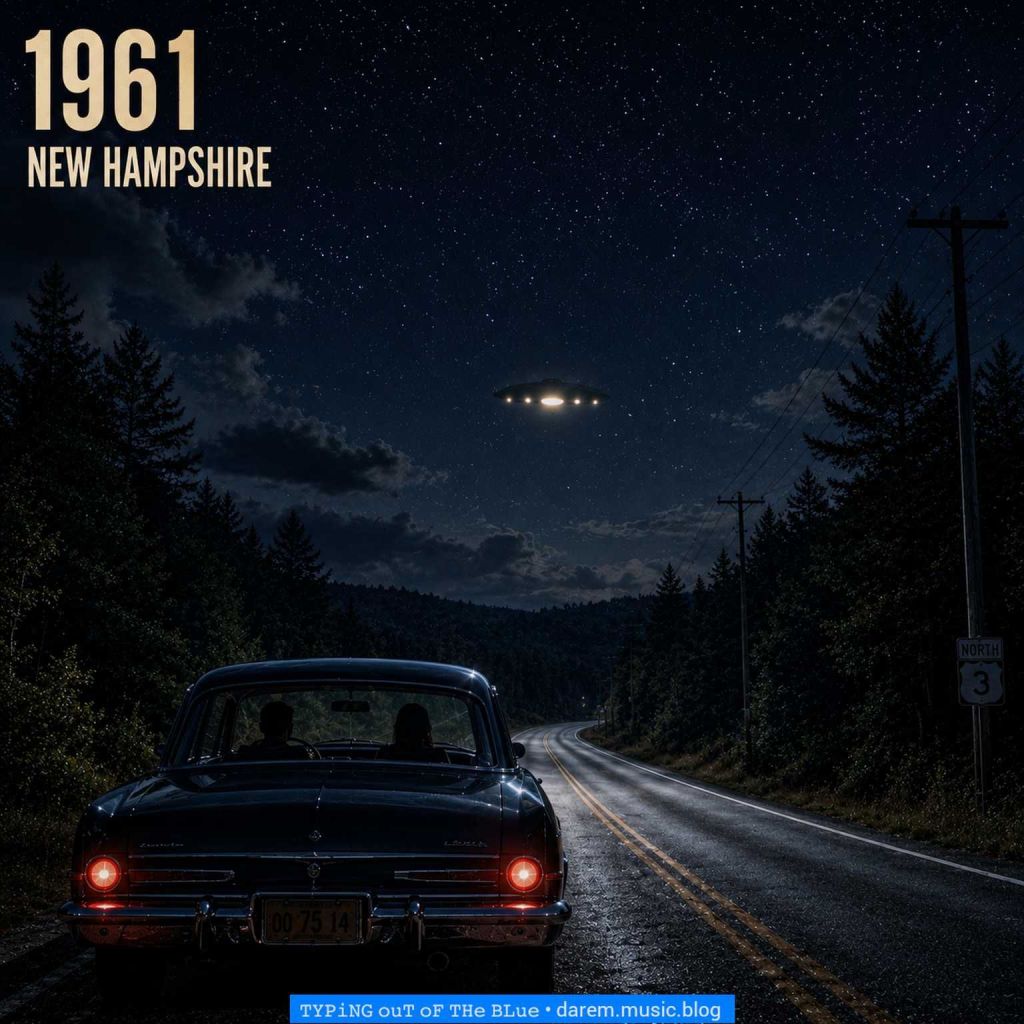
In 1961, a married couple driving through New Hampshire reported seeing a strange object in the sky. Later, they realized that part of their journey seemed missing from memory, as if time itself had skipped a few pages.

In 1967, two children in the French countryside reported seeing small beings near a shining sphere resting in a field. Moments later, the object lifted silently into the sky and disappeared.
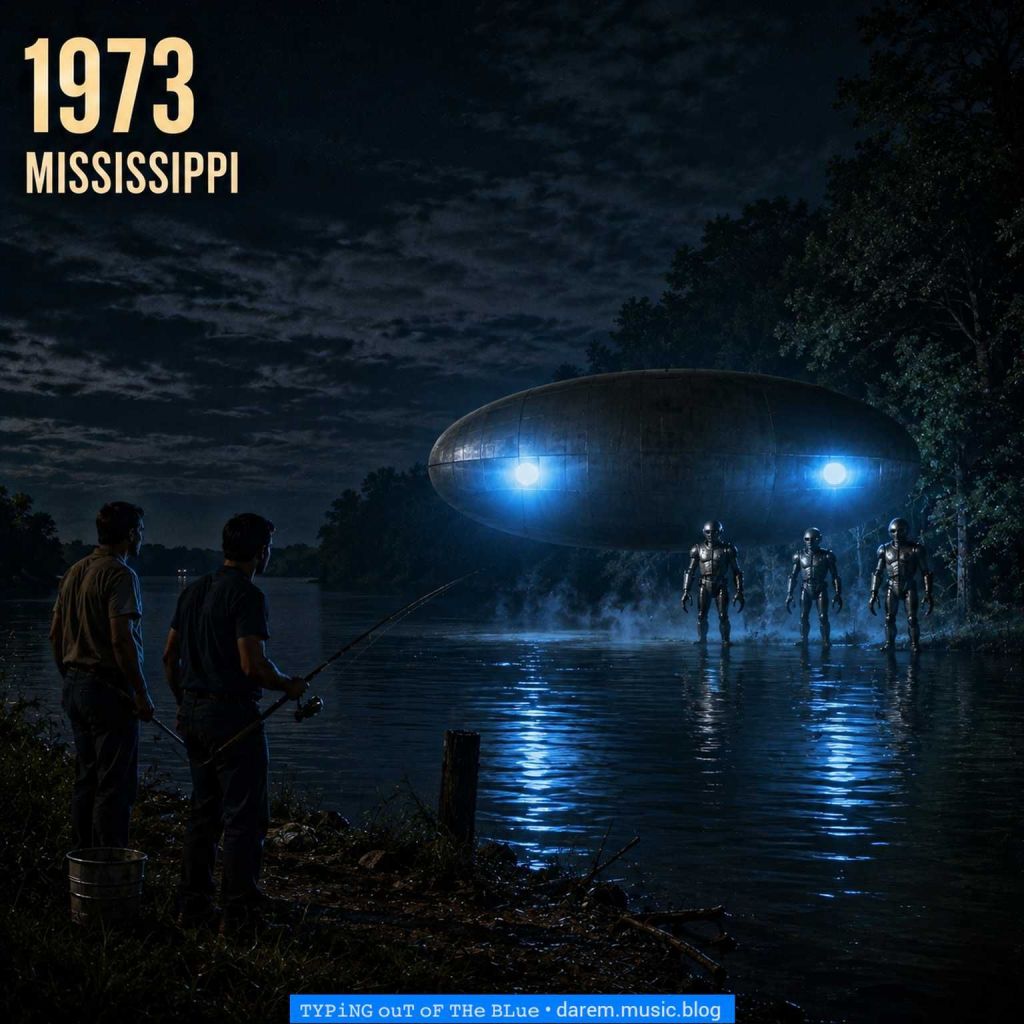
In 1973, several people in Mississippi claimed they were taken aboard a craft by robotic-looking beings. Their frightened reaction was recorded shortly after the event, becoming one of the most discussed details of the case.

In 1994, dozens of schoolchildren in Zimbabwe reported seeing a strange craft land near their playground during recess. Many described similar beings and experiences, despite being interviewed separately.
Were any of these encounters real?
No physical evidence has confirmed extraterrestrial visitors in any of these cases. Some may have involved misidentifications, dreams, memory distortions, social influence, or experiences that still lack a clear explanation.
For now, these stories remain suspended between history, folklore, psychology, and possibility. Some may one day find ordinary explanations, while others may continue to rest quietly in the world’s cabinet of unsolved mysteries.
Perhaps the more interesting question is not whether these encounters prove that we are not alone, but why humanity keeps looking up and asking the same question across generations.
In a universe filled with countless stars and worlds, certainty remains out of reach. Until clearer answers arrive, the silence between the stars leaves room for both skepticism and wonder.
And so the question remains, lingering like a note that refuses to fade at the end of a song: Are we alone, or are we simply listening for voices in a much larger chorus?
For now, the universe keeps its rhythm, and each of us is left to decide whether the night sky is performing a solo or waiting for the rest of the orchestra to join in.
Disclaimer: All images in this article are AI-generated reconstructions created to depict the reported scenes as closely as possible based on witness testimony and available historical descriptions. They are artistic interpretations and not verified photographs of actual events.
⌨ ᴛʸᵖⁱⁿᵍ ᴏᵘᵗ ᵒᶠ ᵗʰᵉ ʙˡᵘᵉ ᵈᵃʳᵉᵐ ᵐᵘˢⁱᶜ ᵇˡᵒᵍ
