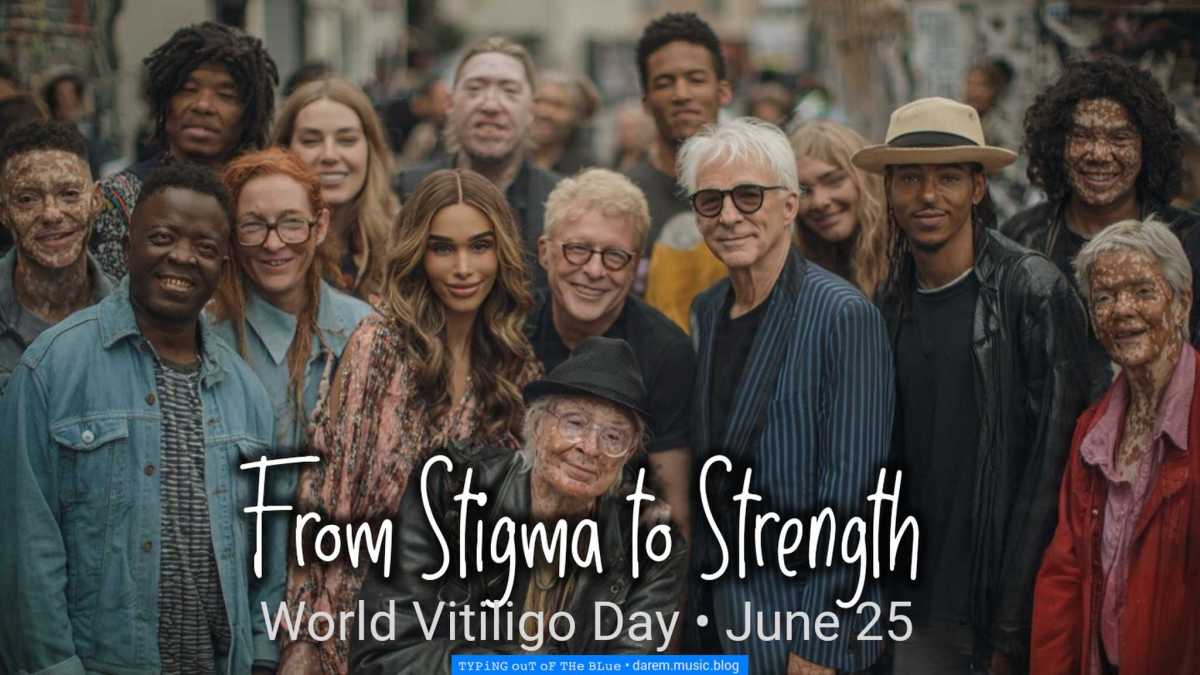
Vitiligo is a condition that causes some areas of the skin to lose their natural color, creating lighter patches that can appear anywhere on the body. It is not contagious, not caused by poor hygiene, and usually does not cause pain. People with vitiligo can study, work, play sports, pursue careers, and enjoy life just like anyone else.
Yet for many people, the challenge is not the condition itself.
A change in appearance can attract attention. We may stare without meaning to. We may make assumptions or repeat things we have heard without knowing whether they are true. Misconceptions about vitiligo have existed for many years, sometimes making people feel different or misunderstood because of how they look.
But many people with vitiligo refuse to let those reactions define them.
They continue showing up. They go to school, build careers, raise families, create art, chase goals, and live their lives with confidence. Their stories remind us that a person’s worth is not measured by appearance. The things that matter most, such as character, kindness, and determination, cannot be seen on the surface.
Things are changing, however. Compared to the past, we are generally more informed and accepting of vitiligo. Better access to information and greater awareness have helped correct many misconceptions. Public figures such as model Winnie Harlow, actor and comedian Steve Martin, and the late musician Michael Jackson helped bring greater visibility to the condition through their work and public presence. While misunderstandings still exist, many communities have become more welcoming and inclusive. What was once often met with stigma is increasingly met with understanding, acceptance, and strength.
Supporting people with vitiligo does not require grand gestures. We can start by treating them the same way we would treat anyone else. We can choose respect over assumptions and understanding over myths. If we are curious, we can ask questions kindly and respectfully. Most importantly, we can remember that a skin condition is only one small part of a much bigger story.
A good song is not made from a single note repeated over and over. Its beauty comes from different notes working together. In the same way, our differences do not diminish the melody of life. They help make it richer.
⌨ ᴛʸᵖⁱⁿᵍ ᴏᵘᵗ ᵒᶠ ᵗʰᵉ ʙˡᵘᵉ ᵈᵃʳᵉᵐ ᵐᵘˢⁱᶜ ᵇˡᵒᵍ