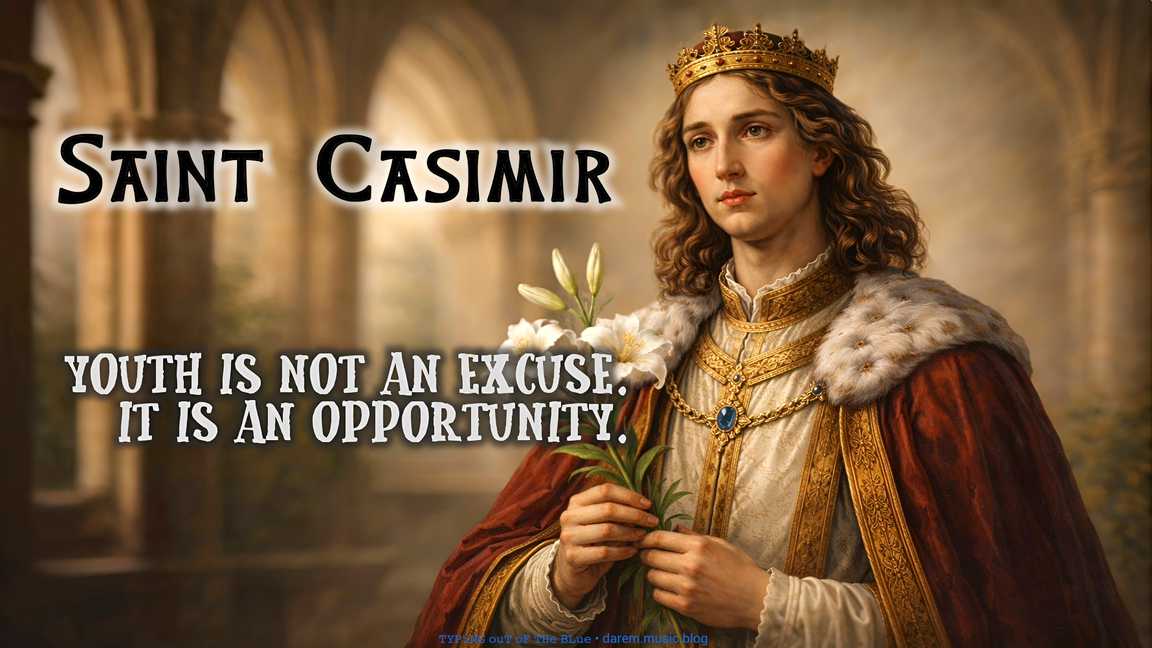
Saint Casimir

He died at twenty-five—but he did not waste his youth.

There is a quiet lesson in the life of Saint Casimir.

Casimir was born into royalty in 1458. Comfort was normal. Influence was expected. Power was within reach. He grew up in palaces, surrounded by politics and ambition.

He could have leaned into it. Many would have.

Instead, he leaned into prayer. Discipline. Charity.

He was offered the throne of Hungary while still young. The kind of opportunity people spend a lifetime chasing. But when politics turned complicated, he did not force his way forward. He stepped back rather than bend his conscience.

He chose restraint inside privilege. He chose integrity inside power.

He died at twenty-five. Which means everything he became, he became early.

There was no long retirement phase. No decades to repair mistakes. The habits he formed in youth shaped his whole life.

Many people treat youth as a waiting room. A phase to experiment without direction. A season to delay seriousness.

Casimir treated it as a foundation.

He did not wait to mature into virtue. He practiced it while young. He did not postpone discipline. He built it early. He did not assume faith was for later. He lived it now.

That is why Saint Casimir became a patron of youth. Not because he was young. But because he proved that young people are capable of depth, conviction, and self-control.

Youth is not an excuse.

It is an opportunity.

Let’s keep learning the saints’ way—day by day.

⌨ ᴛʸᵖⁱⁿᵍ ᴏᵘᵗ ᵒᶠ ᵗʰᵉ ʙˡᵘᵉ ᵈᵃʳᵉᵐ ᵐᵘˢⁱᶜ ᵇˡᵒᵍ

Saint • Darem Placer

Saint Marinus of Caesarea

Sometimes the hardest part is having time to think.

Three Hours

3rd century. Caesarea. Roman rule everywhere.

Marinus was a soldier. Active duty. Trained. Disciplined. Loyal to the empire in every visible way.

He was about to be promoted to centurion. Higher rank. More pay. Public honor. It was already within reach.

Then the condition came. Before the promotion, he had to offer sacrifice to the Roman gods. A required act. Expected. It was how things were done.

Marinus said no.

Another soldier reported him. The case went to the governor. The governor gave him three hours to decide.

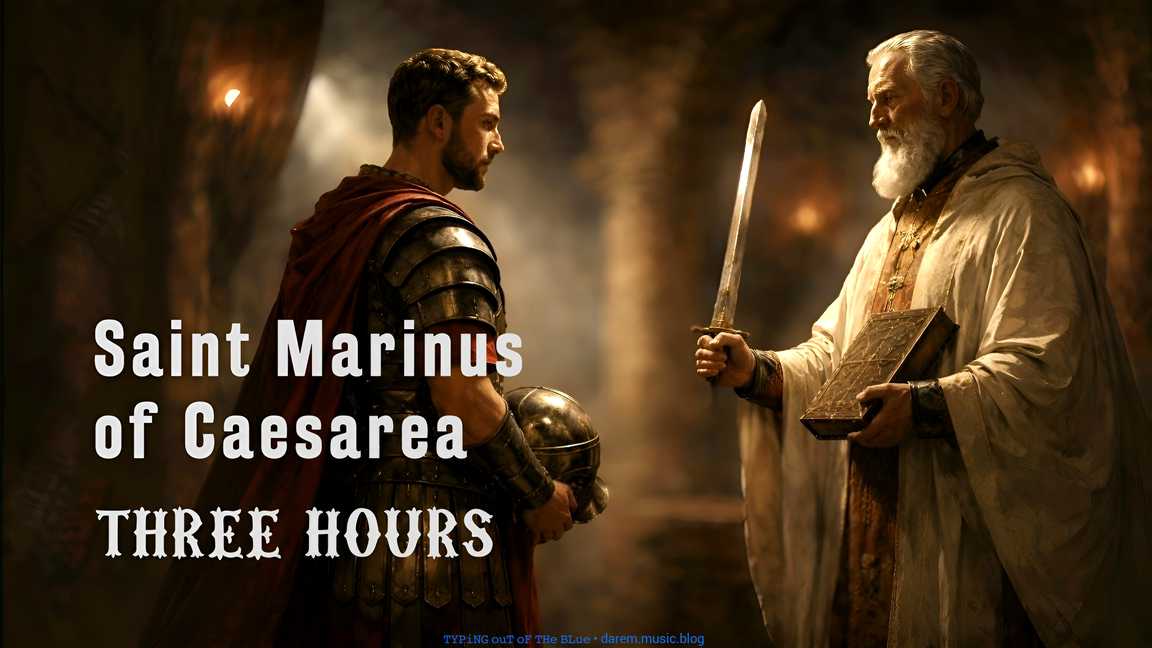
Marinus went to the bishop of Caesarea, traditionally identified as Theotecnus. In the church, the bishop placed a sword in one hand and the Gospel in the other. Then he told him to choose.

Marinus reached for the Gospel.

He returned to the governor. Refused the sacrifice again. He was beheaded around AD 260.

He was given time. He used it. He knew what he was about to lose.

Today, most of us are not facing execution. But we are often given time to rethink what we believe. A pause before sending a message. A night to reconsider a deal. A moment to ask whether we are about to trade something deeper for something easier.

We also get our three hours.

And what we choose in that space shapes who we become.

Let’s keep learning the saints’ way—day by day.

⌨ ᴛʸᵖⁱⁿᵍ ᴏᵘᵗ ᵒᶠ ᵗʰᵉ ʙˡᵘᵉ ᵈᵃʳᵉᵐ ᵐᵘˢⁱᶜ ᵇˡᵒᵍ
Escape the Quiet Road • Darem Placer