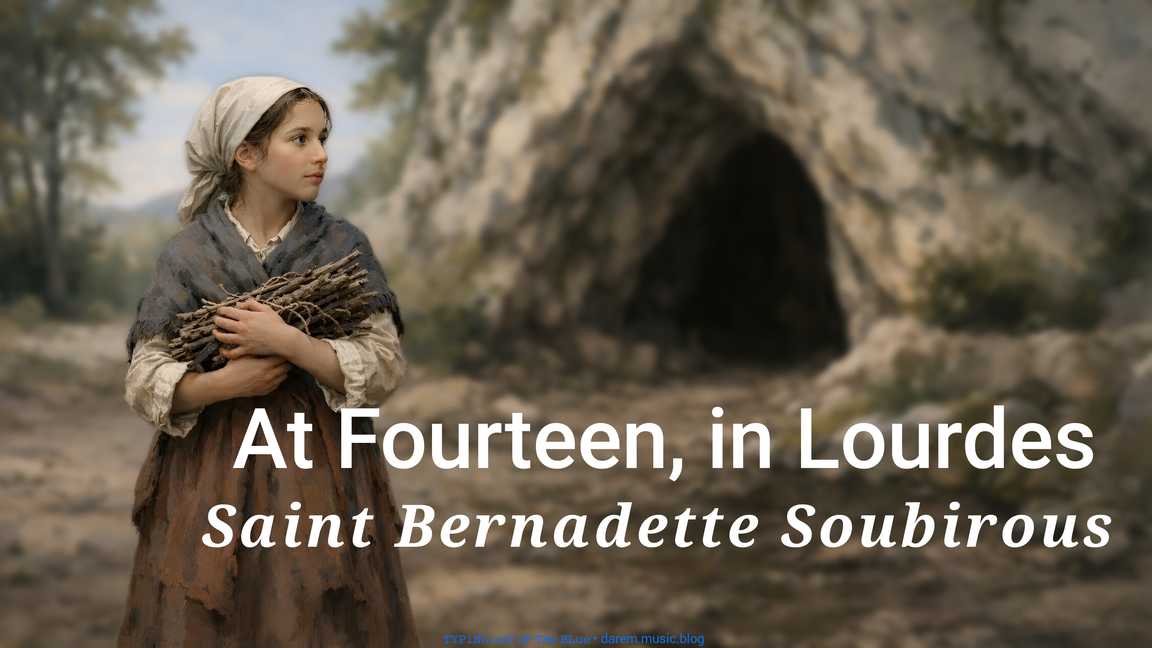
At Fourteen, in Lourdes

In a quiet corner of Lourdes, something began that would reach far beyond her small world.

Bernadette Soubirous grew up in Lourdes, France, in the 19th century. Her family was poor. They lived in a cramped, damp room called the Cachot, an old jail turned into a home. No space. No comfort. Just survival. She carried it quietly.

She wasn’t strong in school. Reading came late. Catechism was difficult. She forgot things easily. She stayed honest about it. When she didn’t understand, she said so. When she was taught, she listened.

As a child, she helped where she could. She gathered firewood, cared for younger children, and handled small tasks that kept the family going. No one was watching. Still, she showed up.

Even in prayer, she was simple. She struggled to memorize words, but she tried anyway. Slowly. Sometimes wrong. But real.

From the outside, her life was easy to overlook. Just a girl living small things faithfully.

And then the day came.

On February 11, 1858, in Lourdes, France, at 14 years old, while gathering firewood near the Grotto of Massabielle, she heard a sound like wind—but the trees didn’t move. She looked up.

And there, in the silence of the grotto, she saw a Lady in white. The first moment of something that would draw the world to Lourdes.

Today, we might feel behind, unnoticed, or not good enough. School may be a struggle. Life at home may be tight. Nothing about it looks special.

But her life shows something real.

We don’t have to stand out to be ready. We don’t have to be ahead to be chosen. We just need to be real, present, and faithful in what is already in front of us.

Let’s keep learning the saints’ way—day by day.

⌨ ᴛʸᵖⁱⁿᵍ ᴏᵘᵗ ᵒᶠ ᵗʰᵉ ʙˡᵘᵉ ᵈᵃʳᵉᵐ ᵐᵘˢⁱᶜ ᵇˡᵒᵍ

Still Air•Darem Placer

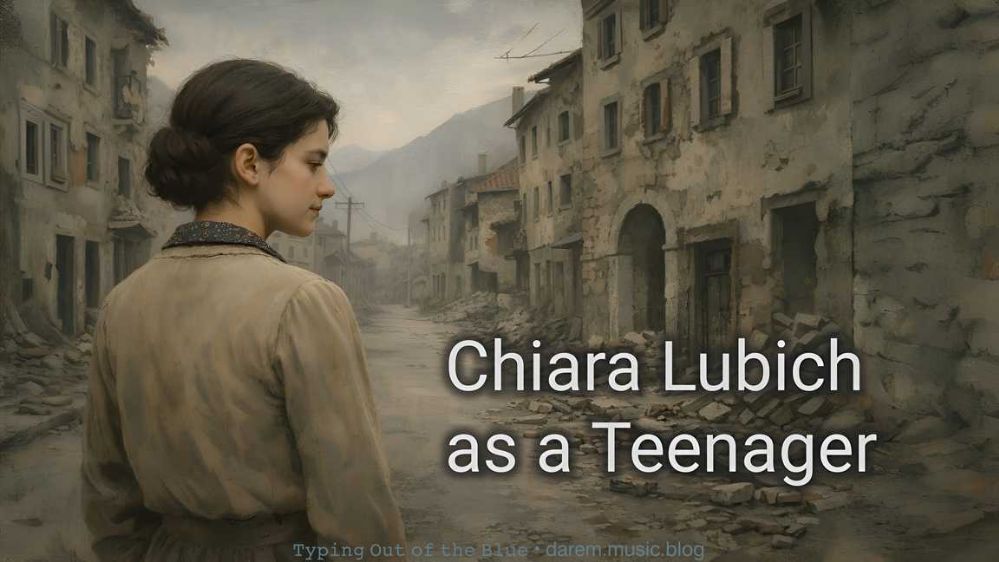
Chiara Lubich as a Teenager

A teenage girl grows up amid limits, uncertainty, and the questions war leaves behind.

For those who’d rather listen.

Chiara was born on January 22, 1920, in Trento, Italy, a small city in northern Italy. She grew up between the two world wars, during a time of tension and uncertainty. Long before she became known as the founder of the Focolare Movement, she was simply a teenage girl trying to understand life and truth.

As a teenager, Chiara lived with clear limits. Her family struggled financially, and her father lost his job because of his political views. Because of this, she learned early how to be practical. She wanted to study philosophy, but her family could not afford university, so she trained to become a primary school teacher instead. She adjusted her path and moved forward.

At home, she encountered two different ways of seeing the world. Her father questioned authority and power. Her mother lived a steady Catholic faith. Growing up with these differences taught Chiara how to think carefully and honestly. She did not accept ideas just because they were common. She wanted truth that could hold up in real life.

As a teen, Chiara was quiet and observant. She liked reading and studying. She paid attention to people, especially those who were struggling. She noticed when words and actions did not match, and this stayed with her.

Her faith developed slowly. There were no sudden changes or dramatic moments. Instead, she formed simple habits: prayer, self-discipline, and listening to her conscience. These became part of her daily life.

When World War II began during her late teenage years, daily life became unstable. Bombings, fear, and loss surrounded her. This did not change her direction, but it sharpened her questions.

What lasts when everything else can be taken away? What is worth holding on to?

⌨ ᴛʸᵖⁱⁿᵍ ᴏᵘᵗ ᵒᶠ ᵗʰᵉ ʙˡᵘᵉ ᵈᵃʳᵉᵐ ᵐᵘˢⁱᶜ ᵇˡᵒᵍ