At Fourteen, in Lourdes

In a quiet corner of Lourdes, something began that would reach far beyond her small world.

Bernadette Soubirous grew up in Lourdes, France, in the 19th century. Her family was poor. They lived in a cramped, damp room called the Cachot, an old jail turned into a home. No space. No comfort. Just survival. She carried it quietly.

She wasn’t strong in school. Reading came late. Catechism was difficult. She forgot things easily. She stayed honest about it. When she didn’t understand, she said so. When she was taught, she listened.

As a child, she helped where she could. She gathered firewood, cared for younger children, and handled small tasks that kept the family going. No one was watching. Still, she showed up.

Even in prayer, she was simple. She struggled to memorize words, but she tried anyway. Slowly. Sometimes wrong. But real.

From the outside, her life was easy to overlook. Just a girl living small things faithfully.

And then the day came.

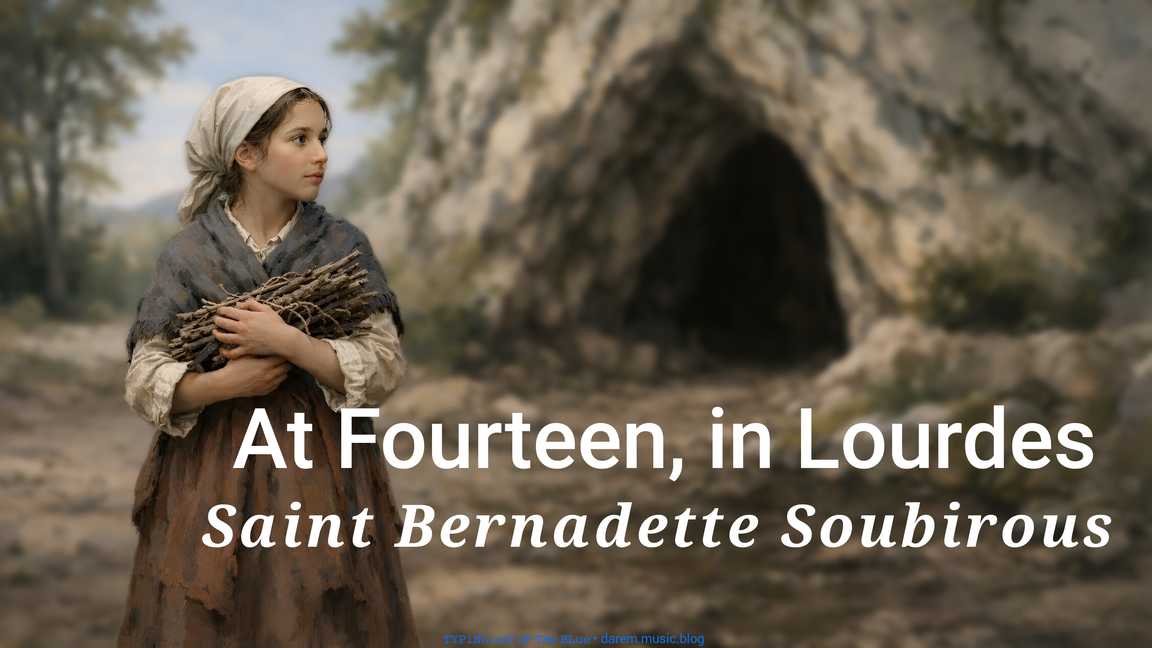
On February 11, 1858, in Lourdes, France, at 14 years old, while gathering firewood near the Grotto of Massabielle, she heard a sound like wind—but the trees didn’t move. She looked up.

And there, in the silence of the grotto, she saw a Lady in white. The first moment of something that would draw the world to Lourdes.

Today, we might feel behind, unnoticed, or not good enough. School may be a struggle. Life at home may be tight. Nothing about it looks special.

But her life shows something real.

We don’t have to stand out to be ready. We don’t have to be ahead to be chosen. We just need to be real, present, and faithful in what is already in front of us.

Let’s keep learning the saints’ way—day by day.

⌨ ᴛʸᵖⁱⁿᵍ ᴏᵘᵗ ᵒᶠ ᵗʰᵉ ʙˡᵘᵉ ᵈᵃʳᵉᵐ ᵐᵘˢⁱᶜ ᵇˡᵒᵍ

Still Air•Darem Placer

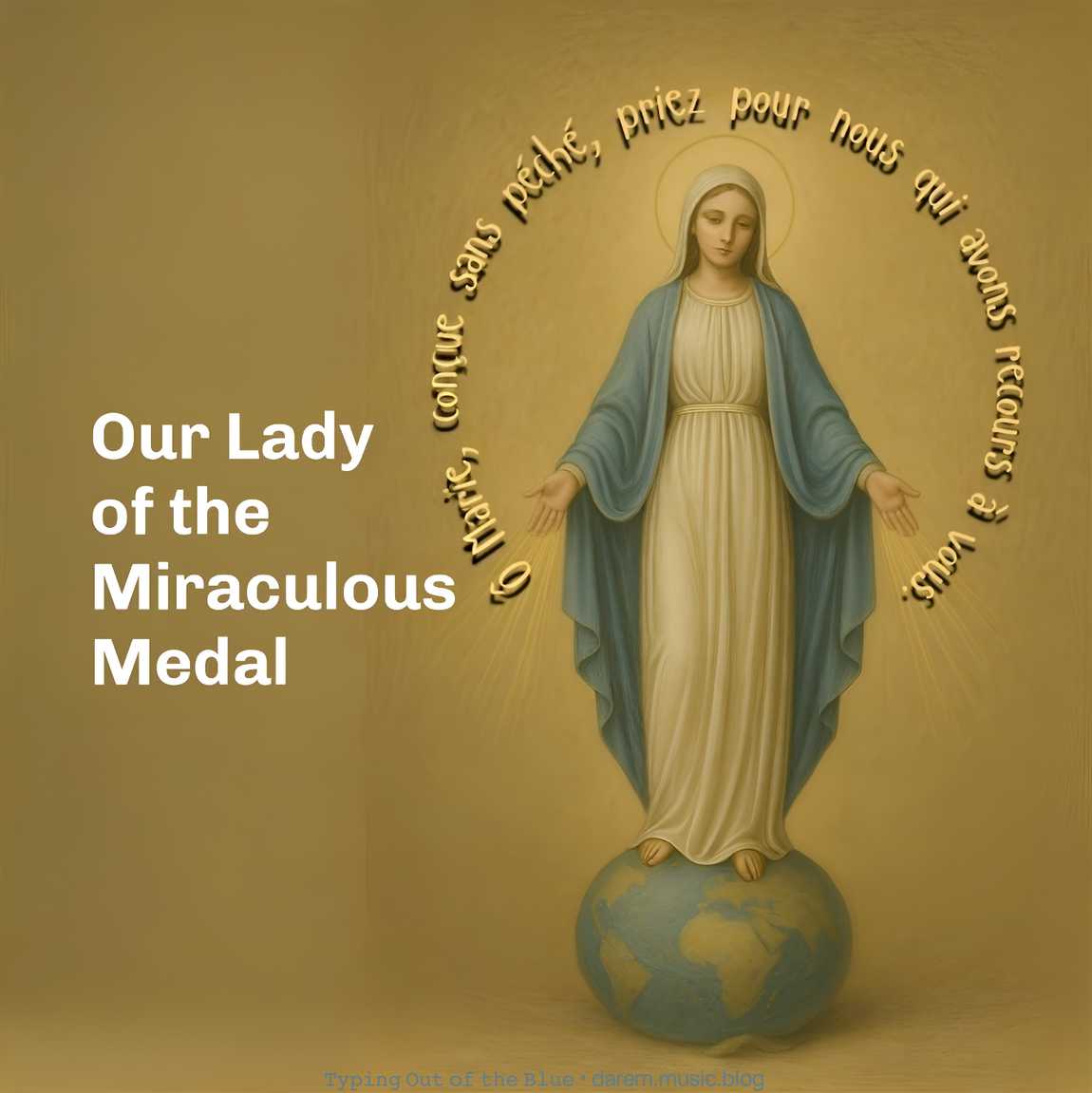
Our Lady of the Miraculous Medal

A clear and simple look at the Miraculous Medal—its history, meaning, and why millions still wear it today.

In 1830, a young woman in Paris named Catherine Labouré reported that the Blessed Mother appeared to her. Catherine was a religious sister of the Daughters of Charity, a community known for serving the poor. The apparitions happened inside their convent on Rue du Bac. She was later canonized as a saint in 1947 for her humility, service, and fidelity to the mission entrusted to her.

During one of these moments, Mary showed Sister Catherine a clear image: She was standing on a globe, rays of light coming from Her hands. Around the image were the words, “Ô Marie, conçue sans péché, priez pour nous qui avons recours à vous.” (“O Mary, conceived without sin, pray for us who have recourse to you.”) Mary asked Sister Catherine to have a medal made exactly as shown.

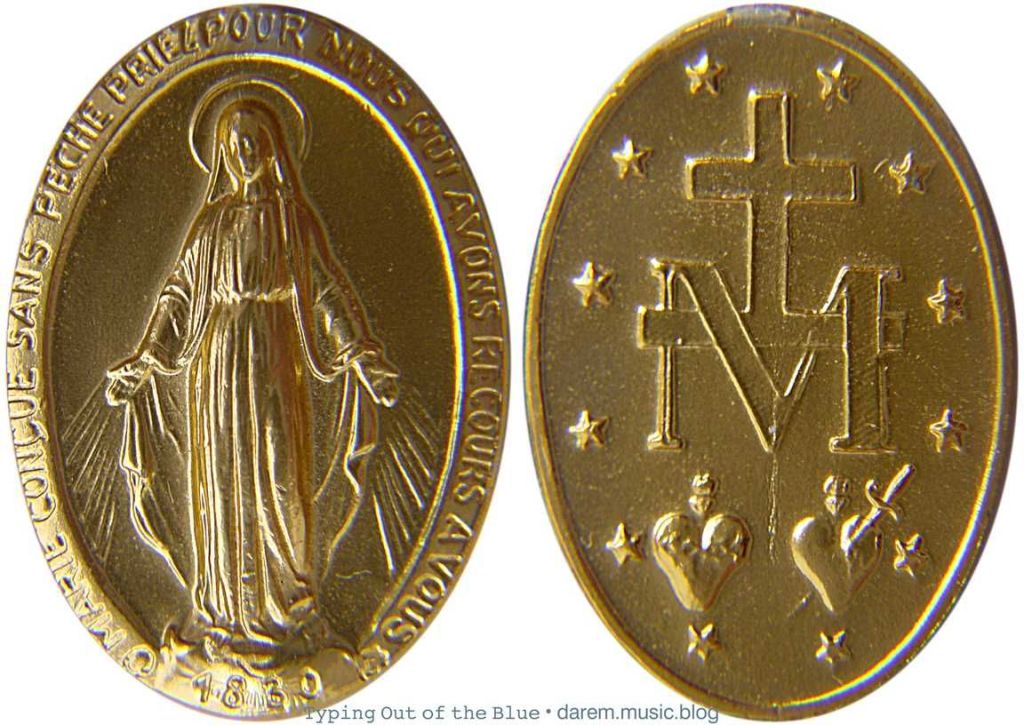
Front and back of the Miraculous Medal, as traditionally depicted.
Image: Wikimedia Commons – CC BY-SA 2.5

The design had two sides.
• Front: Mary with the rays of grace.
• Back: A large “M” for Mary, a cross for Christ, two hearts (Jesus’ Sacred Heart and Mary’s Immaculate Heart), and twelve stars representing the Church.

When the medal was distributed, many people shared experiences of comfort, healing, and sudden clarity in difficult situations. Because of these stories, people started calling it the Miraculous Medal. The Church approved the devotion, recognizing it as a simple but meaningful reminder of Mary’s help and God’s care.

The medal is not a magic object. Catholics wear it as a sign of trust, a small physical reminder to follow Christ, and a way of asking Mary to pray for them. It became popular worldwide because it is easy to carry, easy to understand, and centered on faith, not superstition.

Today, millions still wear the Miraculous Medal—students, workers, parents, and people going through personal challenges. Its message hasn’t changed: Mary leads us to Jesus, and God is near even when life feels uncertain.

⌨ ᴛʸᵖⁱⁿᵍ ᴏᵘᵗ ᵒᶠ ᵗʰᵉ ʙˡᵘᵉ ᵈᵃʳᵉᵐ ᵐᵘˢⁱᶜ ᵇˡᵒᵍ