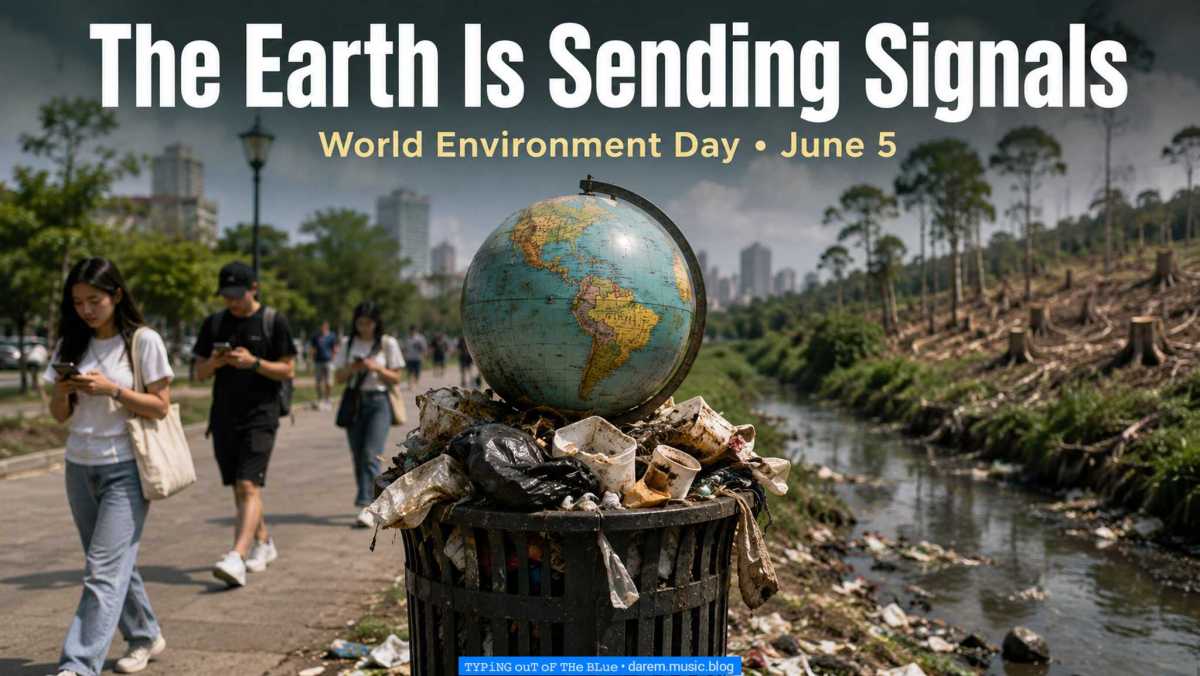
Imagine receiving a warning from someone who cannot speak. No words. No voice. No text message. Just clues.
A river that floods places it never flooded before. A hillside that suddenly gives way after heavy rain. Changes in weather that seem increasingly out of step with what people have long expected.
This is how people have often recognized changes in the environment. Not through sentences, but through consequences.
For a long time, people paid attention. Farmers watched the sky. Sailors studied the sea. Communities learned the rhythms of the land around them.
Today, we have satellites, sensors, and supercomputers. Yet a strange thing happens. We can learn more about the environment than ever before, and still scroll past the warnings. Sometimes we read only the headlines. Sometimes we skip the story altogether.
You can find the clues almost anywhere: in an overflowing trash bin, a polluted creek, or a forest that covers less ground than it once did.
The trouble is that small warnings rarely arrive one at a time. They accumulate.
By the time a problem becomes loud, it has usually been playing for a while.
Caring for the environment does not always require grand gestures. Sometimes it begins with simple things: wasting less, throwing trash where it belongs, conserving resources, or paying closer attention to the places we share.
Must we wait for the warning to grow overwhelmingly loud before we begin caring for the environment?
⌨ ᴛʸᵖⁱⁿᵍ ᴏᵘᵗ ᵒᶠ ᵗʰᵉ ʙˡᵘᵉ ᵈᵃʳᵉᵐ ᵐᵘˢⁱᶜ ᵇˡᵒᵍ