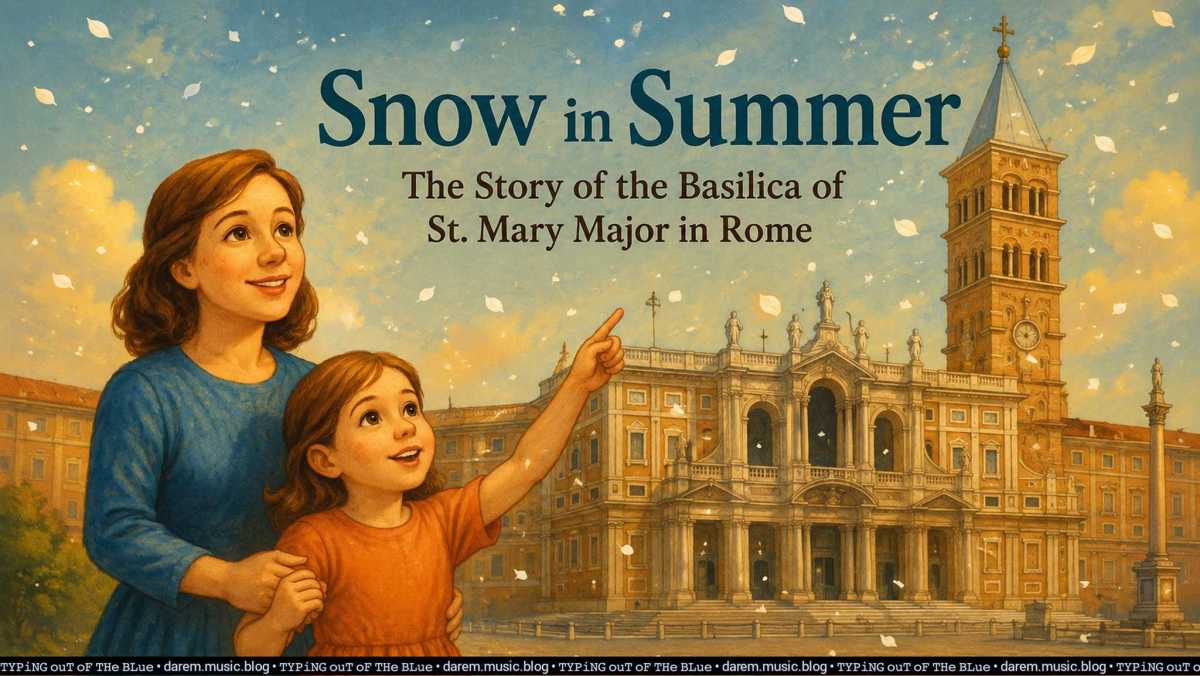
Snow in Summer
A summer snowfall, a shared dream, and a church that has honored Mary for centuries in the heart of Rome.

A summer snowfall, a shared dream, and a church that has honored Mary for centuries in the heart of Rome.
An icon from centuries ago found its way to Rome and eventually into the hearts of millions of Catholics around the world.
Unlike Marian devotions associated with apparitions, Our Lady of Perpetual Help began not with a vision or a message from heaven, but with an icon.
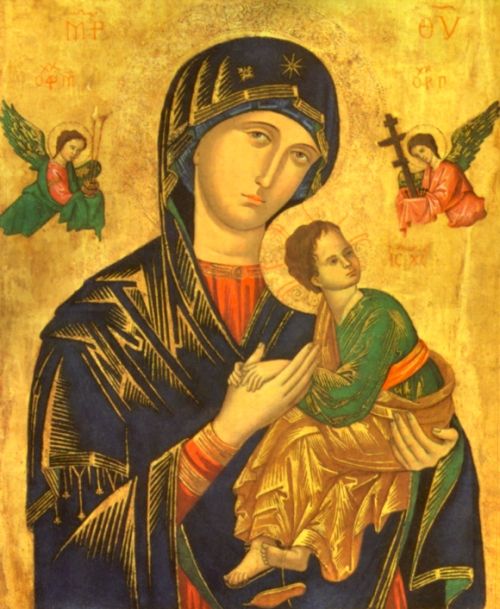
Painted centuries ago in the Byzantine style, the image shows the Blessed Virgin Mary holding the Child Jesus while the Archangels Michael and Gabriel present the instruments of His future Passion. The icon eventually made its way from Crete to Rome, where it was placed in the Church of Saint Matthew and quickly became a beloved object of prayer among the faithful.
Over the years, many people came before the icon carrying worries, illnesses, fears, and hopes. Many also returned with stories of prayers answered and burdens lifted. Devotion to the image quietly grew throughout Rome.
When war reached the city in 1798, the church housing the icon was destroyed. The image survived but disappeared from public view for decades, hidden away and nearly forgotten.
Then, in 1866, Pope Pius IX entrusted the icon to the Redemptorists, a Catholic missionary congregation founded by Saint Alphonsus Liguori, and instructed them to “make her known throughout the world.”
They did exactly that.
The Redemptorists carried copies of the icon wherever they served, introducing the devotion to parish after parish and country after country. Before long, devotion to Our Lady of Perpetual Help had spread far beyond Rome and reached Catholics around the world.
The title itself was not born from an apparition or written on the icon. Rather, it reflected the experience of generations of believers who found comfort in Mary’s intercession and came to see her as a mother whose help never runs out and whose care never grows tired.
Today, the icon of Our Lady of Perpetual Help remains one of the most beloved Marian devotions in the world. Its message is as timeless as ever: no burden is too heavy, no prayer too small, and no soul beyond the reach of God’s mercy when entrusted to the Mother who never ceases to help.
⌨ ᴛʸᵖⁱⁿᵍ ᴏᵘᵗ ᵒᶠ ᵗʰᵉ ʙˡᵘᵉ ᵈᵃʳᵉᵐ ᵐᵘˢⁱᶜ ᵇˡᵒᵍ