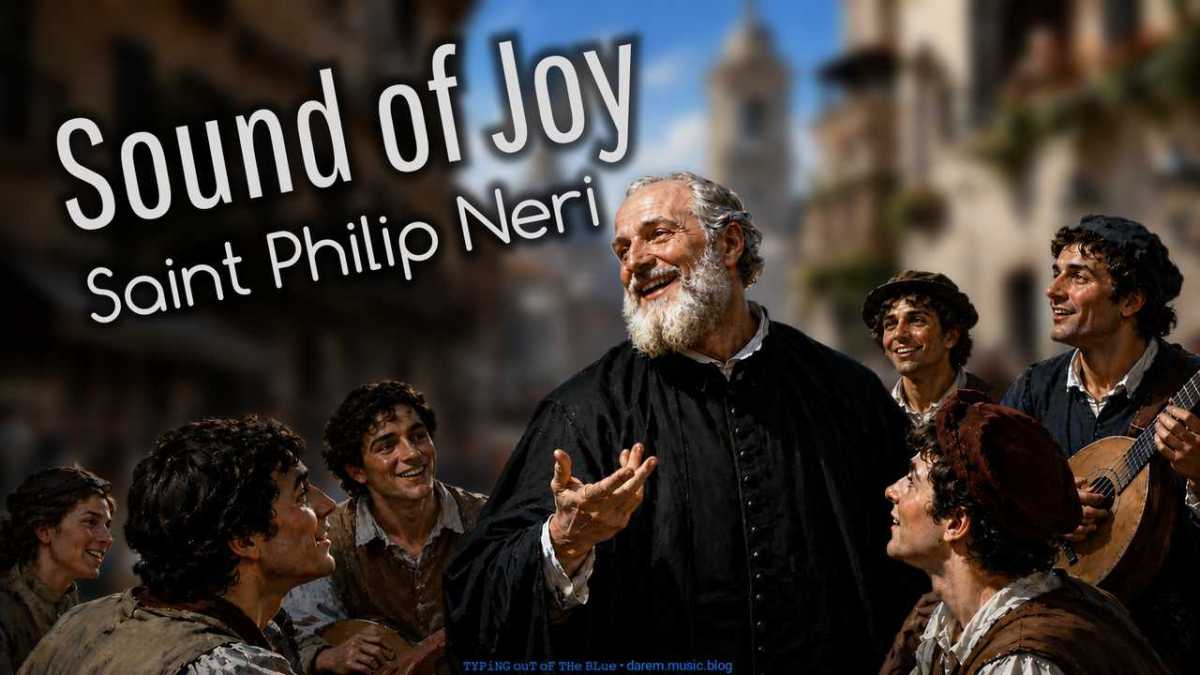
In the noisy streets of 16th century Rome, Father Philip Neri wasn’t the usual serious-looking saint people expect in paintings. He joked around. Laughed loudly. Talked to random people like an old friend hanging out near a bakery while church bells echoed somewhere far away.
Sometimes Father Philip even shaved half His beard or did embarrassing things on purpose just to crush pride before it could grow inside Him. Imagine a priest trolling His own ego centuries before social media existed.
Back then, Rome was noisy. Politics. Corruption. Power games. Everybody trying to look important. But He didn’t fight darkness by becoming darker too. He answered it with joy. Calm joy. The kind that makes exhausted people feel human again.
Young people liked being around Father Philip because He didn’t act like a cold preacher reading lines from a wall. He listened. He cared. He made faith feel alive instead of heavy.
And music became part of that mission.
People gathered around Him for prayer, conversations, and sacred songs. Little by little, those simple gatherings became what’s now known as the Oratory. Faith entered the room carrying melody instead of pressure. Like hearing a soft choir from an open window while the whole city keeps shouting outside.
One of the wildest details about Father Philip: after He died, people reportedly discovered that His heart had physically enlarged. Almost unreal. Like His body itself adjusted to carry that much love.
These days, people spend so much energy trying to look cool. Saint Philip Neri became unforgettable without trying. No branding. No performance. No fake image.
Just joy.
Just warmth.
Just a heart big enough to make people stay a little longer.
Let’s keep learning the saints’ way—day by day.
⌨ ᴛʸᵖⁱⁿᵍ ᴏᵘᵗ ᵒᶠ ᵗʰᵉ ʙˡᵘᵉ ᵈᵃʳᵉᵐ ᵐᵘˢⁱᶜ ᵇˡᵒᵍ