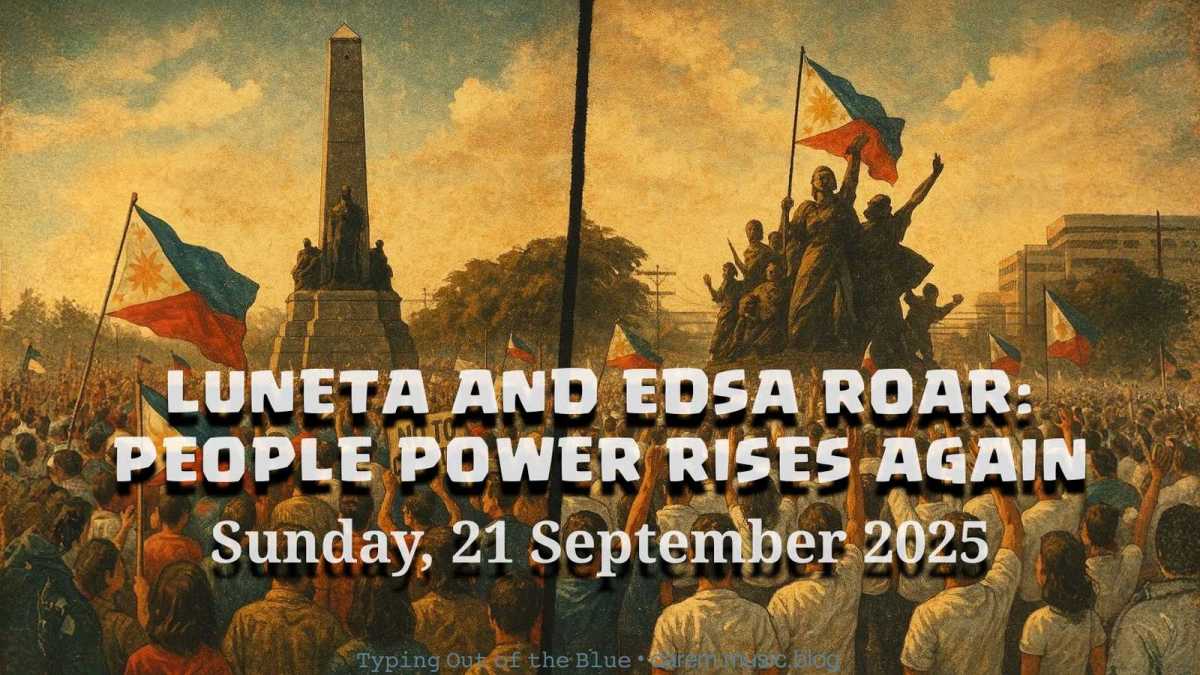
Sunday, 21 September 2025
Today, the streets spoke. At Luneta (Rizal Park), the protest called “Baha sa Luneta: Aksyon na Laban sa Korapsyon” flooded the park with people. Police said 49,000, organizers claimed 80,000—either way, it was a sea of students, retirees, church leaders, and civic groups refusing to stay quiet.
At the EDSA People Power Monument, the “Trillion Peso March” gathered about 3,500 in white, demanding answers on flood control funds gone missing. Some voices went further, calling for the President himself to step down.
Most of the day stayed peaceful, though 17 were arrested near Malacañang after clashes with police. Airspace over Luneta and EDSA was locked down. By afternoon, Luneta groups were already moving toward Mendiola, carrying the anger closer to power.
Luneta and EDSA weren’t random choices—they’re symbols, ghosts of history reminding us that people power doesn’t die, it waits.
What Might Come Next
• Investigations will go deeper—Senate hearings, Ombudsman probes, audits that could expose more dirt.
• Government may react with promises of reform, new oversight, or just tighter control.
• Officials under fire could be forced to answer, resign, or face trial.
• Budgets may be frozen or redirected while flood control projects fall under heavy scrutiny.
• Momentum could spill into more protests, louder online movements, and wider calls for change.
What Might Go Wrong
• The investigations might stall and end up as another cycle of hearings without results.
• Promised reforms could stay as words on paper with no real change on the ground.
• Corrupt officials might escape accountability, dragging the issue until the public moves on.
• The energy of today’s protest could fade without follow-through, turning a historic show of strength into just memory.
• The moment may be co-opted by politics, where noise replaces genuine reform.
What happened at Luneta and EDSA today is more than just a protest. It’s a reminder that corruption will always spark resistance, and that the spirit of people power is never truly silent.
The challenge now is whether this energy can be turned into lasting change—or if it will fade into another moment lost to history.
ᴛʸᵖⁱⁿᵍ ᴏᵘᵗ ᵒᶠ ᵗʰᵉ ʙˡᵘᵉ ᵈᵃʳᵉᵐ ᵐᵘˢⁱᶜ ᵇˡᵒᵍ