Politics and Religion: Should They Mix?

In Chrysostom’s time, faith clashed with power. Remembering him today, we still ask: should politics and religion mix?

The Time of Saint John Chrysostom

John Chrysostom lived in the late 4th century, when the Roman Empire had already accepted Christianity. By then, religion and politics weren’t just neighborsβ€”they were housemates. The Church was closely tied to the State, and bishops often found themselves dealing with emperors, empresses, and royal advisers.

Chrysostomβ€”β€œGolden-Mouthed” in Greek, not John’s last name but a title given for his strong speakingβ€” became Archbishop of Constantinople (the empire’s capital city). His sermons weren’t just about the afterlife; they cut into the sins of the presentβ€”greed, pride, and corruption in high places. He spoke against wealth in the court while the poor suffered outside its gates. He called out bad behavior, even when it meant offending powerful people like Empress Eudoxia (wife of Emperor Arcadius, ruler of the Eastern Roman Empire).

And here’s the point: corruption existed then just as it does now. Riches, power, and comfort tempted leaders to forget fairness. Archbishop Chrysostom couldn’t keep faith away from public life, because silence in the face of wrong would have been a betrayal of the Gospel. His role as shepherd of souls pushed him into the public spotlight, whether he wanted it or not.

In the end, he paid the priceβ€”sent away, mistreated, and left alone. But his courage left a legacy: a reminder that faith has a voice in society, not for power’s sake, but for truth.

As we remember Saint John Chrysostom on his memorial day, September 13, we see that the fight remains the same. The world is still marked by corruption. And maybe this is the answer: when religion is used for control, it should never mix with politics. But when it speaks against injustice and defends the poor, it cannot stay out. The question he faced is the same we ask today: should politics and religion mix?

πšƒπš’πš™πš’πš—πš π™Ύπšžπš 𝚘𝚏 πšπš‘πšŽ π™±πš•πšžπšŽ β€’ 𝖽𝖺𝗋𝖾𝗆.π—†π—Žπ—Œπ—‚π–Ό.π–»π—…π—ˆπ—€

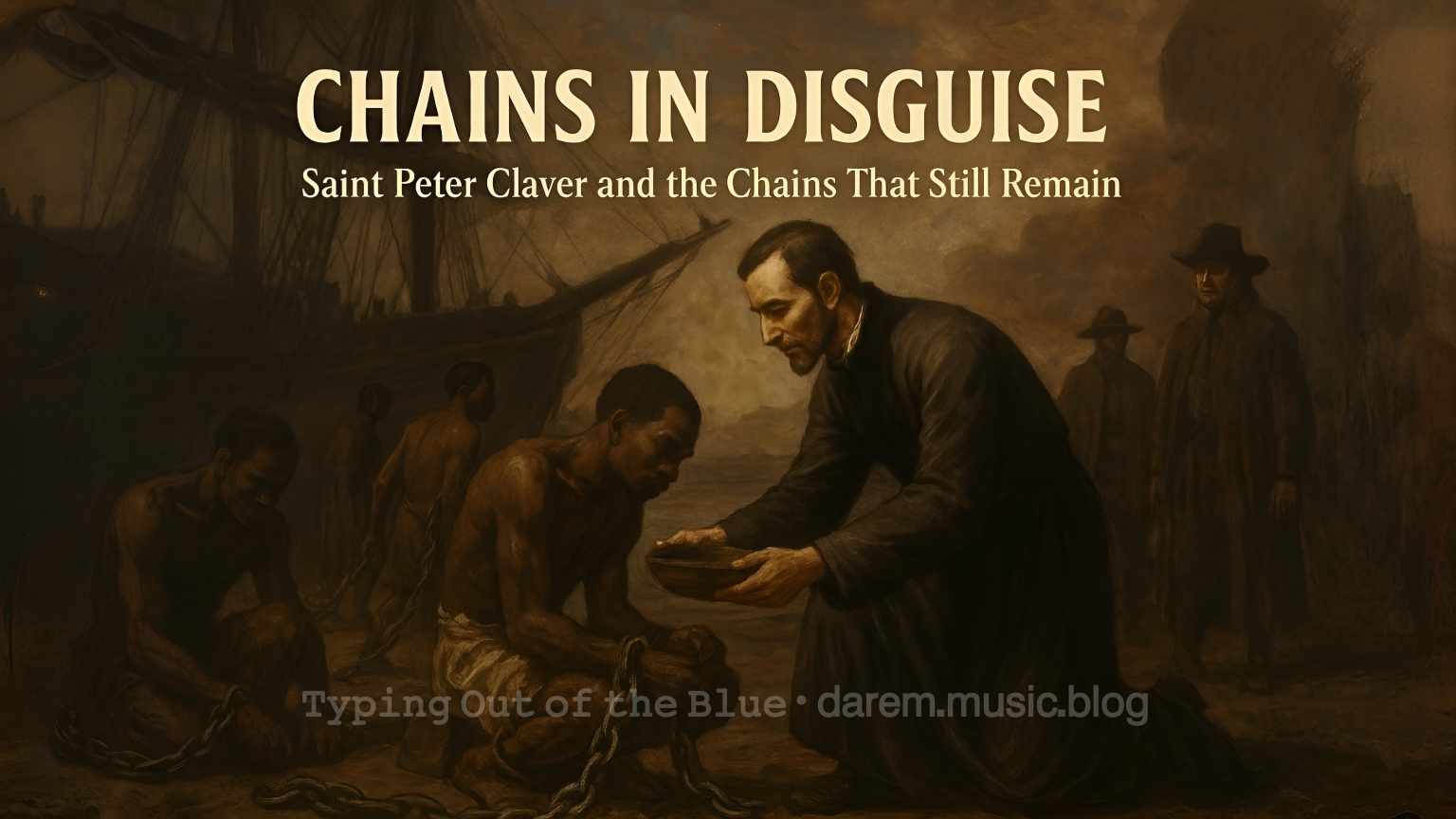
Chains in Disguise

What connects the slave ships of Cartagena to the hidden chains people carry today? On September 9, one man’s story still speaks louder than silence.

Saint Peter Claver and the Chains That Still Remain

Slavery didn’t disappearβ€”it only changed form. Today, fifty million people live with hidden chains. They clean houses they don’t own, make clothes they can’t buy, and dig minerals for gadgets they will never use. Meanwhile, the rich spend on pleasures while keeping labor as cheapβ€”almost freeβ€”as possible.

Centuries ago, the picture was clear and cruel. In the port city of Cartagena, Colombia, slave ships arrived full of men, women, and children. Dragging iron chains and starving, they were pulled out after weeks in the dark. Families were torn apart. Children were branded and sold like objects. Their cries mixed with the voices of buyers counting profit.

Into this walked Father Peter Claver, a Spanish Jesuit priest. He brought food, water, and medicine. He cared for the sick when no one else would. He called the enslaved not property but human beings. He named himself their β€œslave forever.” He didn’t end the system, but he showed that their lives had value.

In his final years, Father Peter was left weak and sick. Paralysis kept him in bed, and the servant assigned to him treated him harshly and neglected him. The man who had spent his life lifting up the forgotten died almost forgotten himself on September 8, 1654. Yet when he passed, the same city that once ignored him filled the streets to honor him.

On September 9, the Memorial of Saint Peter Claver, we remember him. And in remembering him, we face the truth: slavery never fully ended. The chains look different now, but they still exist.

πšƒπš’πš™πš’πš—πš π™Ύπšžπš 𝚘𝚏 πšπš‘πšŽ π™±πš•πšžπšŽ β€’ πšπšŠπš›πšŽπš–πš™πš•πšŠπšŒπšŽπš›.πšŒπš˜πš–

Saints β€’ Darem Placer

Listen on Apple Music, Apple Music Classical, and YouTube Music