The Power of Music

From ancient thought to modern listening, melody and rhythm continue to shape how we experience life.
Music is everywhere. We hear it at home, on the road, at celebrations, and during quiet moments. But music is more than just sound or entertainment. It can affect us in many ways.

It changes our mood.

The right music can calm us down, brighten our day, or give us energy when we need it.

It expresses emotions.

Sometimes, we cannot explain exactly how we feel. Music can express those feelings for us, even without words.

It brings back memories.

A familiar song can quickly remind us of a person, a place, or a moment from years ago.

It helps us through difficult times.

Music cannot solve our problems, but it can give us comfort and help us feel less alone.

It inspires creativity.

A melody can inspire a story, a painting, an idea, or even another piece of music.

It makes ordinary moments feel special.

A quiet drive, a rainy afternoon, a long walk, or a cup of coffee can feel different with the right music playing.

• It brings people together.

People from different cultures, generations, and backgrounds can enjoy the same music. We do not always need to understand the words to share the experience.

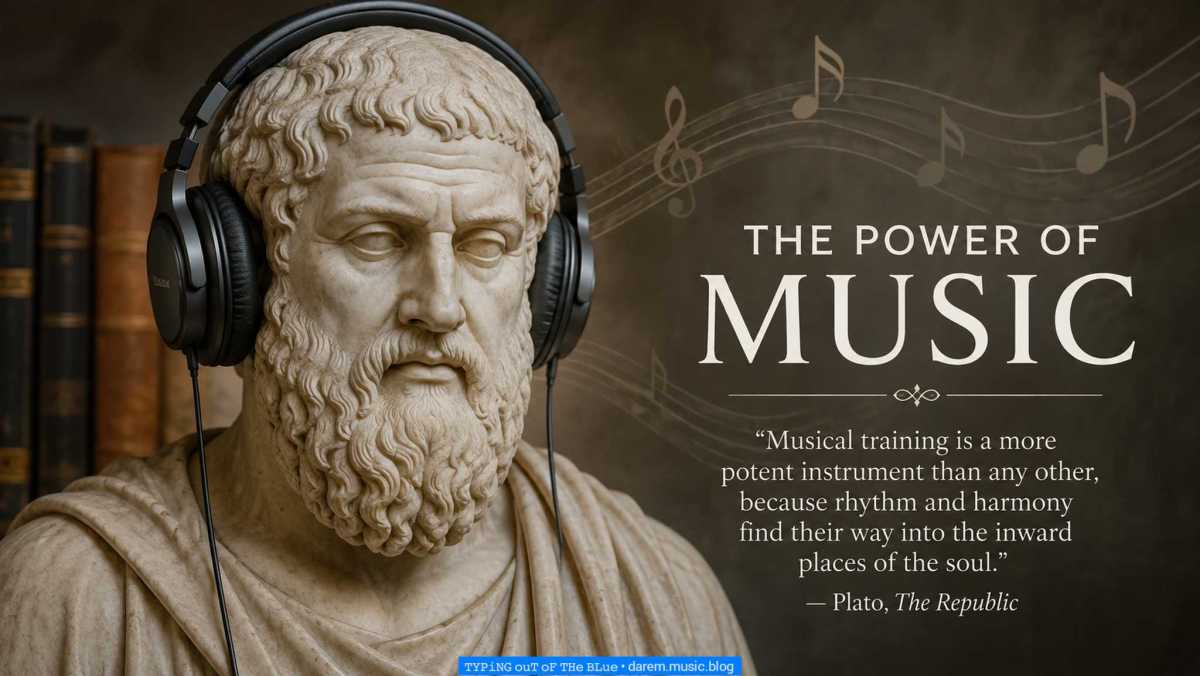
Long before headphones and streaming, Plato wrote about the influence of music. In one English translation of The Republic, he said:

“Musical training is a more potent instrument than any other, because rhythm and harmony find their way into the inward places of the soul.”

More than two thousand years later, the way we listen to music has changed, but its ability to affect us remains.

That is the power of music. Sometimes, a few notes are all it takes.

⌨ ᴛʸᵖⁱⁿᵍ ᴏᵘᵗ ᵒᶠ ᵗʰᵉ ʙˡᵘᵉ ᵈᵃʳᵉᵐ ᵐᵘˢⁱᶜ ᵇˡᵒᵍ

Voices Across the Field • Darem Placer

The Sound That Stays

Born from patient craftsmanship, the violin still leads the way in shaping the emotional sound of music.

Violin Day • December 13

The violin didn’t come from one genius moment. It grew slowly in northern Italy during the early 1500s, shaped by makers who kept adjusting wood until it sang the way they hoped. By the time Andrea Amati, an Italian maker from Cremona, built the earliest known violins, the instrument already had its own voice—bright, sharp, and alive.

Then came Antonio Stradivari, another Italian maker from Cremona who worked around the late 1600s and early 1700s. He didn’t invent the violin, but he refined it so well that musicians still measure new instruments against his work.

That’s why December 13 became Violin Day. It marks the traditional date of Stradivari’s birth—a simple way of acknowledging the craftsman who lifted the instrument to its finest form.

And the violin deserves that kind of attention. Its sound can carry emotion in a way few instruments can—soft enough to feel like a whisper, strong enough to fill a hall, flexible enough to fit every corner of music from folk tunes to symphonies. Violin Day is a moment to appreciate how much feeling this small wooden instrument can hold, and how deeply it has shaped the way the world listens.

⌨ ᴛʸᵖⁱⁿᵍ ᴏᵘᵗ ᵒᶠ ᵗʰᵉ ʙˡᵘᵉ ᵈᵃʳᵉᵐ ᵐᵘˢⁱᶜ ᵇˡᵒᵍ

Merely Christmas • Darem Placer
Out this season on Bandcamp.